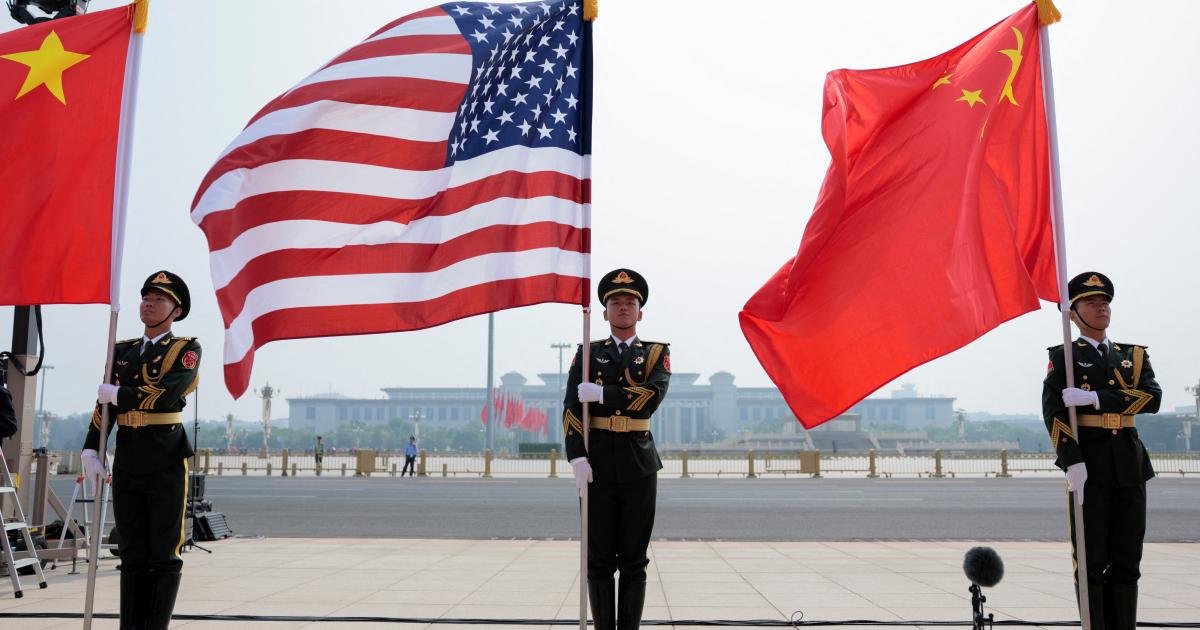
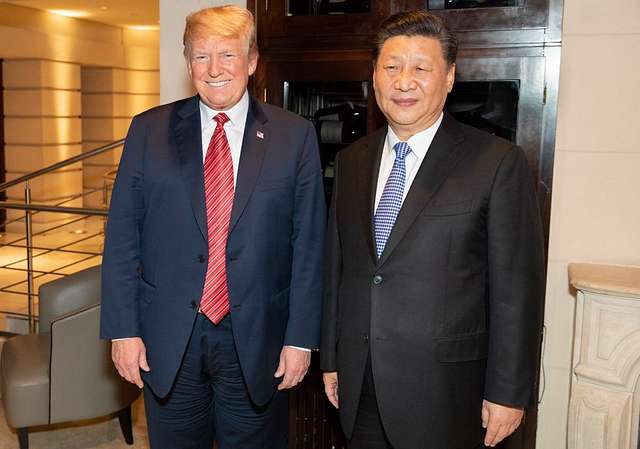
President Donald Trump visited Beijing in mid-May 2026, meeting with Xi Jinping to establish a strategic stability that acknowledges neither superpower can dominate the other. The summit signaled the emergence of a “G-2” world defined by competitive coexistence, where both nations manage deep economic ties despite ongoing military and technological rivalry.
The pageantry was immense. From carefully choreographed photo ops to the arrival of American business titans, the summit was designed to project a return to order. But beneath the diplomatic veneer lies a colder realization: the era of attempting to force the other side into submission has ended. After years of trade wars and technology controls, Washington and Beijing are discovering the limits of coercion.
As Foreign Affairs reports, this is not a reconciliation or a return to the policies of engagement. Instead, it is the beginning of a structural stalemate. In this new G-2 reality, the United States remains the world’s military powerhouse, while China has developed the capacity to push back against Washington’s power projection in the western Pacific. Neither can exclude the other from the global stage, and neither can prevent the other from remaining a dominant economic and technological player.
This relationship is a distinct evolution from the Cold War. Unlike the U.S.-Soviet rivalry, which was defined by separate economic and political blocs, the U.S. and China remain embedded in the same financial networks, supply chains, and technology ecosystems. This interdependence creates a form of stability not based on friendship, but on the fact that both sides can cause substantial damage to each other’s economies if the rivalry descends into sustained conflict.
cluster (priority): 社會主義行動
The most concrete outcome of the summit was the creation of new dialogue structures: a board of trade and a board of investment. While the White House described these as a cornerstone of the meeting, the Council on Foreign Relations notes that these boards are narrower and more transactional than previous U.S.-China dialogue mechanisms.
Rather than attempting a broad strategic settlement, these boards act as management devices to keep trade and investment disputes from escalating into full-blown crises. The Board of Trade, specifically, focuses on non-sensitive goods. This allows both nations to bargain over agriculture, energy, and consumer goods while pointedly leaving the most volatile issues outside the room.
Excluded Issues: Advanced semiconductors, artificial intelligence (AI), military technology, export controls, and critical infrastructure.
Included Issues: Agricultural purchases (soybeans, sorghum, wheat, beef, poultry), energy, and selected industrial goods.
The Grey Zone: Rare earths were mentioned by the White House as a supply-chain concern, but were notably absent from China’s main diplomatic readout.
This carving-out of “non-sensitive” space suggests a pragmatic truce. By isolating the “hard” questions—including the status of Taiwan—the two powers can maintain a repeatable bargaining table without needing to resolve their fundamental ideological or strategic contradictions.
Divergent Readouts on Taiwan and Iran
cluster (priority): Council on Foreign Relations
Despite the public handshakes, the official records of the May 14-15 meeting reveal two different summits. Reporting from ISA highlights a stark discrepancy: the White House readout omitted any mention of Taiwan, while the issue featured heavily in the Chinese version.
For Beijing, Taiwan remains the core of its core interests. During the summit, Xi Jinping warned that mishandling the situation could lead to conflict. While some U.S. analysts viewed this tone as overly aggressive, others, including Lyle Goldstein of Defense Priorities, argue that the Taiwan issue had to be addressed because it is the very foundation of modern U.S.-China relations.
Conversely, Washington’s priority was the conflict in Iran. The discussions there were more opaque, though Trump indicated that Xi agreed China would not send weapons to Iran and opposed an Iranian-run toll system for the Strait of Hormuz. While China has a track record of mediation—such as the 2023 agreement between Saudi Arabia and Iran—there is skepticism about whether Beijing will exert significant pressure on Tehran.
“In an uncertain world, a handshake between Chinese and American leaders is the ‘hard currency’ the global market needs most.”
Robert Kuhn, President of the Kuhn Foundation
This “hard currency” is precisely what the markets were craving after a period of extreme volatility. The summit follows a year of intense escalation, including a period where Trump ramped up the trade war to a level that resulted in 145 percent tariffs on Chinese goods. This led to a near-collapse of trade and sharp drops in bond and stock markets, forcing a TACO—a temporary lowering of tariff rates—in May 2025 to open the door for the current negotiations.
The Beijing Moment and the Business Vanguard
cluster (priority): news.google.com
The summit was as much about corporate interests as it was about geopolitics. According to the Ministry of Foreign Affairs of the People’s Republic of China, 17 American business titans accompanied President Trump, including Tesla CEO Elon Musk, Apple CEO Tim Cook, and Citi Chair and CEO Jane Fraser.
The most dramatic symbolic gesture was the last-minute entry of NVIDIA founder and CEO Jensen Huang into Beijing aboard Air Force One. The presence of the world’s leading AI chip architect underscores the tension of the G-2 reality: while governments attempt to restrict AI and semiconductor flows for national security, the commercial imperative to maintain access to the Chinese market remains a powerful force.
However, the truce remains fragile. A previous agreement reached in Busan, South Korea, last October—which froze current tariff levels—is set to expire this November. While Chinese officials sought to extend this freeze until the end of Trump’s presidency in 2029, the U.S. refused. Washington intends to maintain leverage ahead of Xi’s scheduled return visit to the United States in September.
The result is a “stalemate summit.” Trump described the meeting as incredible, a historic moment, and full of fantastic deals. In reality, the encounter was a high-ceremony exercise in de-escalation. Both regimes are opting for a breathing space, not because the conflict has ended, but because they are preparing for the next phase of a long-term struggle for global power.
As the U.S. focuses on strengthening its control over the Western hemisphere and China pushes for technological self-reliance in AI, the G-2 framework provides a necessary safety valve. It is a relationship defined not by trust, but by the mutual recognition that neither side can afford the cost of total victory.