
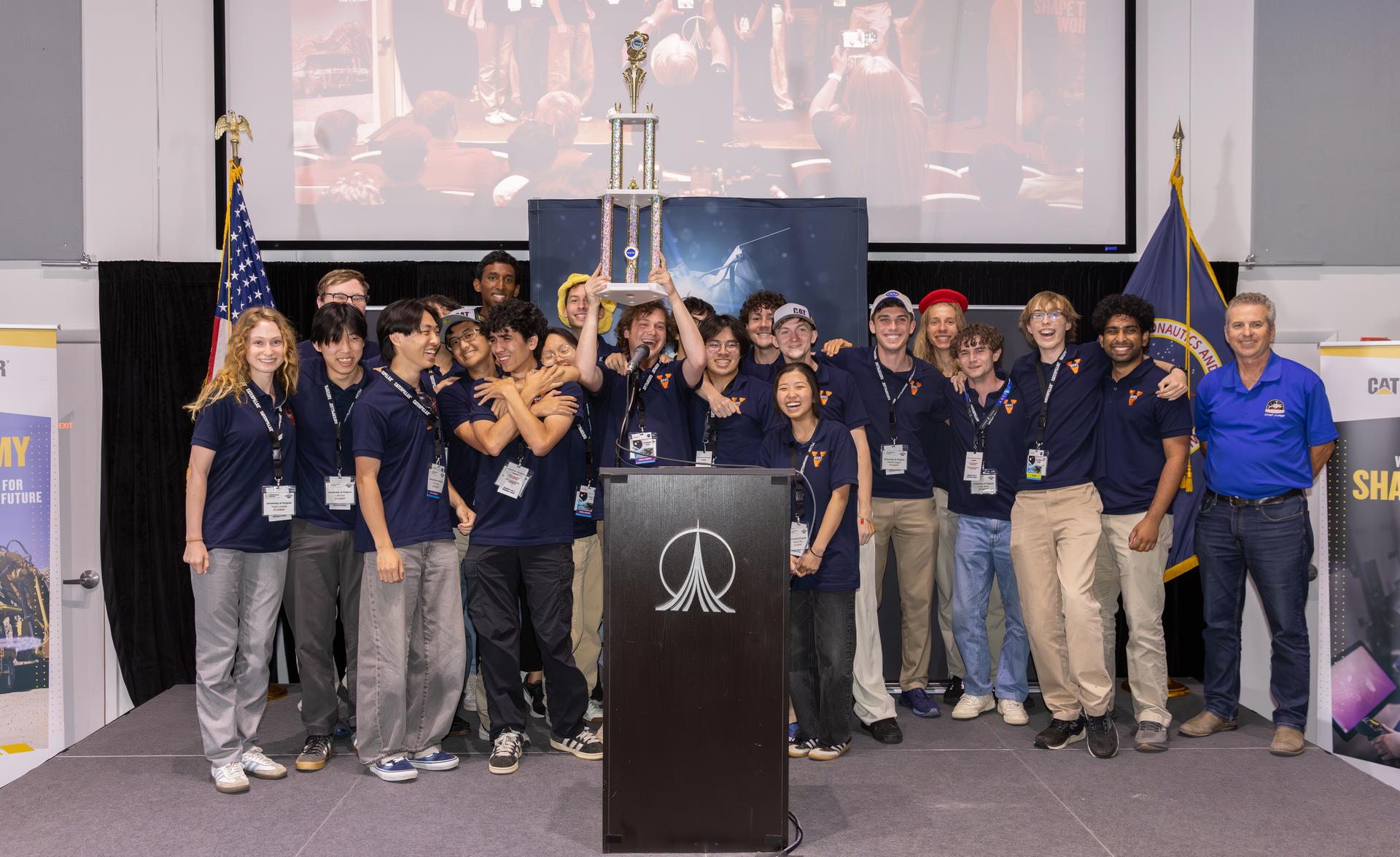
University of Virginia students won the Off World Grand Prize at NASA’s 2026 Lunabotics Challenge on May 21, 2026. The competition, held at the Kennedy Space Center Visitor Complex in Florida, tasked 47 college teams with designing autonomous robots to construct regolith-based berms for future lunar infrastructure.
University of Virginia’s Resilience and the Off World Grand Prize
In the high-stakes environment of space robotics, the difference between success and failure often comes down to how a system handles a crisis. As reported by Mirage News, the University of Virginia team secured the top honor not through a flawless run, but through an adaptive one. When a wheel detached during their first finals attempt, the engineers did not forfeit; they reconfigured the robot to operate on three wheels and continued digging.

This ability to maintain functionality under failure is exactly what the agency seeks for a permanent Moon Base.

The victory underscores a shift in how lunar success is measured. The University of Virginia achieved the highest overall score by completing all events, proving that versatility and reliability outweigh raw output. In a vacuum where repair crews are non-existent, a robot that can limp across the finish line is infinitely more valuable than a high-performance machine that becomes a stationary piece of junk after a single mechanical glitch.
“It’s a difficult prize to win, and it’s not obvious, because the team that built the biggest berm didn’t win. But on an actual lunar mission, it’s not just one thing that matters – it’s everything in the system.”
Robert Mueller, senior technologist at NASA Kennedy’s Swamp WorksBeyond Berm Size: The Metrics of Lunar Engineering
While the visual goal of the competition was the construction of a berm—a raised mound of soil used for protection or structure—the judging criteria were far more clinical. NASA evaluated the prototypes based on a holistic systems engineering approach rather than a simple volume measurement of simulated lunar dust.
- STEM Industry Plan: The strategic approach to the project.
- Systems Engineering Paper: The technical documentation and theoretical foundation.
- Presentations and Demonstrations: The ability to communicate and validate the design.
- Robotic Construction: The actual physical performance of the robot.
Within those pillars, judges scrutinized the “invisible” metrics: robot weight, energy consumption, communications performance, and the level of autonomy. A robot that builds a massive berm but drains its battery in minutes or requires constant manual correction is a liability in a real-world lunar deployment. The 2026 challenge demanded hardware that was simultaneously resilient, efficient, and autonomous.
The Competitive Pipeline from Orlando to Florida’s Coast
The road to the finals was a multi-stage endurance test that began in September 2025. Forty-seven teams from across the United States entered the fray, submitting detailed industry plans and engineering specifications to the agency.
The first major filter occurred at the University of Central Florida’s Exolith Lab in Orlando. In this qualifying round, robots were forced to excavate and transport simulated lunar soil across challenging terrain to build their initial berms. Only the top 10 teams survived this cull to advance to the final three-day event held from May 19 to 21, 2026.
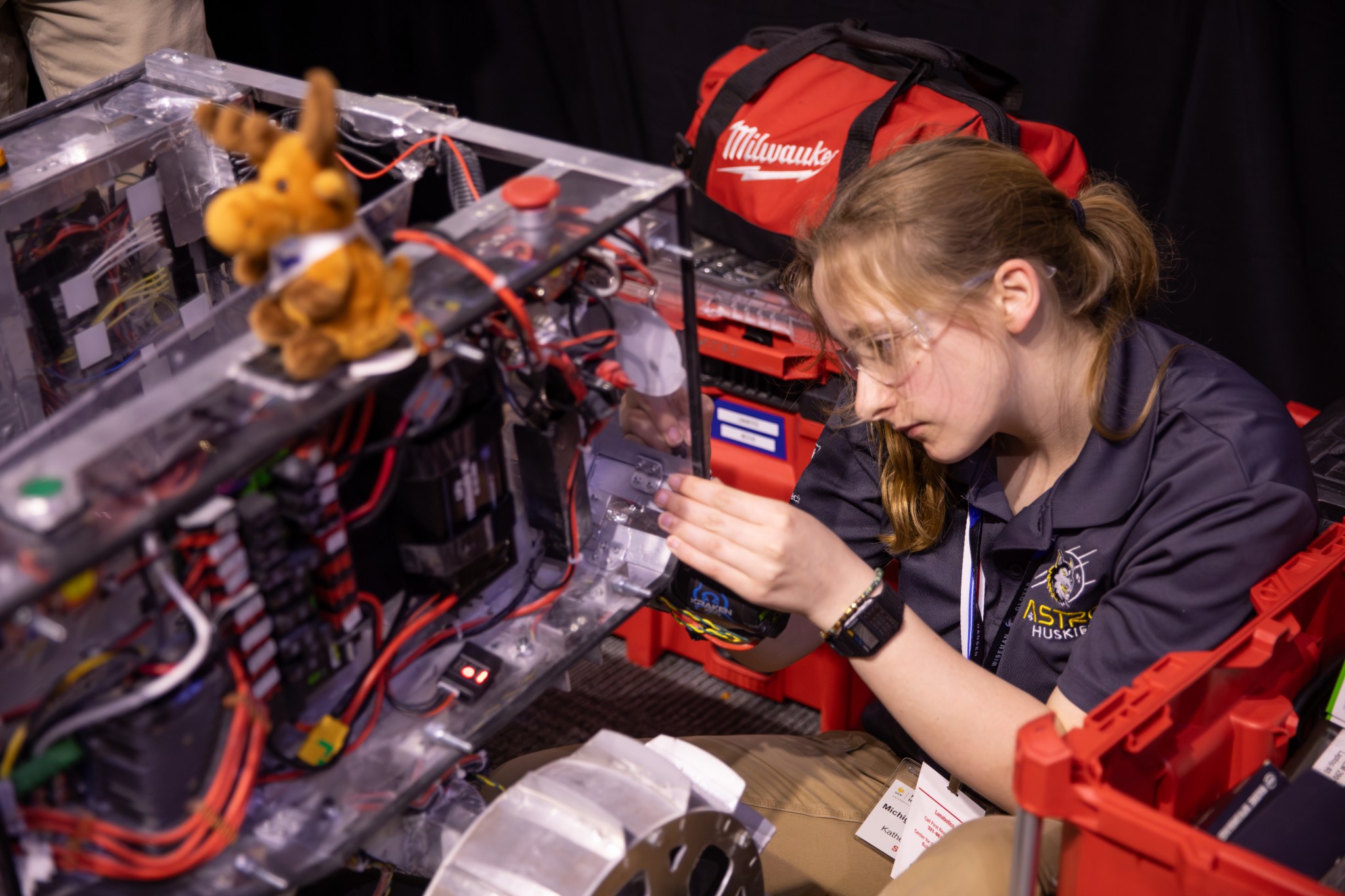
The finals took place inside the Astronauts Memorial Foundation’s Center for Space Education at the Kennedy Space Center Visitor Complex. For students like Katherine Rauscher of Michigan Technological University, the event was the culmination of two semesters of applying NASA’s Systems Engineering principles to a physical prototype.
Scaling Prototype Robots for the Artemis Era
These competitions are not merely academic exercises; they are a test bed for the Artemis missions. As the agency prepares to return to the lunar surface, the need for autonomous construction is paramount. Building launchpads, habitats, and solar arrays using local regolith—rather than hauling every brick from Earth—is the only viable path toward a sustained lunar presence.
By forcing college engineers to grapple with the constraints of weight, power, and mechanical failure, NASA is essentially crowdsourcing the early-stage problem-solving required for off-world infrastructure. The 2026 challenge demonstrates that the next generation of lunar hardware will not be defined by a single “breakthrough” feature, but by the seamless integration of a dozen different subsystems working in harmony.
The victory of the University of Virginia serves as a case study in the priority of the mission over the machine. In the lunar environment, the most sophisticated robot is the one that keeps working when things go wrong.
