

President Donald Trump criticized Israeli Prime Minister Benjamin Netanyahu on June 14, 2026, after Israel launched airstrikes in Beirut just hours before a planned agreement with Iran. Trump described the operation as “small and meaningless,” claiming it delayed the signing of a regional peace deal that aims to end military hostilities.
Trump’s reaction to the Beirut operation
In a telephone interview with Axios on June 14, VnExpress reported that President Trump expressed shock after advisors briefed him on the Israeli strikes in the suburbs of Beirut. Trump claimed the attack occurred only one hour before the U.S. and Iran intended to sign a formal agreement.

“It was terrible, I can’t believe it. Just one hour before we intended to sign the agreement. Hezbollah attacked Israel first, causing no damage and no one died. Why did Bibi order that damn airstrike? I was very angry and told the Israeli Prime Minister that he does not know how to assess the situation.”Donald Trump, via VnExpress
Trump further asserted on Truth Social that the attack “should not have happened,” particularly on a day he had hoped to sign the ceasefire to coincide with his 80th birthday. According to Tien Phong, the President warned that while Israel has the right to self-defense, the specific operation “should not disrupt this important process.”
IDF targets and Hezbollah’s retaliation
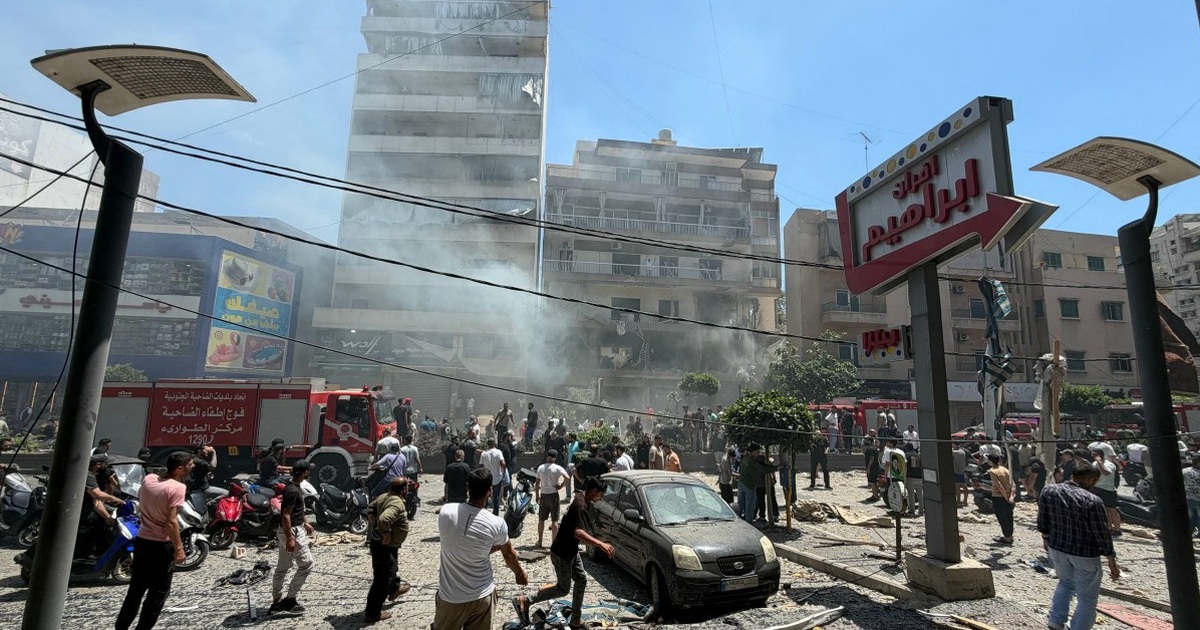
The Israel Defense Forces (IDF) stated on June 14 that they carried out a “precision attack” against a “Hezbollah command center” in the Dahiyeh area of Beirut’s southern suburbs. The Dahiyeh region is widely recognized as a primary stronghold for Hezbollah operations within the Lebanese capital. Israel characterized the move as a direct response to three drones, suspected to be from Hezbollah, that struck northern Israel earlier that day without causing casualties.
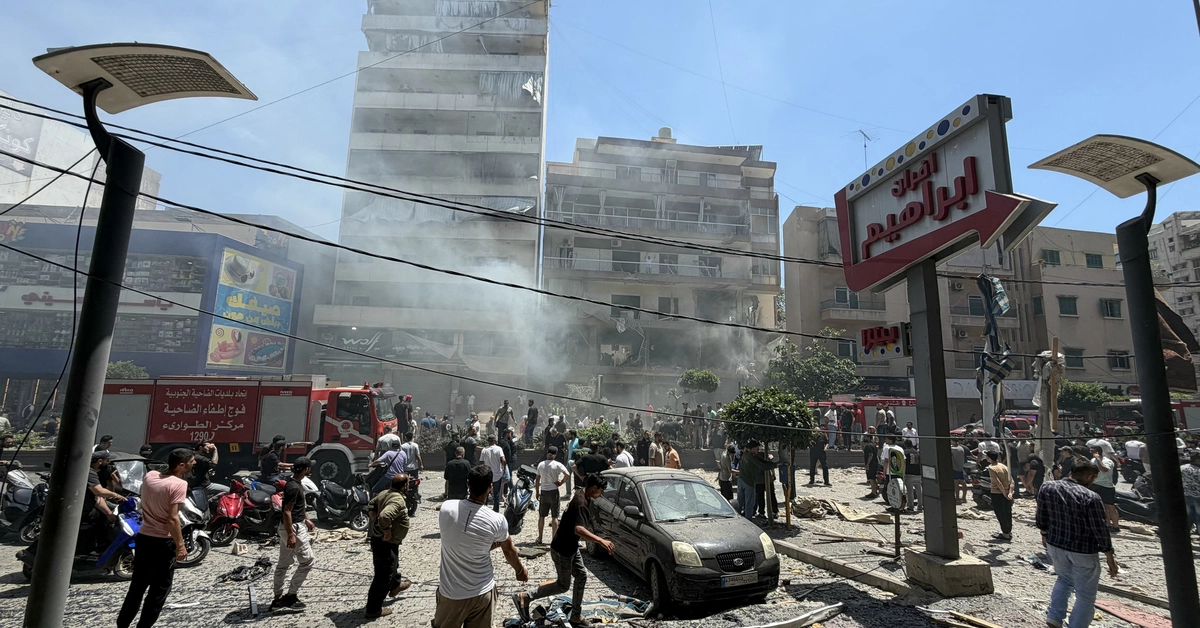
The impact of the strike varied by source. Báo Thanh Niên reported that the Lebanese Ministry of Health confirmed three deaths, including two women, and 16 injuries. The National News Agency (NNA) of Lebanon specified that the strike hit an apartment in the Ghobeiry district.
Hezbollah has disputed the efficacy of Israeli air superiority. In a video released by the group, Hezbollah claimed to have shot down an Israeli Heron 1 long-range drone using a missile, according to reports from Tin tức 24h. The Heron 1 is a known unmanned aerial vehicle used by the IDF for long-endurance surveillance and intelligence gathering.
Naval blockades and the Iran nuclear terms
Despite the diplomatic friction caused by the airstrike, President Trump announced late on June 14 that the “agreement with Iran has been finalized.” The deal involves critical shifts in maritime security and nuclear oversight. As reported by Tuổi Trẻ, the terms are as follows:
- Maritime Access: Iran will immediately reopen the Strait of Hormuz to all commercial vessels. The Strait is a vital global choke point for oil shipments, and its closure or restriction typically triggers spikes in global energy prices. In exchange, the U.S. lifted its naval blockade of Iranian ports effective June 15.
- Nuclear Restrictions: Iran is required to destroy radioactive materials and permit snap inspections of its nuclear facilities. These “snap” inspections are designed to allow international monitors to enter sites without prior notice to ensure compliance with non-proliferation standards.
- Military Cessation: All parties agreed to an immediate and permanent end to military operations across all fronts, including Lebanon.
The U.S. naval blockade removal process is expected to be completed within 30 days of the signing.
Iran’s warnings and the path to Switzerland
The timing of the Beirut strike has left Tehran skeptical of Washington’s influence over Tel Aviv. Mohammad Bagher Ghalibaf, the Speaker of the Iranian Parliament and head of the negotiating team, stated on X that the attack suggests the U.S. either “lacks the will or the capacity” to enforce its commitments.
Ghalibaf warned that continuing the current trajectory would be impossible if commitments are not fully met. This tension highlights a critical gap in the peace process: while the U.S. has excluded Israel from the direct negotiations with Iran, Israel has publicly maintained its right to act independently in Lebanon to prevent threats to its security.
The diplomatic timeline now moves toward a formal ceremony in Switzerland, a country traditionally chosen for such high-stakes diplomacy due to its long-standing policy of neutrality. According to Pakistani Prime Minister Shehbaz Sharif, who acted as a mediator in the talks, the full document is scheduled to be signed in Switzerland on June 19.
While Trump and Sharif expressed optimism for an electronic signing as early as June 14, Iranian Foreign Ministry spokesperson Esmaeil Baghaei clarified that the signing “will not be tomorrow (June 14)” but will occur “in the coming days.”
The stability of the deal remains fragile. If Iran chooses to retaliate against the June 14 strikes, AP reports that peace prospects could collapse, potentially triggering a joint U.S.-Israeli response.
Find more reporting in our World section.
