President Donald Trump announced that a peace deal with Iran is scheduled for signing on Sunday, June 14, 2026, which would immediately reopen the strategic Strait of Hormuz. While Pakistani mediators expressed optimism about an electronic signing, Iranian officials remained non-committal regarding the exact timeline for the agreement.
The Timing Gap: Trump’s Sunday Deadline vs. Tehran’s Skepticism
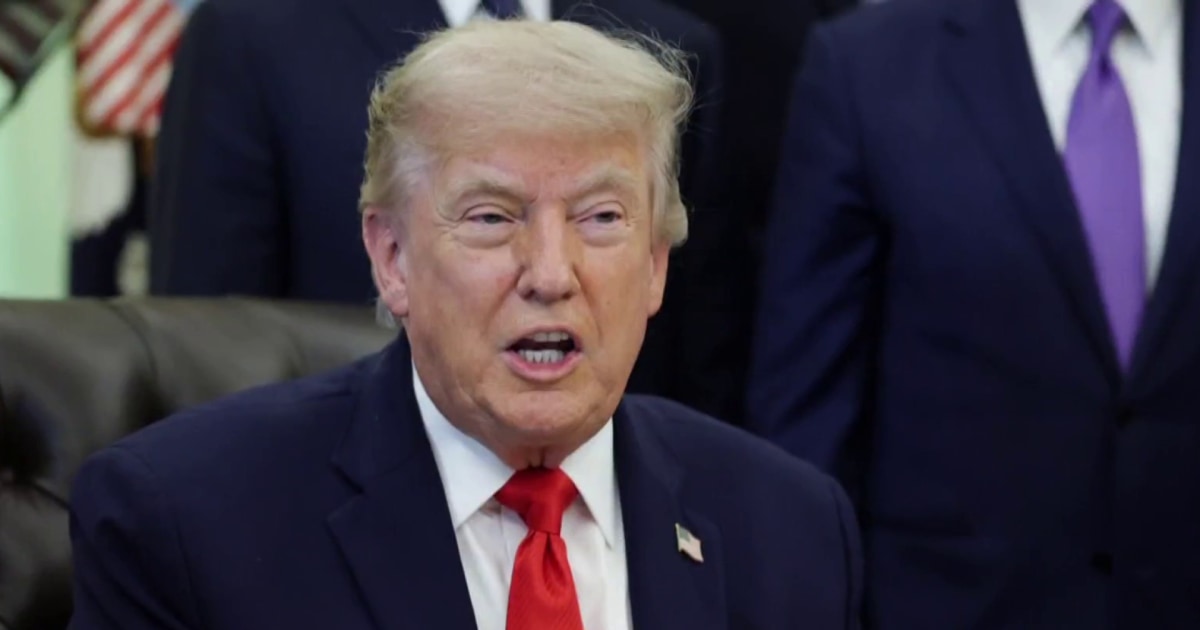
Photo: abcnews.com
The push for a resolution reached a fever pitch on Saturday, with President Donald Trump announcing via Truth Social that a deal is set for signature on Sunday—a date that coincides with his 80th birthday, according to Arab News Japan. Trump asserted that the agreement would end the war and immediately restore access to the Strait of Hormuz.
Pakistan, acting as the primary mediator, has signaled that the finish line is in sight. Prime Minister Shehbaz Sharif stated on X that a deal was closer “than ever before” and predicted that finalization would occur within 24 hours.
The logistics of the signing are unconventional. According to The Hindu, Prime Minister Sharif noted that the agreement will be signed electronically, with technical-level talks expected to follow next week.
Tehran, however, has maintained a more cautious posture. Esmaeil Baqaei, the spokesperson for Iran’s Ministry of Foreign Affairs, explicitly contradicted the Sunday timeline during a briefing on Saturday.
“We have to wait for the exact time of signing the memorandum; Although it will not happen tomorrow, the possibility of this happening in the coming days is not ruled out.”Esmaeil Baqaei, Spokesperson of Iran’s Ministry Foreign Affairs
This discrepancy suggests a lingering trust gap. While the U.S. and Pakistan are projecting a definitive victory on the timeline, Iran is hedging its bets, citing “hesitation” on the American side.
Photo: thehindu.com
The most immediate stake in the negotiations is the Strait of Hormuz, a vital artery for global oil and gas shipments. Since the early stages of the war, Iran has blockaded the waterway, demanding that vessels obtain permission from its armed forces and pay tolls to a newly established oversight body.
The U.S. countered this by imposing its own blockade on Iranian ports. This maritime stalemate has repeatedly threatened global markets, and tensions spiked again just hours before the reported deal.
The U.S. military’s Central Command reported that Iran “launched multiple one-way attack drones in an attempt to strike commercial ships transiting the Strait” on Saturday, though it added that “US forces have downed all of them in recent hours.”
For Iran, the Strait is not just a trade route but a strategic weapon. Foreign Minister Abbas Araghchi told state television on Friday that the waterway remains one of Iran’s “main instruments of deterrence.” He warned that “the administration of Strait of Hormuz will no longer be the same as before,” even if a deal is reached.
Trump’s public stance, as reported by Yahoo News, ignores the complexities of Iranian tolls or administrative control, simply stating the strait will be “OPEN TO ALL” immediately upon signing.
Resolving the ‘Nuclear Dust’ Standoff
BREAKING NEWS: U.S.-Iran Peace Deal Expected To Be Signed Sunday, Trump Says
The fate of Iran’s highly enriched uranium—referred to by Trump as “Nuclear Dust”—remains the most volatile point of contention. This stockpile was believed to have been buried during U.S. strikes in a previous short-lived conflict last year.
There is a fundamental disagreement on how to neutralize this material. Minister Araghchi has insisted that the only viable solution “is to dilute it inside Iran.”
President Trump has rejected the idea of leaving the material in Iranian hands. He argued that his current approach is the “exact opposite” of the 2015 nuclear agreement, which he characterized as an “easy road to a nuclear weapon.”
“We will go in and get the Nuclear Dust [highly enriched uranium]… and downblend and destroy it, whether in Iran, or the United States.”President Donald Trump
This “removal” strategy suggests a level of U.S. intervention that could either be a prerequisite for the deal or a secondary phase to be handled once the ceasefire is stable.
The ‘Islamabad Memorandum’ and Conflicting Terms
Photo: yahoo.com
The proposed framework, dubbed the “Islamabad Memorandum” by Iranian officials, aims to end a war that began on February 28. According to NBC News, the agreement focuses on a phased de-escalation and the lifting of the U.S. naval blockade.
However, the two sides are broadcasting contradictory messages regarding the financial terms of the peace. Minister Araghchi claimed that Iran’s frozen assets would be released upon the signing of the deal. President Trump has flatly denied this, stating that no funds would be provided to Tehran.
The divergence in claims can be summarized across these key friction points:
Issue
U.S. Position (Trump)
Iranian Position (Araghchi/Baqaei)
Signing Date
Sunday, June 14, 2026
Non-committal; “not tomorrow” (as of Sat)
Hormuz Strait
Open to all immediately
Lifting blockade, but maintaining “deterrence”
Nuclear Material
U.S. will “go in and get” it
Dilute material inside Iran
Frozen Assets
No funds provided
Assets released upon signing
If the electronic signing proceeds today, the world will see a rapid shift in Middle Eastern maritime security. But the lack of consensus on frozen assets and nuclear disposal suggests that while the “Islamabad Memorandum” may stop the fighting, the technical-level talks scheduled for next week will be where the real struggle for leverage begins.