

Germany’s pivot from the collapsed FCAS program to a new domestic sixth-generation fighter initiative could reshape Europe’s defense industry—and leave France and Spain scrambling for relevance.
Germany has abandoned its decade-long effort to co-develop a next-generation fighter jet with France, instead betting on a rapid modernization of its Eurofighter fleet and a new domestic alliance to build a sixth-generation aircraft by 2040. The collapse of the Future Combat Air System (FCAS) project, announced by Chancellor Friedrich Merz and French President Emmanuel Macron in May, has forced Berlin to accelerate plans for a German-led consortium, dubbed “Team Gen 6,” which aims to deliver a homegrown fighter by the end of the decade. Meanwhile, Germany’s air force will rely on upgraded Eurofighters—equipped with advanced radar and drone-swarming capabilities—until at least 2060, ensuring the aircraft remains the backbone of the Luftwaffe for generations.
Why the FCAS Collapse Forced Germany to Go It Alone
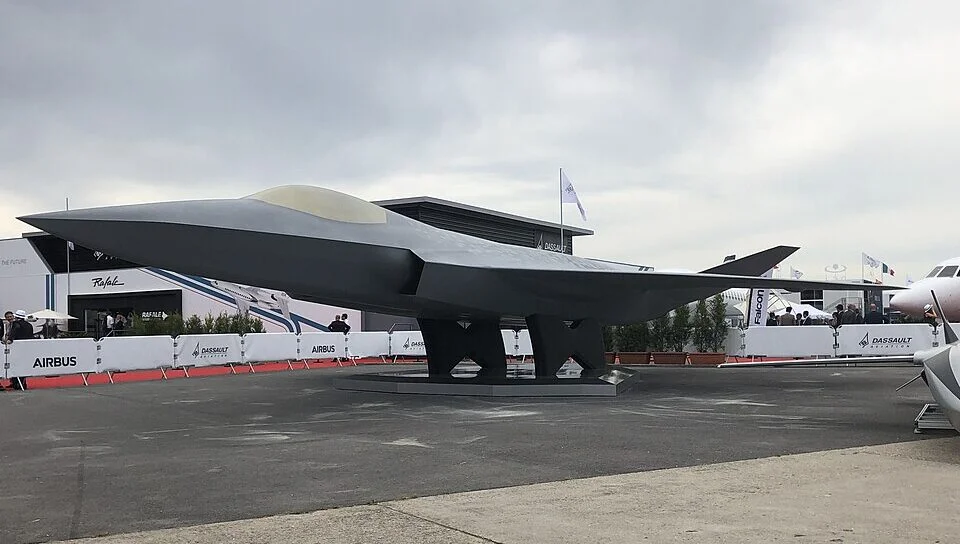
From the start, the FCAS program was doomed by irreconcilable differences between Airbus and Dassault Aviation. France insisted on a carrier-capable jet for its nuclear-powered Rafale replacement, while Germany prioritized a conventional, land-based fighter. These conflicting requirements, alongside deep-seated industrial rivalries, made cooperation impossible. By May 2026, both governments admitted the project was dead, leaving Berlin to scramble for alternatives. According to Ekonomický deník, the failure of FCAS underscores the limits of European defense integration—a lesson that could have broader implications for future EU military projects.
The breakdown was not just technical. Political tensions between Paris and Berlin, exacerbated by disputes over energy policy and defense spending, created an environment where even the most ambitious collaboration became unsustainable. Now, Germany is turning inward, assembling a consortium of eight domestic defense firms—including Airbus Defence and Space, Diehl Defence, Hensoldt, MBDA, and MTU Aero Engines—to develop its own sixth-generation fighter. The group, dubbed “Team Gen 6,” plans to unveil its initiative at the Berlin Air Show this week, signaling a decisive shift away from Franco-German cooperation.
The Eurofighter Gambit: How Germany Will Bridge the Gap Until 2060
While Team Gen 6 works toward a long-term solution, Germany is doubling down on its existing Eurofighter fleet. The Luftwaffe currently operates 138 active Eurofighters, with plans to phase out the oldest models—33 Tranche 1 jets—by replacing them with 38 new Tranche 4 aircraft. Additionally, Germany has ordered 20 more Eurofighters of the Tranche 5 variant, set to enter service between 2031 and 2034. By 2034, the Luftwaffe’s fleet will expand to 163 Eurofighters, all equipped with cutting-edge AESA radar and electronic warfare capabilities, transforming them into networked platforms capable of coordinating with drones and other assets.
This modernization effort is not just about extending the life of the Eurofighter. It’s about redefining its role. The new Tranche 4 and 5 jets will feature advanced sensors, AI-driven decision-making, and the ability to integrate with collaborative combat aircraft (CCA) drones—a shift that aligns with Germany’s broader strategy to dominate the skies through distributed, networked warfare. As Armádní noviny reports, these upgrades will keep the Eurofighter relevant well into the 2060s, ensuring Germany’s air superiority for decades to come.
Team Gen 6: The New German-Led Fighter Consortium
The collapse of FCAS has cleared the path for Team Gen 6, a consortium of German defense firms that aims to develop a sixth-generation fighter jet by 2040. The group, which includes Airbus Defence and Space, Diehl Defence, Hensoldt, MBDA, and MTU Aero Engines, is positioning itself as the lead player in Europe’s next-generation fighter market. However, the consortium’s success hinges on securing international partners—particularly Britain, Sweden, or Spain—to share the financial and technical burden.
Spain, which was a key FCAS partner, now faces a critical decision: will it double down on Eurofighter upgrades or seek a new alliance with Germany? Meanwhile, Britain’s experience with the Eurofighter program—and its ongoing Global Combat Air Programme (GCAP) with Italy and Japan—could make it a natural partner for Team Gen 6. Sweden’s Saab, known for its Gripen fighter, is another potential ally, offering both technology and political balance to the German-led effort.
Yet challenges remain. The FCAS collapse has left a power vacuum in Europe’s defense industry, and France is already positioning itself as a rival hub for sixth-generation technology. Without a unified European approach, the continent risks fragmenting into competing national programs—each vying for influence and market share. For now, Germany’s aggressive push to dominate the fighter jet market could set the tone for the next decade of European defense.
What Happens Next: The Race for Sixth-Generation Supremacy
The stakes could not be higher. A successful German-led sixth-generation fighter would not only secure Berlin’s air dominance but also position Europe as a competitor to the U.S. and China in the global arms market. However, the path forward is fraught with uncertainty. Team Gen 6 must navigate political tensions, secure funding, and deliver on ambitious timelines—all while France and other EU members pursue their own visions for next-generation warfare.
For Spain and Italy, the FCAS collapse is a wake-up call. Both nations must decide whether to align with Germany’s new initiative or pursue alternative partnerships. Meanwhile, the Eurofighter’s continued modernization—with its focus on networked capabilities and drone integration—could serve as a blueprint for how legacy systems can be future-proofed in an era of rapid technological change.
One thing is clear: Europe’s defense industry is at a crossroads. The failure of FCAS has exposed deep divisions, but it has also created an opportunity for Germany to take the lead. Whether this initiative succeeds will determine not just the future of European airpower, but the continent’s ability to compete in an increasingly multipolar world.
For now, the Eurofighter remains Germany’s best bet—until Team Gen 6 delivers its promised sixth-generation marvel. The question is no longer if Europe can build a next-gen fighter, but who will lead the charge.
Find more reporting in our World section.
