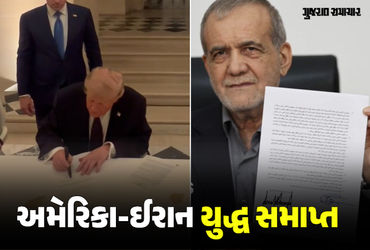
U.S. President Donald Trump and Iranian President Masoud Pezeshkian signed a Memorandum of Understanding (MoU) on Wednesday, June 17, 2026, to end a four-month conflict. The agreement, which takes immediate effect, establishes a ceasefire and initiates the phased reopening of the Strait of Hormuz to stabilize global oil trade.
The diplomatic theater for the finalization of the deal shifted to France, where President Trump signed a hard copy of the agreement during a dinner with President Emmanuel Macron at the Palace of Versailles. According to Gujarat Samachar, copies of the signed document have already been dispatched to Iran and the various nations that mediated the negotiations.
This formal signing follows an earlier digital agreement reached on Sunday between U.S. Vice President JD Vance and Iran’s Parliament Speaker Mohammad Baqer Ghalibaf. While a meeting between the two nations’ delegations remains scheduled for Friday in Geneva, Iranian officials indicated the session is not intended for further signing, as the digital and hard-copy executions have already rendered a face-to-face signing ceremony unnecessary.
Reopening the Strait of Hormuz and Oil Access
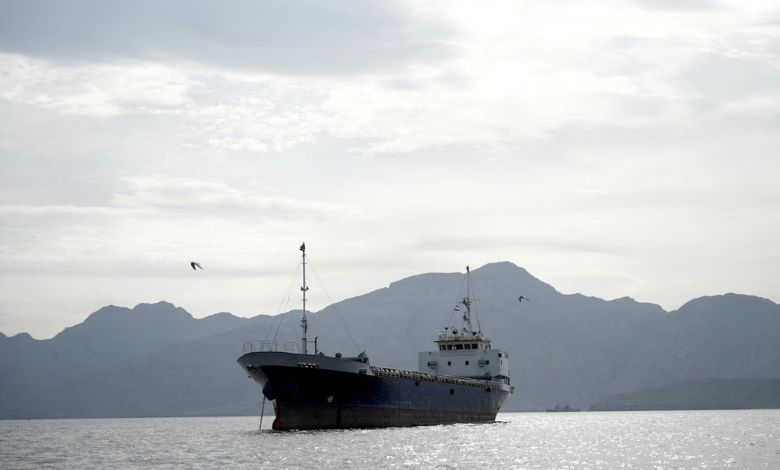
A central pillar of the MoU is the restoration of maritime traffic through the Strait of Hormuz, one of the world’s most critical chokepoints for energy exports. As reported by Mumbai Samachar, the route is reopening in phases. During a G-7 meeting with President Macron, Trump confirmed that mine-clearing operations are currently underway.
The administration expects the route to be fully open by Friday, though officials warned that it may take at least two weeks for shipping traffic to return to normal levels. This urgency is driven by significant domestic pressure in the U.S., where fuel prices have climbed and energy supplies were disrupted by the conflict.
Tehran, however, is tying its long-term cooperation to specific economic concessions. Ismail Bighai, a spokesperson for Iran’s Foreign Ministry, stated that Tehran must be permitted to sell its crude oil without restrictions related to insurance or transportation, ensuring the country has full access to the resulting revenue.
For more on this story, see US-Iran deal: Officials reveal details of agreement as Trump says it will be signed ‘shortly.
The Trump-Netanyahu Rift and the Lebanon Variable
While the U.S. and Iran have reached a truce, the agreement has exposed a widening strategic divide between Washington and Jerusalem. According to Sandesh, President Trump and Israeli Prime Minister Benjamin Netanyahu are locked in a clash over the scale of the conflict; Trump seeks a rapid exit to satisfy domestic political needs, while Netanyahu favors a prolonged campaign to permanently weaken Iran and its proxies.

Tensions peaked when Israel launched an attack on Beirut, the capital of Lebanon, despite explicit warnings from Trump. This escalation prompted Iran to fire ballistic missiles at Israel, occurring exactly as the Trump administration was conducting sensitive, behind-the-scenes negotiations with Tehran. Reports indicate that Netanyahu was kept in the dark when Trump cancelled a proposed U.S. strike on Iran after Tehran signaled readiness for a peace draft.
The survival of this peace deal now rests heavily on the situation in Lebanon. While the U.S. and Iran have signed their MoU, the lack of a permanent end to violence in Lebanon remains a volatile variable that could collapse the broader regional truce.
This follows our earlier report, U.S. Completes Iran Strikes, Iran Claims Hormuz Vessel Attacks.
Financial Denials and Nuclear Precedents
The agreement has also been shadowed by conflicting reports regarding financial transfers. Addressing a report from the New York Times claiming the U.S. would provide 28 lakh crore rupees to Iran, Trump denied the claim during a visit to France. As noted by Gujarati Mid-day, Trump stated that the U.S. is not making any financial investments in Iran currently, though he left the door open for future investment.
Questions regarding the legitimacy of the deal have also surfaced because Iran’s Supreme Leader, Mojtaba Khamenei, did not sign the document. U.S. officials dismissed this concern, citing the 2015 nuclear deal as precedent, noting that the Supreme Leader typically does not sign such agreements.
If I had not supported Israel after taking office, its existence would not be here today.
Donald Trump, via Gujarati Mid-dayTrump’s rhetoric has remained aggressive toward both former U.S. administrations and current Israeli leadership. He claimed that former President Obama was aligned with Iran and asserted that Israel would have been destroyed long ago if not for his intervention.
Read also: Iranian hardliners in vociferous push to reject proposed peace deal with US.
Timeline of the Conflict and Resolution
The current peace agreement ends a destructive cycle of violence that began in February 2026.
- February 2026: Joint U.S.-Israel attacks on Iran trigger a wide-scale war, resulting in thousands of deaths.
- Early June 2026: U.S. political pressure mounts due to rising fuel prices and upcoming elections.
- Sunday, June 14, 2026: JD Vance and Mohammad Baqer Ghalibaf sign the MoU electronically.
- Wednesday, June 17, 2026: President Trump signs the hard copy at the Palace of Versailles; President Pezeshkian signs the agreement.
- Friday, June 19, 2026 (Expected): Formal signing ceremony and the projected full opening of the Strait of Hormuz.
The immediate future depends on the transparency of the deal’s details, which officials say will be made public within 24 to 48 hours of the formal ceremony. For now, the focus remains on the physical clearance of the Strait of Hormuz and whether the fragile ceasefire can withstand the ongoing friction between the U.S. and Israel over Lebanese sovereignty.
Find more reporting in our World section.