The Lâm Đồng Provincial People’s Committee has established a review council to propose canceling the national scenic spot ranking of GouGah Waterfall in Đức Trọng. This move follows severe landscape degradation caused by the Đại Ninh hydroelectric project, which has rendered the site’s original ecological and aesthetic values nearly impossible to restore.
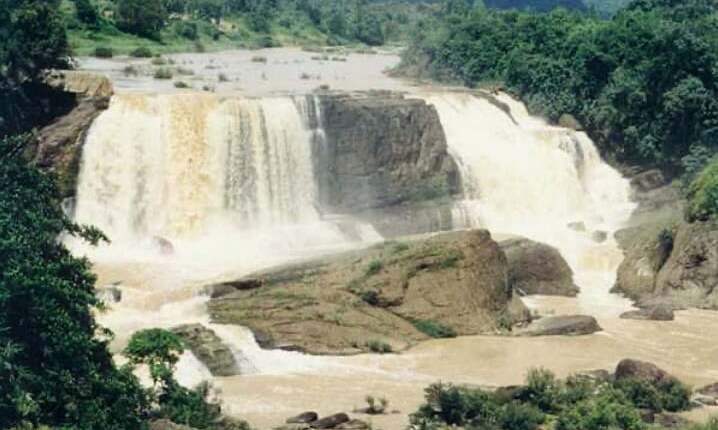
Located approximately 900 meters from National Highway 20 in Đức Trọng, GouGah Waterfall was once a defining natural landmark of the South Central Highlands. In 2000, the Ministry of Culture and Information—now the Ministry of Culture, Sports and Tourism—officially designated the site as a national scenic spot, protecting an area of more than 129 hectares.
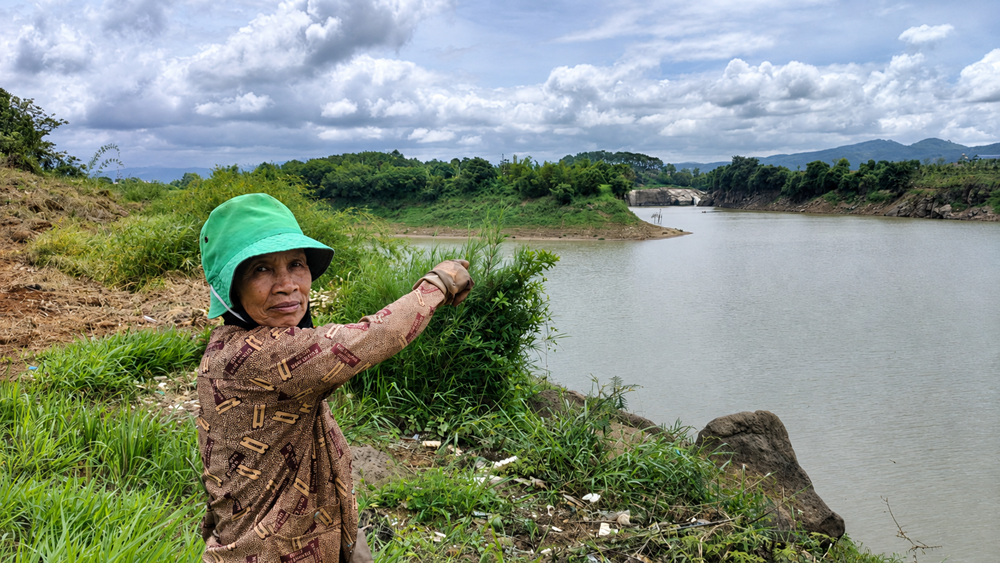
However, according to reporting from VnExpress, the landscape began to decline sharply after the Đại Ninh hydroelectric project began impounding water in 2008. The resulting reservoir flooded large portions of the scenic area and disrupted the waterfall’s natural flow and structure.
The Role of the Đại Ninh Hydroelectric Project
The transformation of GouGah is a direct consequence of the reservoir’s fluctuating water levels. The waterfall, which originates from the upper reaches of the Đa Nhim River, now exists in a state of seasonal instability.
Rainy Season: Rising reservoir levels submerge approximately two-thirds of the waterfall, sometimes making the flow entirely unrecognizable.
Dry Season: Low water levels leave the falls depleted, with the riverbed often overtaken by weeds and duckweed.
While the hydroelectric project is the primary driver of the degradation, local officials note that climate change and natural erosion and sedimentation have further altered the region’s topography.
The environmental cost was high despite early attempts at mitigation. Ba Van Hoa reports that before the Đại Ninh dam was constructed, stakeholders consulted experts and researchers to assess the potential impact on the national landmark. Despite these evaluations, the current deformation of the site is described as especially serious, raising critical questions about the efficacy of impact assessments when balancing economic development against heritage conservation.
Vanishing Features of a Former National Landmark
Photo: baovanhoa.vn
The physical reality of the site today bears little resemblance to the “majestic” waterfall that once attracted large numbers of domestic and international tourists to the southern gateway of Đà Lạt.
“My family has lived here since before the liberation. In the past, this waterfall was very high, probably more than 30 meters. The water fell from a great height with a loud roar; you could hear it from several kilometers away. Children like us back then used to go to the waterfall to play, and villagers often came here to bathe and collect water for use. But now…”
Kon Sa Ka Iu, 76-year-old K’Ho ethnic resident, via Ba Van Hoa
Current observations confirm that while some basalt rock cliffs remain visible and a small portion of the flow—roughly 10 meters high—still descends during low-water periods, the original scale is gone. The booming roar that once echoed through the forest has been replaced by a quiet, fragmented stream surrounded by a vast reservoir.
Legal Framework for the Ranking Cancellation
The proposal to strip GouGah of its national status is not merely a reaction to aesthetic loss but a legal necessity. The UBND of Đức Trọng commune has stated that restoring the original elements that constituted the site’s value is virtually impossible.
Under the provisions of the Cultural Heritage Law 2024, the local government is seeking the authority to cancel the ranking. The process involves a scientific review by the provincial council before the final decision is submitted to the Ministry of Culture, Sports and Tourism.
This administrative move follows years of failed attempts to monetize the site. Multiple investors were previously attracted to develop eco-tourism projects at the waterfall, but these ventures failed to meet expectations due to the degraded state of the landscape.
The case of GouGah Waterfall serves as a stark example of “heritage erasure” via infrastructure. When a site’s primary value is its natural flow and raw power, the introduction of a dam does not just alter the environment—it deletes the very characteristic that earned the site its national recognition. For the residents of Đức Trọng, the loss is both cultural and nostalgic, leaving behind a name and a few basalt cliffs where a national landmark once stood.