Researchers at the 2026 European Geosciences Union and University College London are warning that escalating rocket launches and satellite megaconstellations are polluting Earth’s upper atmosphere with black carbon and exotic metals. These developments, coupled with catastrophic launch failures, have prompted urgent calls for international regulations to prevent irreversible environmental harm.
Black Carbon and the 2029 Pollution Projection
The scale of the modern space race has fundamentally altered the chemistry of the upper atmosphere. For decades, rocket launches were rare enough that their environmental footprint was negligible. However, the proliferation of satellite “megaconstellations” — vast networks of internet satellites launched in rapid succession — has turned the stratosphere into what ZME Science reports is an accidental climate experiment.
A study led by researchers at University College London (UCL) highlights a specific and potent threat: black carbon, or soot. Unlike surface-level pollution that is eventually washed away by rain, rocket soot is injected directly into the upper atmosphere where air moves slowly. These particles can linger for years, making them significantly more impactful than ground-based emissions.
Climate Potency: Rocket soot can be about 540 times more effective at altering the climate than soot emitted near the surface.
Projected Impact: By 2029, megaconstellations could account for 42% of the total climate impact from space-sector pollution.
Thermal Paradox: This pollution can slightly cool Earth’s surface by blocking sunlight while simultaneously warming the upper atmosphere.
“Rocket launches are a unique source of pollution,” said lead author Connor Barker of UCL Geography, noting that they inject chemicals into one of Earth’s last relatively pristine environments.
Eloise Marais, a professor at UCL Geography, describes this phenomenon as a “small-scale, unregulated geoengineering experiment that could have many unintended and serious environmental consequences.” While the current atmospheric impact remains small, Marais warns that the window to act before the damage becomes irreversible is closing.
Exotic Metals and the Vienna Warnings
Photo: ZME Science
The concern extends beyond soot to the very materials used to build spacecraft. At the 2026 European Geosciences Union held in Vienna, Austria, researchers raised alarms about the intrusion of exotic materials into the atmosphere as satellites and hardware re-enter and burn up. As SpaceNews reported, the lack of transparency from commercial space companies is hindering the ability of scientists to quantify this damage.
Commercial entities are often reluctant to disclose the specific alloys and chemicals used in fabrication, citing competitive secrets and the risk of intellectual property theft by foreign adversaries. This secrecy creates a blind spot for atmospheric chemists trying to determine how these metals interact with the ozone layer and other stratospheric processes.
To bridge this gap, several high-tech monitoring projects are underway:
Laser Scanning: The Leibniz Institute of Atmospheric Physics is using a three-channel laser to scan the upper atmosphere for space debris metals.
In-Orbit Mass Spectrometry: Researchers are proposing the use of spectrometers to measure tiny particles that serve as tracers for larger debris.
CAIRT Mission: ESA specialists have developed the Changing-Atmosphere Infra-Red Tomography concept to provide global observational constraints on aluminum oxide aerosols.
Debris and Habitat Destruction at Boca Chica
Are rocket launches bad for the Earth's climate?
While atmospheric chemistry is a long-term threat, the immediate physical cost of the space race is often seen in the wreckage of failed launches. The environmental toll is most visible in sensitive coastal ecosystems, where the boundary between cutting-edge engineering and ecological disaster is thin.
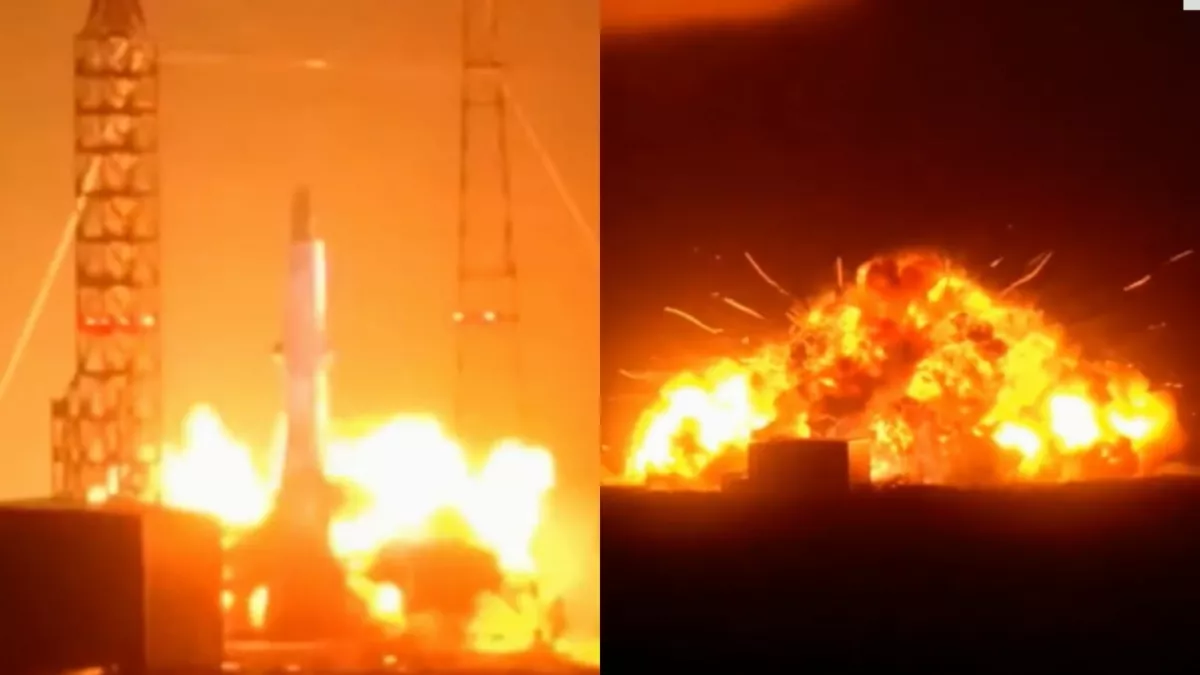
On 20 April 2023, SpaceX’s Starship—the most powerful rocket ever built—suffered a failure just under four minutes into its flight. Engineers termed the event a “rapid unscheduled disassembly,” but the ground reality was far more destructive. The blast excavated a crater beneath the launchpad and propelled concrete, metal, and soil fragments up to 10 kilometers away.
Boca Chica, Texas, is adjacent to wildlife refuge areas and state parks hosting protected species. The fallout from the Starship explosion left conservation areas littered with debris and ash-like residue over nearby communities, leading the US Fish and Wildlife Service to document significant environmental damage.
“The amount of environmental destruction they cause with the debris, and the potential for fires, air and water pollution – we would like to see more security and testing before we’re launching spaceships near protected areas.”Sarah Gaines Barmeyer, deputy vice president of conservation programmes at the National Parks Conservation Association (NPCA)
This is not an isolated incident. A Blue Origin launch failure in May 2026 similarly damaged launch infrastructure and nearby buildings, reigniting the debate over whether heavy rockets should be launched in proximity to sensitive habitats. In the case of Starship, Elon Musk later admitted that a “massive water-cooled steel plate” intended to protect the pad had not been ready in time for the 2023 launch.
The Regulatory Vacuum in Low Earth Orbit
Photo: SpaceNews
The recurring theme across these failures and atmospheric shifts is a systemic lack of oversight. Experts are increasingly describing the current state of space operations as an unsustainable “Wild West” approach.
Because space is an international domain, no single national government has the authority to enforce comprehensive environmental standards. This creates a loophole where commercial and government actors can prioritize speed and cost over sustainability.
“Countries seem empowered to do whatever they want to do. Who is going to control and regulate in this international environment that we have evolved into?”Jack Burns, associate director of the Colorado Space Policy Center
The stakes are not merely ecological but operational. Daniel Baker, Director of the Colorado Space Policy Center, warns that the absence of international regulations increases the risk of “rogue players” or non-government entities cutting corners, which could lead to larger, more catastrophic problems in low Earth orbit. Baker emphasizes that this is a “worldwide problem,” as the pollutants injected into the upper atmosphere do not respect national borders.
As the industry moves toward May 2026 and beyond, the tension between commercial ambition and planetary health is reaching a breaking point. The shift from rare, government-led missions to frequent, commercial megaconstellations has outpaced the legal frameworks designed to protect the Earth. Without a transition from voluntary guidelines to binding international law, the upper atmosphere may become a permanent monument to the externalities of the new space race.