
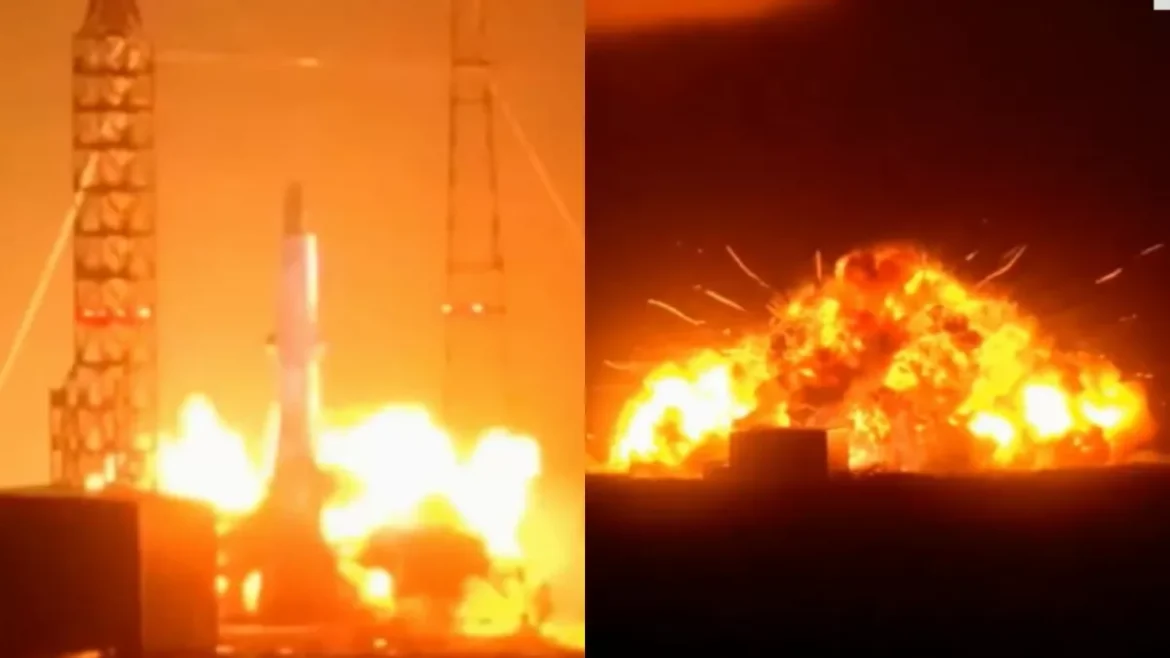
Researchers at the 2026 European Geosciences Union and University College London are warning that escalating rocket launches and satellite megaconstellations are polluting Earth’s upper atmosphere with black carbon and exotic metals. These developments, coupled with catastrophic launch failures, have prompted urgent calls for international regulations to prevent irreversible environmental harm.
Black Carbon and the 2029 Pollution Projection

- Climate Potency: Rocket soot can be about 540 times more effective at altering the climate than soot emitted near the surface.
- Projected Impact: By 2029, megaconstellations could account for 42% of the total climate impact from space-sector pollution.
- Thermal Paradox: This pollution can slightly cool Earth’s surface by blocking sunlight while simultaneously warming the upper atmosphere.
Exotic Metals and the Vienna Warnings

- Laser Scanning: The Leibniz Institute of Atmospheric Physics is using a three-channel laser to scan the upper atmosphere for space debris metals.
- In-Orbit Mass Spectrometry: Researchers are proposing the use of spectrometers to measure tiny particles that serve as tracers for larger debris.
- CAIRT Mission: ESA specialists have developed the Changing-Atmosphere Infra-Red Tomography concept to provide global observational constraints on aluminum oxide aerosols.
Debris and Habitat Destruction at Boca Chica
The Regulatory Vacuum in Low Earth Orbit

