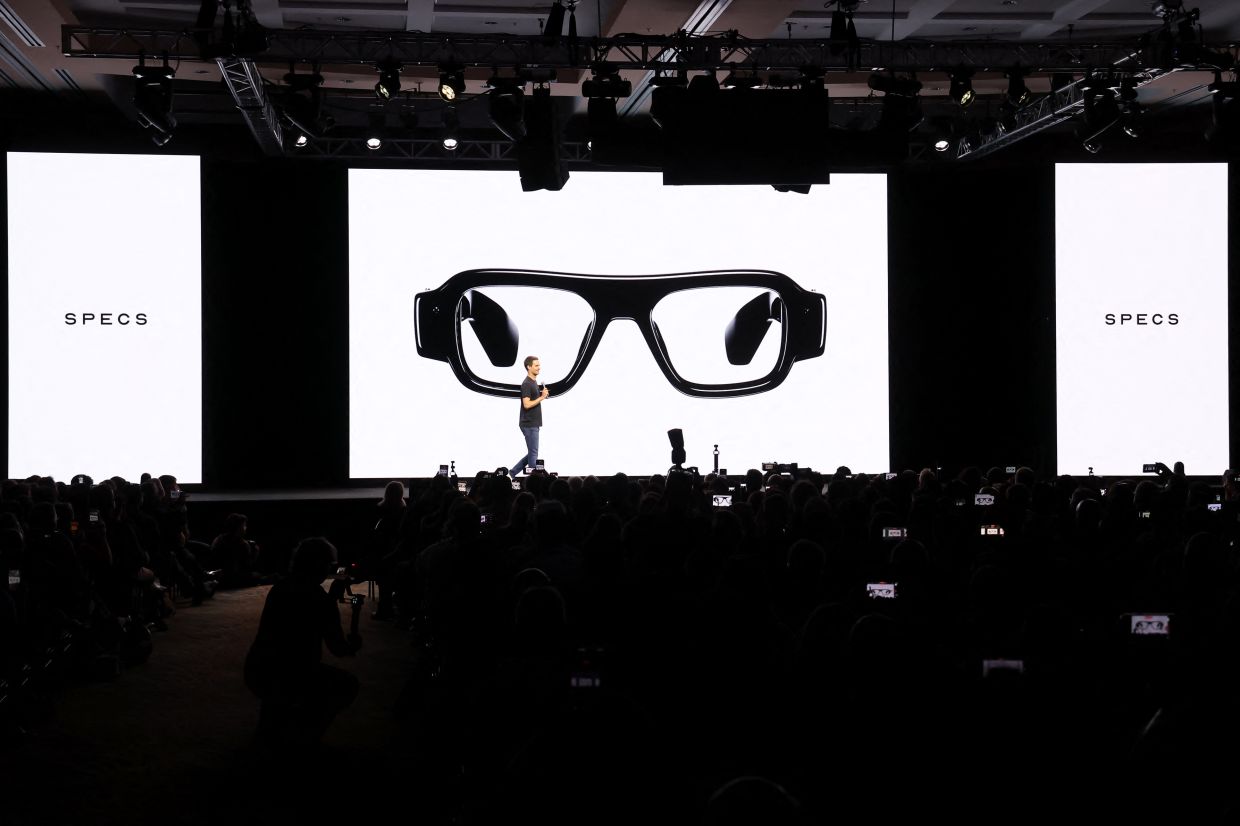
Snap launched its Specs augmented reality glasses on Tuesday at the Augmented World Expo in Long Beach, California. Priced at US$2,195, the standalone devices aim to move computing beyond smartphones. The glasses will be available this fall in the United States, the United Kingdom, and France.
How Specs Differ From Meta and Apple Hardware
Photo: Mashable
Snap is attempting to carve out a middle ground in the wearable market. According to The Star, CEO Evan Spiegel views competing products from Meta and Google as “phone accessory,” tools that simply project a flat screen in front of the wearer’s eye. Spiegel described this experience as feeling like a “tiny little phone screen stuck to your eye everywhere you look.”
Specs take a different technical approach by mapping the surrounding world to project three-dimensional digital objects that interact with the real environment. Unlike many AR products, Mashable reports that Specs do not require a computing puck or USB-C tether, utilizing a proprietary liquid-crystal-on-silicon display.
The hardware also diverges from Meta’s current offerings in display architecture. While the Meta Ray-Ban Display uses a single display, Yahoo Finance notes that Specs feature displays in both lenses and operate as a self-contained computing device without needing an external controller like the Meta Neural Band.
Spiegel contrasted this with high-end mixed-reality headsets, which he called “very capable and immersive, but … cumbersome to wear and shut you out of the world.”
The Pricing Strategy and Market Positioning
Photo: Yahoo Finance
The US$2,195 price tag—which requires a $200 refundable deposit—places Specs in a precarious position between budget smart glasses and luxury headsets. This is a massive leap from Snap’s 2016 camera-only Spectacles, which cost $130 and failed to achieve mass-market success.
Snap is betting that consumers are sufficiently fatigued by smartphone screens to justify a $2,000+ investment. CNBC reports that Spiegel believes users are questioning their relationship with screens due to factors like neck pain from staring down at phones and a feeling of missing everyday moments.
Spiegel’s Use Cases for a Post-Smartphone World
SpaceX Takes Off, Cursor's Wild Rise, Snap Bets on AR Glasses | Diet TBPN
The rollout will begin with the developer community, leveraging the 450,000 people already using Snap’s AR tools. Spiegel intends to expand to early adopters who find value in three specific “buckets” of utility:
Daily Utility: Heads-up directions, real-time translation, and a built-in virtual tape measure for work.
Private Display: A large virtual screen for streaming content or working on airplanes and the go.
Shared Computing: Collaborative experiences where multiple users view and interact with the same 3D model or game.
“Almost 20 years since the launch of the iPhone, people are ready to think about computing differently,”
Evan Spiegel, CEO of Snap
By focusing on shared experiences, Snap hopes to move computing from a “single player” activity to a social one. This strategy attempts to capitalize on a growing trend; IDC data cited by Yahoo Finance shows that shipments of smart glasses without displays grew 167% year-over-year in the first quarter, while those with displays grew 86%.
Financial Pressure and the Irenic Capital Conflict
The launch arrives during a period of severe financial instability for Snap. The company has been in the red since its 2017 stock market debut and cut approximately 1,000 jobs—16% of its workforce—in April.
The Specs project is a point of contention with shareholders. Irenic Capital Management, an activist fund, has demanded that the operation be shut down or sold off, claiming it has absorbed more than US$3.5bil. In an apparent move to isolate the project’s risk and development, Snap created a subsidiary called Specs Inc. in January.
Wall Street’s immediate reaction was lukewarm. Snap shares fell roughly 4% following the announcement. This decline reflects a mix of concerns over the device’s “intimidating” price and social media criticism regarding the physical size of the frames.
“We’ve been really clear with investors since we founded the company that we’re going to manage the business for the long term and really in service of our community and our customers,”
Evan Spiegel, CEO of Snap
While Meta and Google can subsidize hardware losses with dominant ad businesses, Snap lacks that same cushion. The success of Specs now depends on whether developers can create “killer apps” that make a $2,195 pair of glasses a necessity rather than a luxury toy.