
Researchers in Berlin and Amsterdam have found that predators are adapting their hunting strategies to exploit gaps in the collective memory of prey, reshaping the arms race between species as of May 12, 2026.
Predators Learn from the Shoal’s Memory
In the wild, the survival of prey often hinges on the ability to recognize and react to the presence of predators. New research from the Cluster of Excellence Science of Intelligence (SCIoI) and the Leibniz Institute of Freshwater Ecology and Inland Fisheries (IGB) in Berlin reveals that predators are now adapting their hunting strategies based on the collective memory of their prey. By analyzing nearly 800 attacks by three bird species—Amazon kingfishers, green kingfishers, and great kiskadees—on sulfur mollies in the wild, scientists have found that predators are learning to avoid triggering the fish’s powerful group defense mechanisms.
The study, published on May 12, 2026, highlights a dynamic arms race: as prey develop better collective escape strategies, predators adjust their tactics to exploit the gaps. For example, when sulfur mollies detect a predator, they form tight, synchronized shoals that make it difficult for birds to single out an individual. However, the research shows that predators are now targeting the edges of these shoals, where fish are less coordinated and more vulnerable.
This adaptive behavior suggests that predators are not only responding to immediate threats but are also incorporating lessons from past encounters, effectively using the shoal’s own memory against it. The findings indicate that the predator-prey relationship is far more fluid than previously understood, with both sides continuously refining their strategies based on the other’s actions.
The Physics of Escape: Reaction Time Overturns the Rules
While predators are often larger and faster, their success rate in capturing prey is surprisingly low—particularly in aquatic environments. A study published in the Proceedings of the National Academy of Sciences (PNAS) by researchers at the University of Amsterdam’s Institute for Biodiversity and Ecosystem Dynamics (IBED) offers a new explanation for this phenomenon. The key factor, according to the research, is not maneuverability but reaction time.
For decades, the turning gambit model has been used to explain how prey escape predators. This model suggests that prey can evade capture by making a sharp, well-timed turn, even if the predator is faster. However, the new study found that prey are generally not maneuverable enough to compensate for their speed disadvantage. Instead, the researchers discovered that the critical factor is the predator’s reaction time—the brief delay between detecting the prey’s evasive move and responding to it.
“It’s this little head start, or benefit of starting to turn earlier, that gives prey enough space to evade,” says Lars Koopmans, a PhD candidate at IBED and lead author of the study. In aquatic environments, where water’s density allows for sharper turns, prey can even slip behind the predator before it realizes what has happened. The study found that predators catch prey in only about 1 in 10 attacks in water, despite their physical advantages.
This insight challenges the long-held assumption that physical performance alone determines the outcome of predator-prey interactions. Instead, the speed of perception and decision-making plays a crucial role. The findings suggest that the arms race between predators and prey is not just about who is faster or more agile, but also about who can anticipate and react more quickly to the other’s movements.
Collective Escape Strategies: The Fountain Effect
When prey form groups, their collective escape strategies can create complex patterns that further complicate the predator’s task. A study published in Communications Biology examines the “fountain effect,” a collective escape maneuver observed in schooling fish such as sardines when attacked by predators like striped marlin. In this phenomenon, the prey split into two subgroups, turning in an arched trajectory around the predator before rejoining, visually resembling a fountain.
The research, which used drone-based observations and agent-based modeling, found that the fountain effect emerges from individual escape rules combined with social interactions. Prey prioritize maximizing their distance from the predator, which creates conflict between the predator’s attack strategies and the prey’s avoidance tactics. This dynamic explains why predators often struggle to capitalize on group attacks, even when targeting the most vulnerable individuals.
The study’s authors note that these collective escape patterns are robust across different attack scenarios, suggesting that prey have evolved simple yet effective decision heuristics to maximize survival in high-risk situations. The findings highlight the importance of considering both individual and social behaviors when studying predator-prey dynamics.
The Broader Implications: Cognitive Evolution and Arms Races
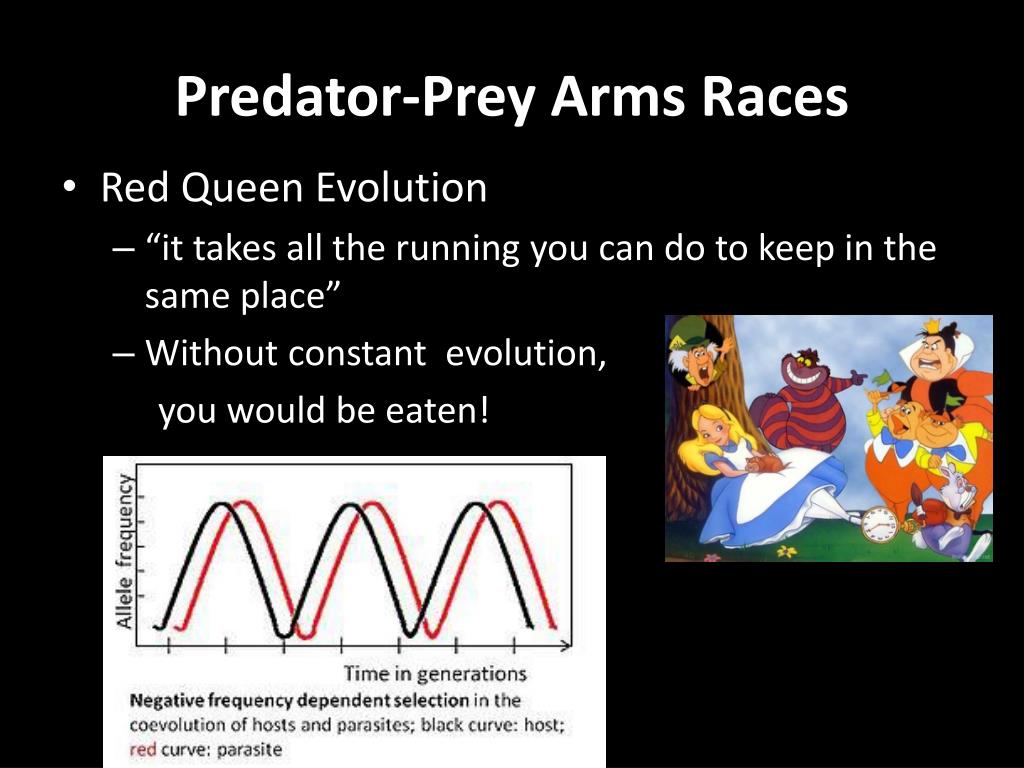
The interplay between predators and prey is not just a matter of physical traits but also of cognitive evolution. A review in Nature Reviews Biodiversity emphasizes that interactions between predators and prey can drive significant cognitive changes in both species. As predators develop more sophisticated hunting strategies, prey must adapt their behaviors to survive, leading to a continuous cycle of innovation and counter-adaptation.
This arms race extends beyond individual encounters. Predators that learn from past interactions and adjust their tactics based on the collective memory of their prey are effectively using the prey’s own social structures against them. Similarly, prey that develop better collective escape strategies force predators to innovate further, creating a feedback loop that shapes the evolutionary trajectory of both species.
The research from Berlin, Amsterdam, and other institutions underscores the complexity of these interactions. It suggests that the traditional focus on physical attributes—such as speed, size, and maneuverability—must be expanded to include cognitive and behavioral adaptations. The arms race between predators and prey is not a static battle but a dynamic, ever-evolving process shaped by memory, learning, and collective intelligence.
What Comes Next: Observing and Modeling Real-World Interactions
While the new studies provide significant insights, many questions remain unanswered. For example, researchers are now filming real predator-prey interactions between fish on coral reefs to determine whether prey can achieve the precise timing required to evade capture. Additionally, further research is needed to understand how predators and prey adapt their strategies over longer periods and across different environments.
The findings also suggest that the principles observed in natural ecosystems may have broader applications. For instance, understanding how collective memory and adaptive strategies shape predator-prey dynamics could inform robotics, artificial intelligence, and even human decision-making in high-stakes scenarios.
As scientists continue to unravel the complexities of this arms race, one thing is clear: the battle between predator and prey is far from over. It is a continuous, evolving dance of adaptation, learning, and survival—one that reminds us of the intricate and often unseen forces shaping the natural world.
