Rotational Discrepancies and the Daily Drift
The fundamental discrepancy in timekeeping between the two planets stems from the difference in rotational velocity. While Earth completes a rotation in approximately 24 hours, Mars takes slightly longer. This 39-minute and 35-second difference means that a Martian day, or sol, is about 2.7% longer than an Earth day.
For crews or robotic missions on the surface, this creates a “drift” effect. If a mission team on Earth attempted to operate on a strict 24-hour schedule, their work window would shift forward by nearly 40 minutes every day. Within a few weeks, the Earth-based team would be attempting to communicate with the rover at midnight Martian time, during the planet’s coldest period when solar-powered assets are inactive.
To combat this, NASA mission controllers use a modified schedule. According to NASA’s Jet Propulsion Laboratory, teams often shift their start times daily or utilize “Mars time” software to align their circadian rhythms with the rover’s daylight hours.
Defining the Martian Coordinate System
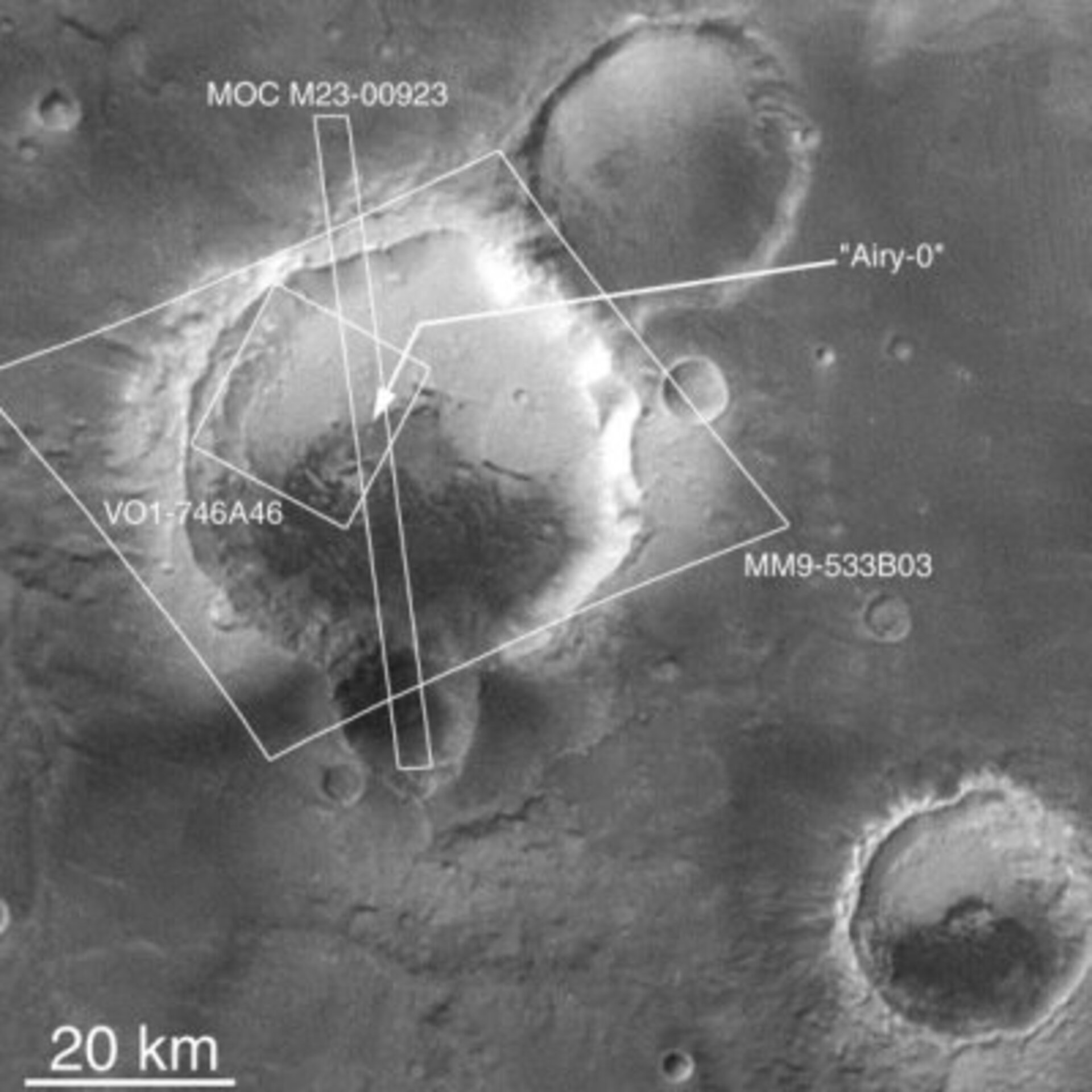
Time cannot be synchronized without a shared starting point. On Earth, the Prime Meridian passes through Greenwich, England. For Mars, the International Astronomical Union (IAU) established the Airy-0 crater as the zero-degree longitude marker.
The Airy-0 crater is a small impact site that serves as the anchor for the Martian coordinate system. By designating this point as the Prime Meridian, scientists can establish a universal Martian time. This allows different landers, such as the Perseverance and Curiosity rovers, to reference the same temporal baseline regardless of their specific landing site.
This system functions similarly to Coordinated Universal Time (UTC) on Earth. When a researcher refers to “Mars Local Time,” they are calculating the solar position relative to the Airy-0 meridian.
Managing Operations via Specialized Chronometry
Synchronizing two worlds requires more than a map; it requires specialized chronometry. NASA utilizes a system of “Sols” to track time on the surface, numbered from the day of landing. For example, a rover’s status report is filed under “Sol 100” rather than a calendar date.
To manage the communication lag and the sol drift, mission controllers use specialized software and clocks. These tools translate Earth-based UTC into Martian Sol time. This ensures that commands sent from Earth arrive when the rover is awake and the sun is at a usable angle for photography or movement.
wp:quote
The difference in day length is small, but it accumulates. Without a synchronized sol-clock, we would lose the ability to coordinate real-time observations with the Martian diurnal cycle.
NASA Jet Propulsion Laboratory Engineer
The communication delay adds another layer of complexity. Depending on the orbital positions of Earth and Mars, a signal takes between 3 and 22 minutes to travel one way. This means “real-time” synchronization is physically impossible; instead, teams rely on “time-stamped” sequencing.
Challenges for Human Colonization and Future Standards
While Sols work for robotic missions, a permanent human colony would require a formal calendar. This presents a significant astronomical challenge because the Martian year is nearly twice as long as Earth’s, lasting 687 Earth days.
One proposed solution is the “Mars Coordinated Time” (MTC) system, which divides the planet into time zones similar to Earth’s. However, the IAU has not formally adopted a civil calendar for human habitation. The primary conflict lies in whether to prioritize the solar day (the sol) or maintain a link to Earth’s 24-hour cycle to prevent psychological distress in colonists.
Medical research into circadian rhythms suggests that humans can adapt to a 24.6-hour day, but the transition is not seamless. According to studies on isolated environments, such as those conducted at the Mars Dune Alpha habitat, the shift in sleep-wake cycles can lead to fatigue and cognitive decline if not managed with artificial lighting.
As space agencies move toward the Artemis-to-Mars pipeline, the need for a standardized “Interplanetary Time Scale” has increased. Current synchronization relies on the Deep Space Network (DSN), a global array of radio antennas that track the precise position and time of spacecraft.
The DSN uses atomic clocks to maintain nanosecond precision, which is necessary for the “delta-DOR” (Delta-Differential One-way Range) technique. This method allows NASA to pinpoint a spacecraft’s location by comparing the arrival time of signals at two different Earth stations.
The next phase of synchronization will likely involve placing atomic clocks directly on the Martian surface. This would eliminate the need to constantly reference Earth’s clocks and allow for a truly independent Martian timekeeping system, reducing the reliance on the 20-minute communication lag.
Find more reporting in our Science section.