
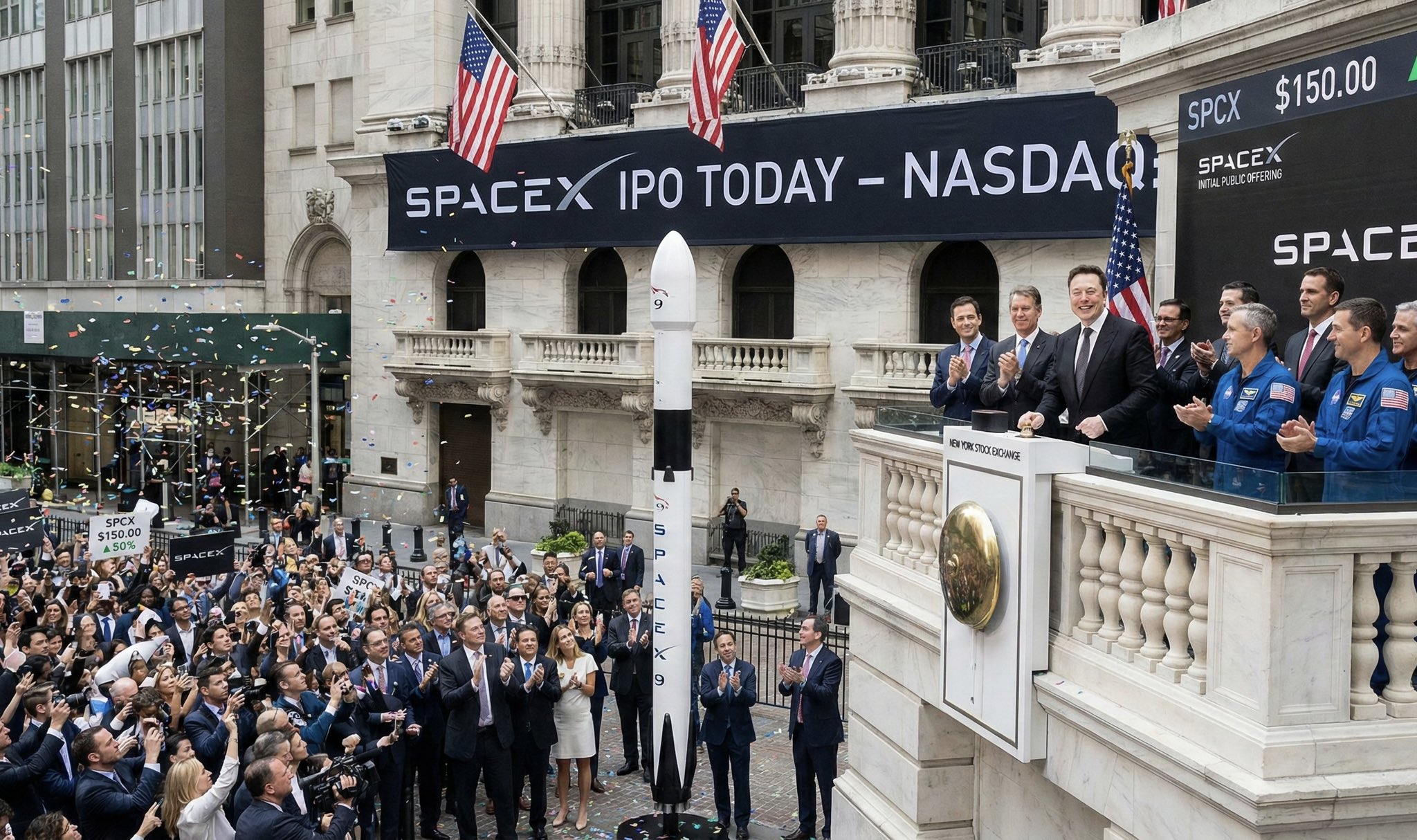
Elon Musk became the world’s first trillionaire on Friday, June 12, 2026, following the initial public offering of SpaceX on the Nasdaq, according to Forbes and Fox Business. The stock debut, trading under the ticker SPCX, pushed Musk’s estimated net worth to $1.1 trillion after the company raised $75 billion in its record-setting IPO.
SpaceX IPO achieves record-breaking $75 billion raise
SpaceX stock began trading on the Nasdaq on Friday, June 12, 2026, under the ticker SPCX, according to Fox Business. The company raised $75 billion in its initial public offering, which Fox Business reported as the largest IPO in history, surpassing the $29 billion Saudi Aramco IPO in 2019. While the company priced the IPO at $135 per share on Thursday, shares rose to $150 at the start of Friday’s trading, according to Forbes.
The jump from the initial offering price to the opening market price reflects the intense appetite for the stock. In capital markets, such a price increase during a debut is often a sign of high demand relative to the number of shares available. The scale of the $75 billion raise also represents a significant test of liquidity on the Nasdaq, as the influx of new shares for a single company is unprecedented in recent history.
Investor demand for the offering was high. Reuters reported that the company attracted more than $250 billion in orders, while Bloomberg News reported that retail investors submitted more than $70 billion in requests for shares, according to Fox Business. This massive gap between the $250 billion in orders and the $75 billion raised indicates that the offering was heavily oversubscribed, meaning demand was more than three times the available supply. The company is expected to allocate at least 20% of the offering to retail investors, per Bloomberg.
Wealth breakdown of the world’s first trillionaire
The SpaceX IPO pushed Elon Musk’s net worth to an estimated $1.1 trillion, according to Forbes and Fox Business. This milestone makes Musk the first person to reach a trillion-dollar valuation in U.S. dollars, according to Wikipedia.
Musk’s wealth is primarily composed of equity rather than liquid cash, a common characteristic of founders of massive technology firms. This means his net worth is directly tied to the market valuation of the companies he leads. As the share price of SpaceX fluctuates on the Nasdaq, Musk’s estimated wealth moves in tandem.
Musk’s fortune is heavily tied to his ownership in SpaceX. According to Forbes, the SpaceX chairman, CEO, and chief technical officer owns 4.8 billion shares valued at $715 billion, along with 350 million stock options worth $50 billion. This provides him with a 38% stake in the company. Fox Business estimates the value of his stake in SpaceX at approximately $690 billion.
For more on this story, see OpenAI files for IPO as AI investment race intensifies.
“Elon Musk’s ascent to a $1 trillion fortune represents a milestone once considered unimaginable, highlighting how rapidly wealth can be created in an increasingly interconnected and technology-driven world,” Matt Durot, Deputy Editor, Wealth at Forbes
Musk’s wealth also includes significant holdings in Tesla. In November 2025, Tesla approved a pay package for Musk worth $1 trillion, to be received over 10 years if specific goals are met, according to Wikipedia. Such performance-based compensation structures link executive wealth to the long-term market capitalization and operational milestones of the corporation.
Starlink revenue and SpaceX market valuation
The valuation of SpaceX reached nearly $2 trillion following the IPO, according to Forbes, while Fox Business reported the company’s value at approximately $1.8 trillion. A significant driver of this growth is Starlink, SpaceX’s satellite internet business. According to the company’s IPO filing, Starlink generated the majority of SpaceX’s $18.67 billion in revenue last year, according to Fox Business.
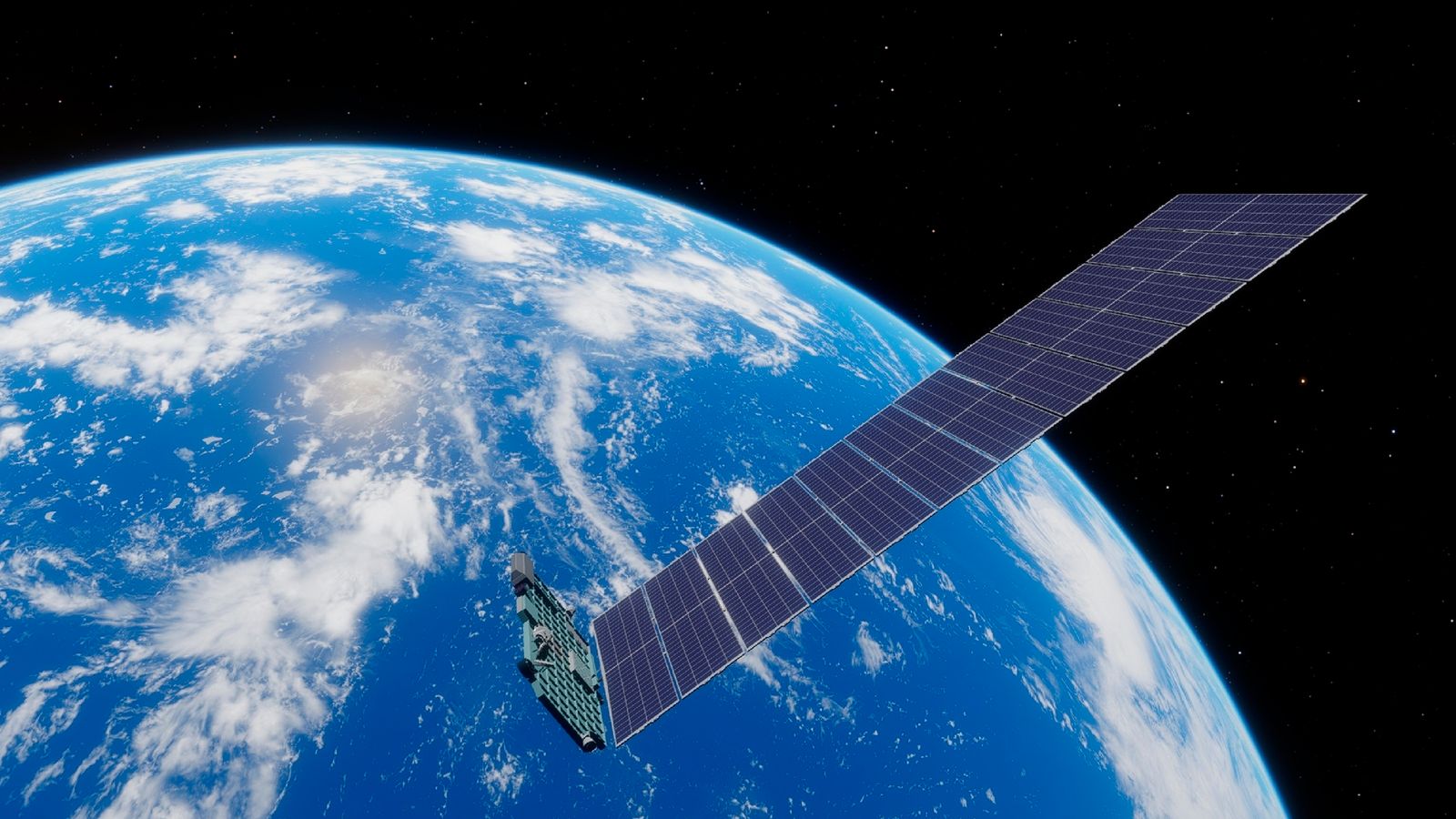
The role of Starlink is critical to the company’s financial profile because it provides a recurring revenue model. While traditional aerospace companies often rely on one-time contracts for rocket launches, Starlink operates through a constellation of satellites in low Earth orbit that provide internet services to customers via monthly subscriptions. This shift from service-based launch contracts to a high-margin, recurring subscription model is a central factor in the company’s multi-trillion-dollar valuation.
SpaceX has become the world’s largest space company, having pioneered reusable rocket technology to lower launch costs, according to Fox Business. By landing and reusing orbital-class rocket boosters, the company has significantly reduced the cost of access to space compared to traditional expendable launch systems. The company also serves as a contractor for NASA and the U.S. government for civil and national security missions. These government contracts often serve as “anchor” customers, providing the foundational demand and steady revenue required to fund further research and development.
Additionally, the company’s subsidiary xAI was established in 2026, according to Wikipedia. The integration of space-based infrastructure, launch capabilities, and artificial intelligence represents the broader technological ecosystem that has underpinned the company’s rapid expansion into the global market.
Find more reporting in our Science section.
