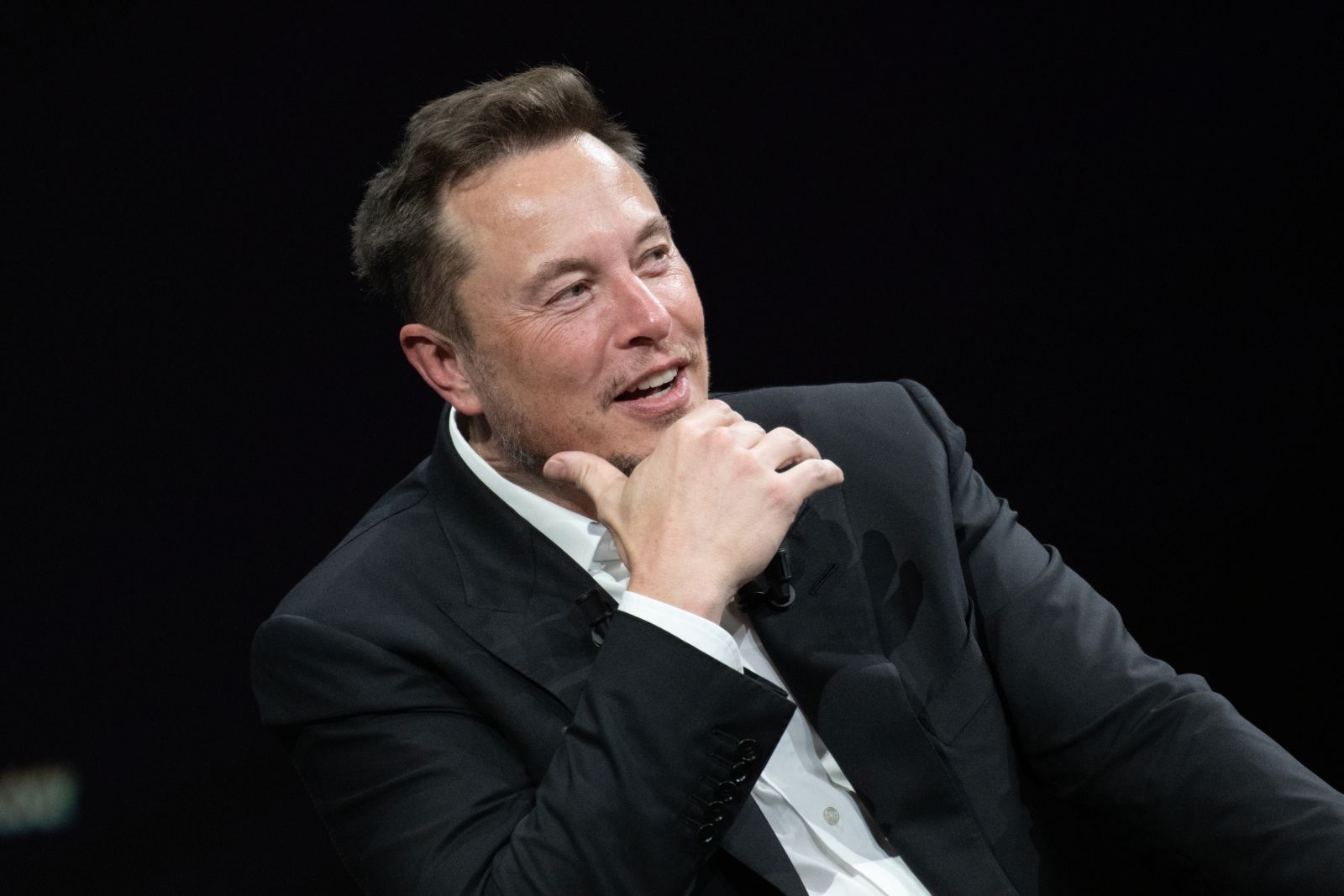
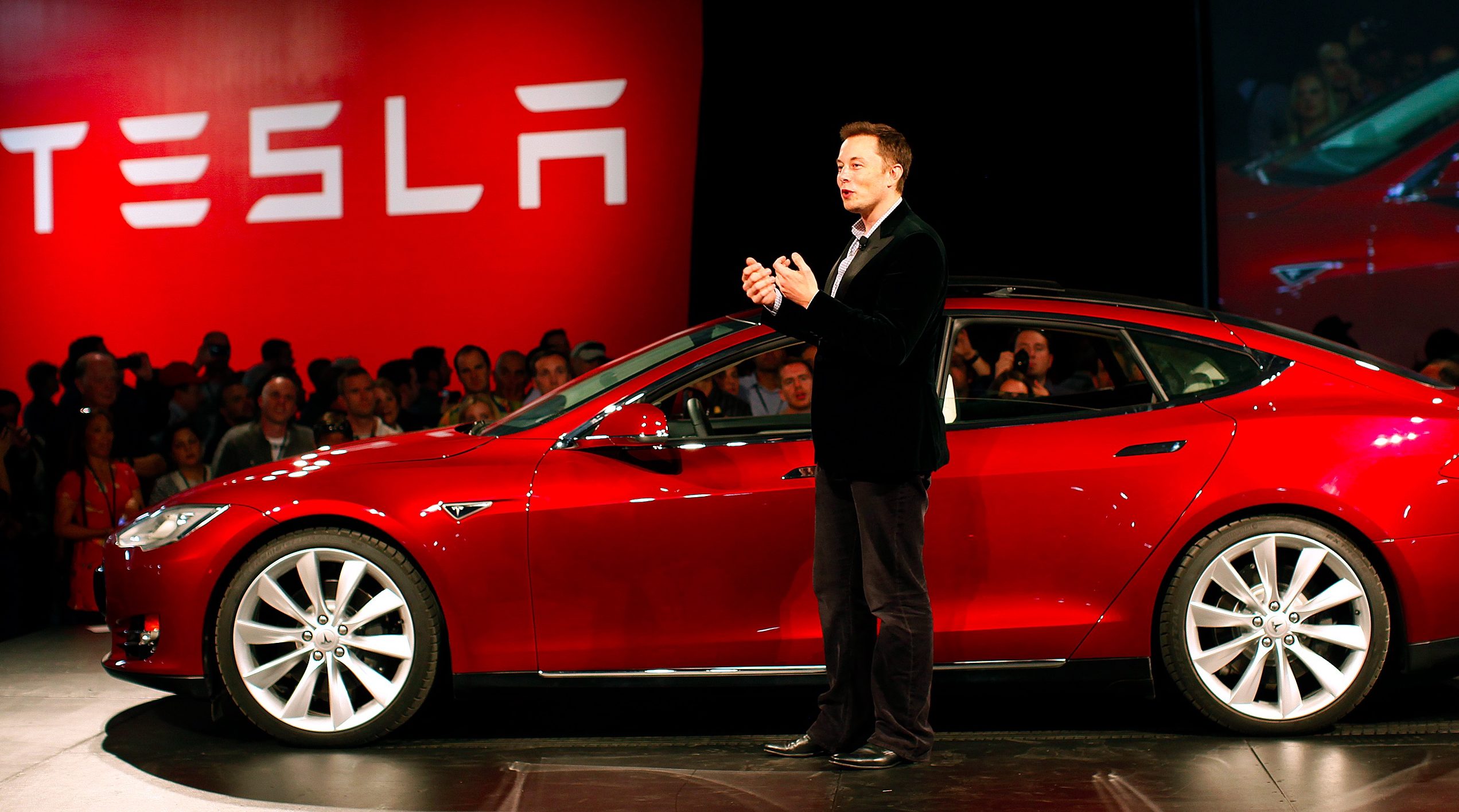
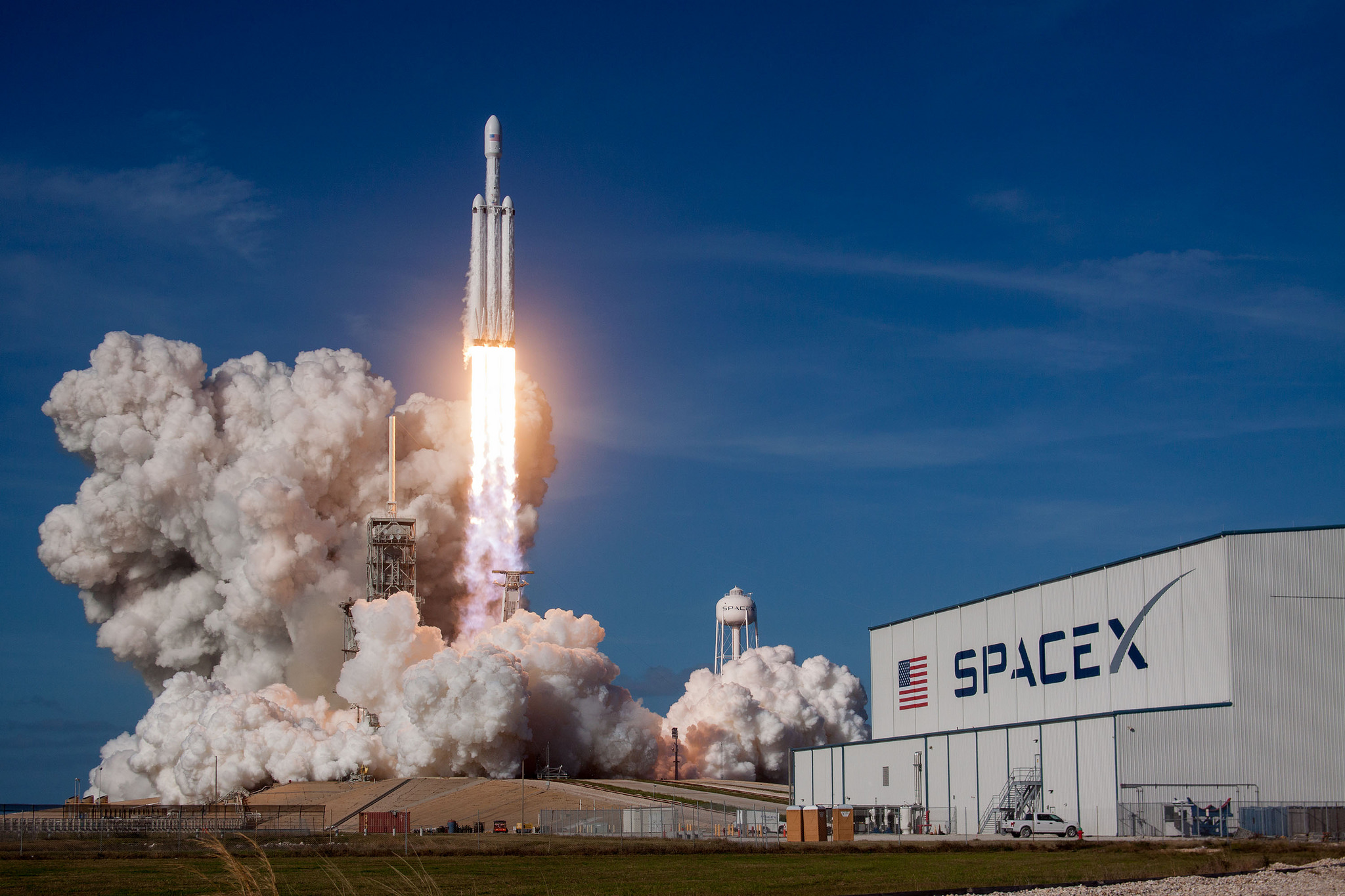
similar in size to next-generation Starlink satellites, according to Space.com. This deployment represents a considerable increase in capacity compared to previous Starship flights, during which the Ship carried between eight and 10 mass simulators. The Flight 12 batch also includes two inspector spacecraft. The success of these deployment capabilities is central to SpaceX’s long-term goals. Beyond building out the Starlink megaconstellation, the company intends to use the Starship system to ferry astronauts to the lunar surface for NASA’s Artemis program and to assist in the establishment of a colony on Mars. ## SpaceX Leadership and Strategic Direction SpaceX was founded in 2002 by Elon Musk, who serves as the company’s CEO and chief engineer. Under his leadership, the company has focused on innovations in reusable rockets and commercial spaceflight. Musk, who holds citizenship in South Africa, Canada, and the United States, has also founded or co-founded several other major ventures, including Tesla, Neuralink, and the Boring Company. In 2026, the company’s artificial intelligence startup, xAI, became a subsidiary of SpaceX. As of May 2026, Forbes estimates Musk’s net worth to be US$788 billion. Musk’s previous professional history includes founding the software company Zip2 in 1995 and the online payment company X.com, which later merged to form PayPal.
SpaceX
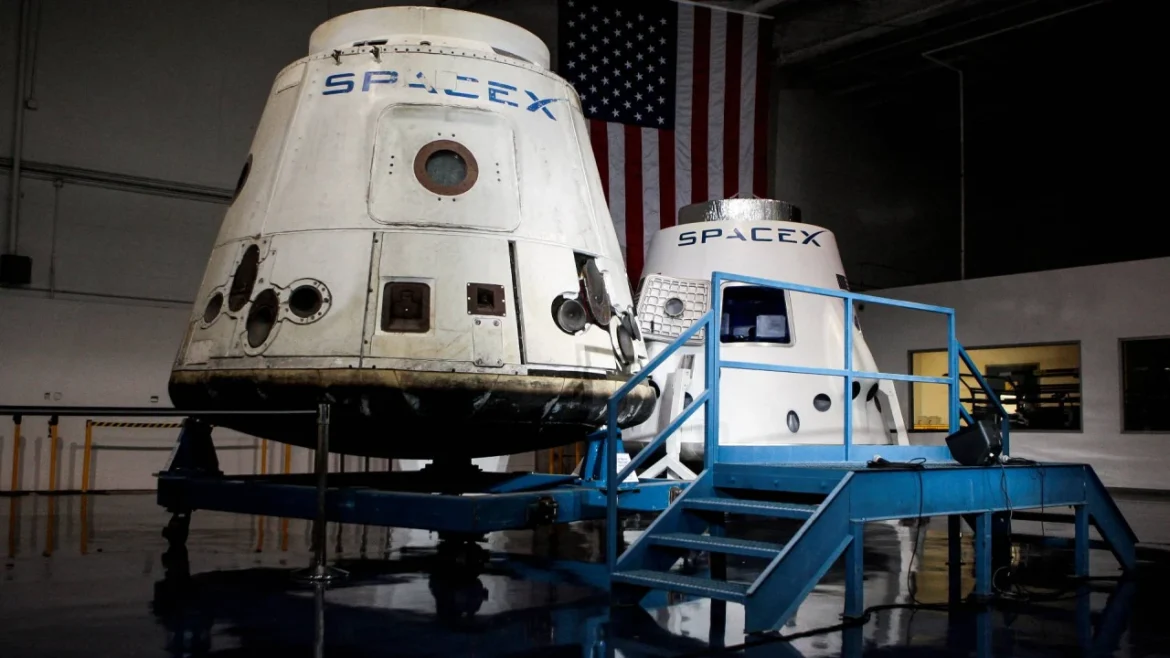
NASA and SpaceX launched a Cargo Dragon spacecraft aboard a Falcon 9 rocket from Cape Canaveral Space Force Station on Friday to resupply the International Space Station. The mission carries critical food, scientific equipment, and replacement parts required for the station’s ongoing operations and upcoming crew rotations.
The launch marks the latest deployment under the Commercial Resupply Services program, a framework through which NASA utilizes private sector launch capabilities to maintain the International Space Station (ISS). This specific mission follows a sequence of successful cargo deliveries that have become a routine component of the station’s logistical cycle.
Technical Execution of the Dragon Resupply Mission
The Falcon 9 rocket performed its ascent as scheduled, successfully delivering the Dragon capsule into a precise orbital trajectory. Following the separation of the spacecraft from the first stage, the Dragon capsule began a series of orbital maneuvers designed to synchronize its path with the ISS. This rendezvous process is a highly automated sequence, relying on GPS-based navigation and proximity sensors to ensure a safe approach.
SpaceX mission controllers monitored the ascent from their headquarters, confirming that all stages of the flight met performance specifications. The Dragon spacecraft, specifically designed for cargo transport, is equipped with autonomous docking technology. This allows the vehicle to attach itself to the station’s docking ports without direct manual intervention from the ISS crew, although the astronauts monitor the procedure closely from the station’s interior.
Once the docking is finalized, the ISS crew will perform a series of pressure checks and seal verifications before opening the hatches. The transition of supplies from the Dragon capsule to the station’s storage modules is a labor-intensive process that typically spans several days. This period is critical for ensuring that the station’s internal inventory is updated and that all sensitive scientific hardware is handled according to microgravity protocols.
Essential Cargo and Laboratory Support
The cargo manifest for this mission includes a diverse array of supplies necessary for both human life support and scientific continuity. Primary shipments include nutritional provisions and water, which are essential for the current crew’s long-term habitation of the station. Beyond basic sustenance, the Dragon capsule carries clothing, hygiene products, and various consumable hardware required for the maintenance of the station’s life support systems.
A significant portion of the payload is dedicated to scientific research. The ISS serves as a unique laboratory for microgravity experiments that cannot be replicated on Earth. This mission carries specialized hardware and biological samples intended for study in an environment free from the effects of heavy gravity. These experiments often focus on fluid physics, material science, and the biological responses of cells to long-term weightlessness.
In addition to scientific payloads, the mission provides critical spare parts for the station’s aging infrastructure. The ISS requires constant maintenance to address the wear and tear caused by the extreme thermal cycles and radiation environments of low Earth orbit. Replacing components such as air filtration units, electrical switches, and plumbing hardware is a continuous requirement to prevent system failures that could jeopardize the station’s operational status.
The Role of Commercial Logistics in Orbital Operations
The reliance on SpaceX for these resupply missions reflects a broader shift in how space agencies manage low Earth orbit logistics. By contracting commercial providers to handle routine cargo and crew transport, NASA can redirect its internal resources and budget toward deep-space exploration and the development of the Artemis program. This model has transitioned the ISS from a government-operated outpost to a collaborative hub involving multiple commercial stakeholders.
The frequency and reliability of these SpaceX launches have established a predictable cadence for station resupply. This predictability allows NASA and its international partners—including ESA, JAXA, and Roscosmos—to plan long-term scientific research and crew rotations with greater certainty. The maturity of the Falcon 9 launch vehicle and the Dragon spacecraft has effectively lowered the logistical barriers to maintaining a permanent human presence in space.
As the ISS approaches the end of its operational life, the expertise gained through these commercial resupply missions remains relevant. The logistical frameworks established by the NASA-SpaceX partnership provide a template for future commercial space stations, which are expected to take over the role of low Earth orbit habitation once the ISS is decommissioned. The success of this mission reinforces the viability of a commercial-heavy model for orbital logistics and research support.
The Dragon capsule is expected to complete its rendezvous and docking with the ISS within the next 48 hours. Following the successful transfer of cargo, the spacecraft will eventually be prepared for an uncrewed reentry and splashdown in the Atlantic Ocean, allowing for the recovery and reuse of the capsule’s internal components.
SpaceX Launches Falcon Heavy with ViaSat-3 F3 Satellite After 18-Month Hiatus
SpaceX will launch its Falcon Heavy rocket on April 27 after an 18-month hiatus, carrying the ViaSat-3 F3 communications satellite into geostationary orbit.
The launch window opens at 10:21 a.m. EDT (1421 GMT) from NASA’s Kennedy Space Center in Florida and lasts 85 minutes.
Falcon Heavy, which uses three modified Falcon 9 first stages strapped together, generates about 5.1 million pounds of thrust at liftoff.
This makes it the second-most-powerful operational launch vehicle today, behind NASA’s Space Launch System at 8.8 million pounds of thrust.
SpaceX’s Starship, still in development, produces 16.7 million pounds of thrust but has not yet flown an operational mission.
The Falcon Heavy has flown 11 times since its debut in February 2018, including the October 2024 launch of NASA’s Europa Clipper spacecraft.
Its last flight before this mission was also in October 2024, ending a gap of 18 months between launches.
The ViaSat-3 F3 satellite weighs 6.6 tons (6 metric tons) and will operate in geostationary orbit at 22,236 miles (35,786 kilometers) above Earth.
At that altitude, the satellite’s orbital speed matches Earth’s rotation, allowing it to remain fixed over the Asia-Pacific region.
ViaSat-3 F3 will provide high-throughput broadband service to commercial, defense, and commercial customers across that region.
It is the third satellite in the ViaSat-3 constellation, following ViaSat-3 F1 launched in April 2023 and ViaSat-3 F2 launched in November 2025.
ViaSat-3 F1 currently serves airline passengers, while ViaSat-3 F2 is expected to begin serving customers in the Americas next month.
Dave Abrahamian, ViaSat’s vice president of space systems, said the launch marks a pivotal moment in delivering fast, secure, and reliable broadband capacity.
Falcon Heavy returns to flight after longest gap in its history
The April 27 launch ends the longest dormant period for Falcon Heavy since it became operational, surpassing previous gaps between missions.
This break was longer than the interval between any of its prior 11 flights, which had averaged roughly every few months during active periods.
The delay reflects shifting launch manifests and payload readiness rather than technical issues with the rocket itself.
ViaSat-3 F3 completes a three-satellite broadband constellation
With ViaSat-3 F3 in orbit, the constellation will cover the Americas, Asia-Pacific, and global airline routes for high-speed data services.
The satellites are designed to deliver flexible, high-capacity bandwidth that can be redirected based on demand.
ViaSat-3 F2, launched on an Atlas V in November 2025, is undergoing final checks before entering service over the Americas.
The full constellation aims to compete with other geostationary broadband networks by offering adaptive throughput for government and commercial users.
What time does the Falcon Heavy launch on April 27?
The launch window opens at 10:21 a.m. EDT (1421 GMT) and lasts for 85 minutes.
Where will the ViaSat-3 F3 satellite operate once in orbit?
ViaSat-3 F3 will operate in geostationary orbit over the Asia-Pacific region to provide broadband services.
SpaceX secures right to acquire AI startup Cursor for $60 billion later this year
SpaceX announced on Tuesday that it has secured the right to acquire AI coding startup Cursor for $60 billion later this year, or to pay $10 billion for ongoing work if the acquisition does not proceed, marking one of the largest single bets in the history of artificial intelligence.
The deal, disclosed via a post on X by SpaceX, positions the company to directly challenge OpenAI’s Codex and Anthropic’s Claude Code by integrating Cursor’s AI-powered code editor into its own AI assistant, Grok, which was developed under Musk’s xAI venture. SpaceX emphasized that combining Cursor’s software with its Colossus supercomputer — a system powered by 200,000 Nvidia H100 GPUs — would enable the creation of “the world’s most useful models” for coding and knowledge work.
Cursor, founded in 2022 by four MIT graduates — Michael Truell, Sualeh Asif, Arvid Lunnemark and Aman Sanger — began as a reaction to what its founders saw as stagnation in AI-assisted coding tools. Asif told a 2024 Lex Friedman podcast that the team felt frustrated seeing AI models improve although Copilot’s experience remained unchanged, prompting them to build an editor where AI is embedded directly into the workflow rather than bolted on as a sidebar chat.
The startup has grown rapidly, raising a $60 million Series A in 2024 at a $400 million valuation backed by Andreessen Horowitz, Thrive Capital, and early supporters from Stripe and OpenAI. Its November 2025 Series D round, led by Accel, Thrive, and A16z with participation from Coatue, Nvidia, and Google, valued Cursor at $29.3 billion — a figure that has since more than doubled in private talks, with Cursor reportedly seeking $2 billion at a valuation exceeding $50 billion.
SpaceX’s move comes amid escalating tensions in the AI sector, less than a week before Musk is set to face Sam Altman in court over Musk v. Altman, a high-profile lawsuit concerning OpenAI’s transition to a for-profit model. Notably, OpenAI’s Startups Fund led Cursor’s $8 million seed round in 2023, making Altman’s company an early backer of the startup now being acquired by Musk’s space and AI empire.
Following a wave of departures from xAI’s founding team, SpaceX recently hired two Cursor engineers, Andrew Milich and Jason Ginsberg, signaling a deeper integration of talent between the two organizations. Cursor’s CEO, Michael Truell, described the partnership as “a meaningful step on our path to build the best place to code with AI,” emphasizing the goal of scaling Cursor’s Composer model with SpaceX’s computational scale.
For Cursor, the deal provides access to computing resources that few startups can rival — Colossus represents one of the largest AI training clusters in the world, potentially giving the company an edge in training larger, more sophisticated models than would be feasible independently. The arrangement too allows SpaceX to avoid the regulatory and financial risks of an outright purchase while maintaining strategic control through an option to acquire.
The valuation implied by the deal — $60 billion for a company last valued at $29.3 billion — reflects not just Cursor’s current technology but Musk’s belief in its potential to become a foundational layer of AI-augmented software development, especially as enterprises seek tools that proceed beyond autocomplete to enable true collaborative coding with AI.
Why is SpaceX choosing an option to acquire rather than an outright purchase?
SpaceX structured the deal as an option to buy Cursor for $60 billion later this year or pay $10 billion for work done together, allowing it to secure strategic access to Cursor’s technology and talent while deferring the full financial commitment and potential regulatory scrutiny of an outright acquisition.

How does Cursor’s valuation jump from $29.3 billion to over $50 billion in talks?
Cursor is reportedly in discussions to raise $2 billion at a valuation above $50 billion, driven by investor confidence in its growth trajectory and the strategic value of its technology — a round that would precede and potentially inform SpaceX’s acquisition option, though the $60 billion figure reflects SpaceX’s internal valuation of the company’s long-term potential under its ownership.
NSF is not affiliated with and does not represent the National Aeronautics and Space Administration (NASA). NASA initials used with NASA’s permission.
While preparing for a 6-engine static fire test as part of its pre-flight test campaign, SpaceX’s Ship 36 experienced an anomaly, resulting in destruction of the vehicle and significant damage to the Massey’s rocket test site in Starbase, TX. The test site is approximately 5 miles away from the Starship production facility, and roughly 9 miles from the Brownsville city limits. Per a statement from SpaceX, all personnel are safe and accounted for: https://x.com/SpaceX/status/1935572705941880971
Multiple angles of the explosion, including drone footage and slow motion video. The ending clips show the brightness of the fireball miles away at the production and launch sites.
🎥 Video from Jack Beyer, D Wise, Jerry Pike, Ceaser G, and the Starbase Live Team http://nsf.live/starbase.
✂️ Edited by Thomas Hayden
🔍 If you are interested in using footage from this video, please contact [email protected]
🔗 Support NSF’s News Gathering: https://www.nasaspaceflight.com/shop/
⚡ Become a member of NSF’s channel for exclusive Discord access, fast turnaround clips, and other exclusive benefits. Your support helps us continue our 24/7 coverage. Click JOIN above to get started.⚡
L2 Boca Chica (more clips and photos) from BC’s very early days to today.
🔗 https://forum.nasaspaceflight.com/index.php?topic=47107.0
(Join L2 and support NSF here: https://www.nasaspaceflight.com/l2/)
#starship #spacex #starbase #explosion #anomaly
LDAPAABJRG2UMCU3
The first launch attempt for Starship Flight 9 with Booster 14-2 and Ship 35 from Pad A, Starbase, Earth. The window for the launch opens at 18:30 local time (23:30 UTC) on Tuesday, May 27.
This mission will not include a catch of Booster 14, as the Booster will splashdown in the Gulf. Ship 35 will be the focus of this test flight, as SpaceX aims to perform a successful SECO with the upgraded Block 2 version, follow two consecutive flights which failed to reach that milestone.
Ship 35 is the third Block 2 Ship, featuring several upgrades to mitigate the problems suffered during Flights 7 and 8.
⚡ Become a member of NASASpaceflight’s channel for exclusive discord access, fast turnaround clips, and other exclusive benefits. Your support helps us continue our 24/7 coverage. ⚡
🔍 If you are interested in using footage captured by this stream, please review our content use policy: https://www.nasaspaceflight.com/content-use-policy/
LDAPAABJRG2UMCU3
Elon Musk’s polygonal pickup is a polarizing sales flop that’s missed the billionaire’s volume goal by a staggering 84%. And there’s no sign that things are improving.
Read the full story on Forbes: https://www.forbes.com/sites/alanohnsman/2025/04/03/elons-edsel-tesla-cybertruck-is-the-auto-industrys-biggest-flop-in-decades/
Subscribe to FORBES: https://www.youtube.com/user/Forbes?sub_confirmation=1
Fuel your success with Forbes. Gain unlimited access to premium journalism, including breaking news, groundbreaking in-depth reported stories, daily digests and more. Plus, members get a front-row seat at members-only events with leading thinkers and doers, access to premium video that can help you get ahead, an ad-light experience, early access to select products including NFT drops and more:
https://account.forbes.com/membership/?utm_source=youtube&utm_medium=display&utm_campaign=growth_non-sub_paid_subscribe_ytdescript
Stay Connected
Forbes newsletters: https://newsletters.editorial.forbes.com
Forbes on Facebook: http://fb.com/forbes
Forbes Video on Twitter: http://www.twitter.com/forbes
Forbes Video on Instagram: http://instagram.com/forbes
More From Forbes: http://forbes.com
Forbes covers the intersection of entrepreneurship, wealth, technology, business and lifestyle with a focus on people and success.
Take your personal data back with Incogni! Use code AITELLY at the link below and get 60% off an annual plan: http://incogni.com/AITELLY
This is SpaceX’s pride and joy—the Falcon 9, designed under the visionary leadership of Elon Musk.
Sitting atop the rocket is Crew Dragon, carrying four astronauts on a critical mission to rescue and replace two crew members aboard the International Space Station.
The reason these two NASA astronauts are stranded traces back to Boeing’s Star liner.
On its first-ever astronaut mission, launched on June 5, 2024, the vehicle encountered unexpected issues, leaving the crew awaiting a safe return.
During the docking procedure, the Star liner encountered issues with its Reaction Control System thrusters.
The spacecraft’s software initially flagged five s as non-operational, affecting its ability to maneuver in all six degrees of freedom.
Although four of the thrusters were eventually restored, the underlying cause of the malfunction remains unclear.
We’re here to take a closer look at how SpaceX’s Crew Dragon rescue process works.
In the event of a rescue, a replacement crew would travel , where the Falcon 9 rocket stands ready for liftoff.
Falcon 9 is a two-stage rocket designed for reliability and efficiency.
Unlike rockets that rely on a single engine, its first stage is powered by nine Merlin engines.
This design provides an added layer of safety—if one engine fails, the remaining engines can compensate, ensuring a smooth and controlled ascent.
The second stage, responsible for propelling Crew Dragon into orbit, is power++ed by a single Merlin engine.
At the very top of the rocket sits the capsule named Crew Dragon—designed to safely transport astronauts to and from space.
#spacex #iss #crewdragon
Instagram
https://www.instagram.com/aitelly3d/
Twitter
https://twitter.com/aitelly3d
We make it on Blender
Download it is free and Safe
Peace Out
As a small channel, we encourage you to share our videos.
However, please be advised that any unofficial translations or editing of our work in any medium will be considered a breach of our intellectual property rights.
We apologize for the legal language, which arises from our experiences dealing with a lot of duplicated content.
This has been a result of big channels duplicating our Videos, ripping our original hard work, which we have created from scratch, from modeling to rigging to animation and rendering.
As a result, we’ve had to involve lawyers.
NASA’s SpaceX Crew-10 Docks With the ISS: All the Highlights in 13 Minutes
After a 28-hour flight aboard the Crew Dragon Endurance, NASA’s SpaceX Crew-10 mission successfully docked with the International Space Station. Watch all the highlights from the mission that will return NASA astronauts Sunita Williams and Barry Wilmore to Earth.
Read more on CNET.com
NASA Crew-10 Docks With ISS To Trade Places With ‘Stranded’ Astronauts https://cnet.us/5zl
0:00 Intro
0:47 View from ISS and Crew Dragon
1:35 330 Meters from ISS docking
2:20 View from ISS external cameras
2:40 View from inside Dragon Endurance
3:23 View of docking and navigation lights
4:03 Approaching way point two
5:10 Mission Control Teams clear for docking
5:57 Ready for final approach
7:02 Dragon Docks with ISS
9:19 ISS Crew prepares to welcome astronauts aboard
10:25 Crew-10 thanks ground crews
Subscribe to CNET on YouTube: https://www.youtube.com/cnet
Never miss a deal again! See CNET’s browser extension 👉 https://bit.ly/3lO7sOU
Check out CNET’s Amazon Storefront: https://www.amazon.com/shop/cnet
Follow us on TikTok: https://www.tiktok.com/@cnetdotcom
Follow us on Instagram: https://www.instagram.com/cnet/
Follow us on Bluesky: https://bsky.app/profile/cnet.com
Follow us on X: https://www.x.com/cnet
Like us on Facebook: https://www.facebook.com/cnet
CNET’s AI Atlas: https://www.cnet.com/ai-atlas/
Visit CNET.com: https://www.cnet.com/
#space #spacex #nasa #internationalspacestation #iss
Blastoff! NASA’s SpaceX Crew-10 launches to space station, booster lands in Florida
A SpaceX Falcon 9 rocket launched the Crew-10 mission for NASA from Launch Complex-39 at the Kennedy Space Center (KSC) in Florida on March 14, 2025 at 7:03 p.m. EST (2348 GMT). Full Story: https://www.space.com/space-exploration/international-space-station/spacex-launches-relief-crew-for-nasas-beleaguered-starliner-astronauts-on-iss-video
Crew-10 is NASA astronauts Anne McClain and Nichole Ayers, JAXA (Japan Aerospace Exploration Agency) astronaut Takuya Onishi and Roscosmos cosmonaut Kirill Peskov.
Credit: NASA