OpenAI announced Monday, June 8, 2026, that it has filed a confidential S-1 to go public. This move follows a similar filing by rival Anthropic on June 1 and precedes SpaceX’s trillion-dollar IPO scheduled for this Friday. The race marks a historic shift of AI giants into public markets.
The timing isn’t accidental. For months, the private markets have been a pressure cooker of astronomical valuations and speculative fervor. By filing confidentially, OpenAI and Anthropic are buying themselves time to resolve internal hurdles while keeping the door open to a public debut the moment market conditions peak.
The Confidential S-1 and OpenAI’s Strategic Tradeoffs
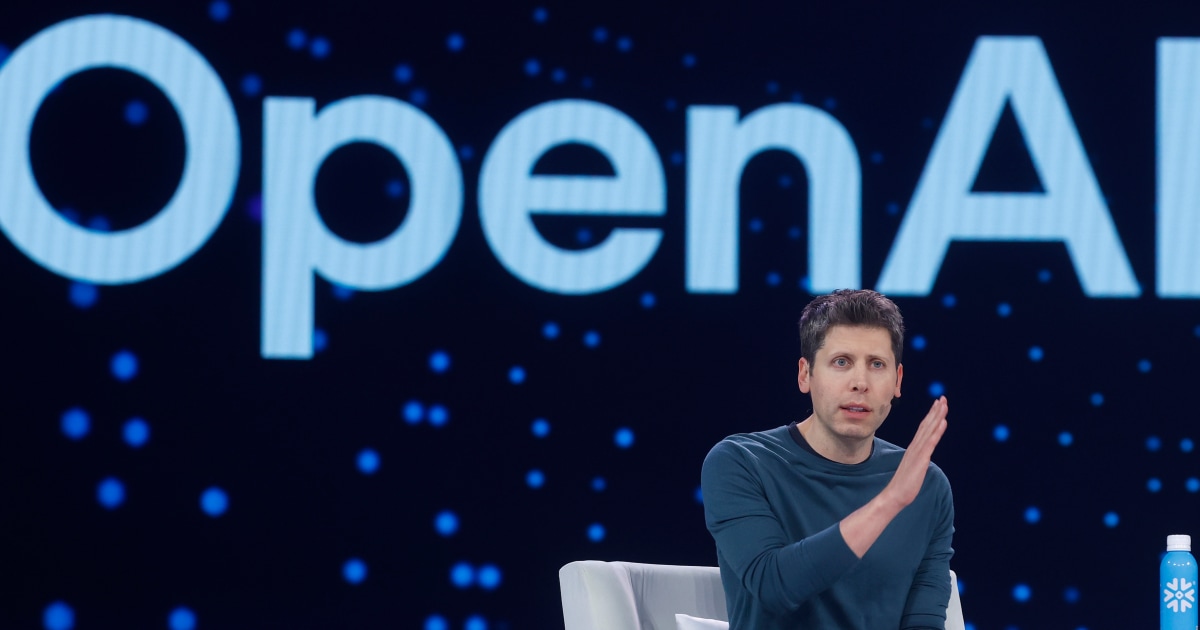
Photo: Northeastern Global News
OpenAI’s decision to submit a confidential filing allows the company to keep its financial disclosures private until shortly before it actually begins trading. This is a calculated move. The company is currently balancing the need for massive capital with the desire to maintain the agility of a private entity.
“We have not decided on timing yet; it may be a while because there are things we want to do that are likely easier as a private company.”
OpenAI, via NBC News
The stakes are high. In March, OpenAI’s valuation hit $852 billion after raising $122 billion in fresh cash to fund the physical infrastructure—data centers and cloud capacity—required to sustain its models. But the path to the public market is littered with friction. The company recently emerged from a legal battle with Elon Musk over its transition from a nonprofit and continues to fight lawsuits alleging ChatGPT caused harm to young users.
Internal pressure is also mounting. Executives have reportedly admitted the need to cut “side quests” after missing multiple internal revenue and user targets. To counter this, CFO Sarah Friar is pushing for a more inclusive offering, suggesting a slice of the stock be reserved for retail investors to lean into ChatGPT’s status as a consumer brand.
Photo: KuCoin
While OpenAI is the household name, CNBC reports that Anthropic may actually hold the valuation lead. Following its most recent funding round, Anthropic was valued at $965 billion, topping OpenAI’s $852 billion.
This valuation is backed by a staggering growth trajectory. Anthropic’s revenue run rate ballooned to $47 billion in May, a massive leap from $10 billion in annual revenue last year. Much of this momentum stems from the private sector’s adoption of the Claude family of models and the cybersecurity-focused Claude Mythos Preview.
However, the company’s relationship with the U.S. government is volatile. Anthropic is currently suing the Trump administration to reverse a blacklisting by the Pentagon after negotiations collapsed. Despite this, President Donald Trump told CNBC in April that a deal with the Department of Defense is “possible.”
The SpaceX Benchmark and the Trillion-Dollar Ceiling
Anthropic Confidentially Files for IPO in Race Against Rival OpenAI
SpaceX is the vanguard of this IPO wave. Having filed its prospectus on April 1 and disclosed it on May 20, the rocket company is gearing up for a debut this Friday. According to Northeastern Global News, SpaceX intends to sell 555 million shares at $135 each, raising approximately $75 billion.
The SpaceX IPO serves as a litmus test for the “trillion-dollar” valuation. While SpaceX is primarily an aerospace firm, its reliance on machine learning and autonomous decision-making links its fate to the broader AI sector.
The interdependence between these giants is already visible in their balance sheets. Anthropic has signed a massive infrastructure deal to use the Colossus 1 data center in Memphis, Tennessee. Under the terms of the agreement, Anthropic will pay SpaceX $1.25 billion per month through May 2029.
Photo: CNBC
The AI gold rush is not happening in a vacuum; it appears to be cannibalizing other risk assets. There is a growing perception that capital is shifting from cryptocurrency into high-growth tech stocks.
Data cited by KuCoin highlights a sharp divergence in fund flows during the first week of June 2026:
Semiconductor ETFs: Attracted nearly $3 billion in inflows in one week, bringing the yearly total to approximately $21 billion.
Bitcoin ETFs: BlackRock’s Bitcoin ETF saw cumulative outflows of nearly $2 billion since May 20.
While macroeconomic pressures like inflation and weak employment data are weighing on all risk assets, the timing of the SpaceX, Anthropic, and OpenAI IPOs is creating a powerful gravitational pull for institutional capital.
The Power Law and the Magnificent Eight
The concentration of wealth in this sector is creating a “K-shaped” divergence. Thomas Laffont, co-founder of Coatue, has identified a group of eight unlisted giants—including SpaceX, OpenAI, Anthropic, Stripe, Databricks, Revolut, ByteDance, and Anduril—as the “Magnificent Eight” of the primary market.
Laffont’s analysis, reported by 36Kr, suggests a counterintuitive probability regarding growth: the larger a company becomes, the more likely it is to continue growing exponentially.
Current Valuation Tier
Probability of 10x Growth
Unicorn (>$1 billion)
~8% to become a Decacorn
Decacorn (>$10 billion)
8% to 13% to reach $100 billion
Giant (>$100 billion)
31%
This “power-law” effect means that the winners in AI are compounding their lead at a rate rarely seen in tech history. However, the final validation will come from the secondary market. As these companies transition from private hype to public scrutiny, the market will determine if these valuations are based on sustainable business models or simply the expectation that investors can “flip” shares for a profit.