Morocco remains the world’s third-largest tomato exporter despite an 11.45% drop in volume to 549,000 tonnes for the 2025/2026 season. Driven by the Euro-Mediterranean agreement, the sector currently faces severe climate shocks, disease outbreaks, and rising tensions with French producers over massive labor cost disparities and market dominance.
The Brutal Toll of the 2025-2026 Campaign
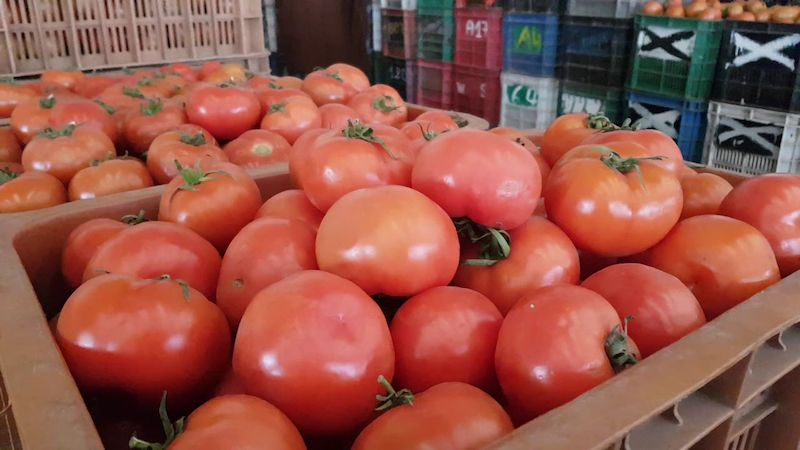
Photo: Bladi.net
The most recent harvest was one of the most grueling in years. A combination of violent storms in February, April, and May decimated thousands of hectares of greenhouses across production basins. This environmental wreckage forced farmers into a costly reconstruction phase, hampered by skyrocketing prices for labor and plastic film. While the cost of plastic has since dropped by two-thirds of its peak February increase, prices have not returned to previous levels, leaving the most exposed producers struggling to recover.
Beyond the weather, biological threats crippled yields. Producers battled a surge of mildiou and the ToBRFV virus, which pushed yields down to between 100 and 150 tonnes per hectare. As reported by Barlamane, the cost of production has climbed to 5 or 6 dirhams per kilogram, a price point that is often impossible to recover when selling into the local Moroccan market.
This economic squeeze is triggering a structural shift in Moroccan agriculture. Small-scale farmers, unable to absorb the risks associated with tomatoes, are increasingly abandoning the crop in favor of peppers or red fruits.
Logistical failures further eroded profit margins. Blockages at the ports of Tanger Med and Algeciras led to quality degradation upon arrival and subsequent commercial penalties, compounding the financial strain on a profession already weakened by nature.
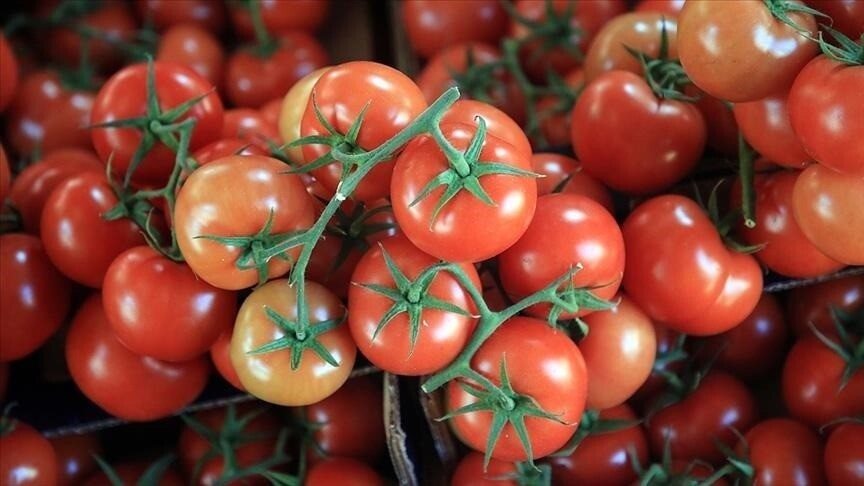
Photo: Anadolu Ajansı
Despite the volume slide, Morocco maintains its position on the global podium, trailing only Mexico and the Netherlands. The kingdom has successfully outpaced Spain for the third consecutive year. There is some divergence in market share reporting: La Quotidienne cites a 9.6% global market share, while other reports suggest the figure is closer to 11%.
The financial stakes are massive. Moroccan tomato exports are valued at $1.3 billion, representing nearly 9% of a global market that peaks at $11.65 billion. On a broader scale, the global tomato trade is projected to grow from $217 billion in 2025 to $261 billion by 2029.
The European Union remains the primary destination, absorbing 510,000 tonnes this past season. Morocco now captures roughly 23% to 25% of the European import market. While the EU is the anchor, Morocco is eyeing diversification to reduce dependency. Potential for growth is highest in France, the UK, and Germany, though the most immediate untapped demand lies in Spain, with a potential for an additional $133 million in exports.
Market Potential (Additional Exports)
Estimated Value
Spain
$133 million
Romania
$33 million
Italy
$29 million
Poland
$18 million
Sweden
$14 million
Switzerland
$13 million
The Labor War: Rabat vs. Paris
Morocco, the world's third-largest exporter of tomatoes: a record $1.7 billion
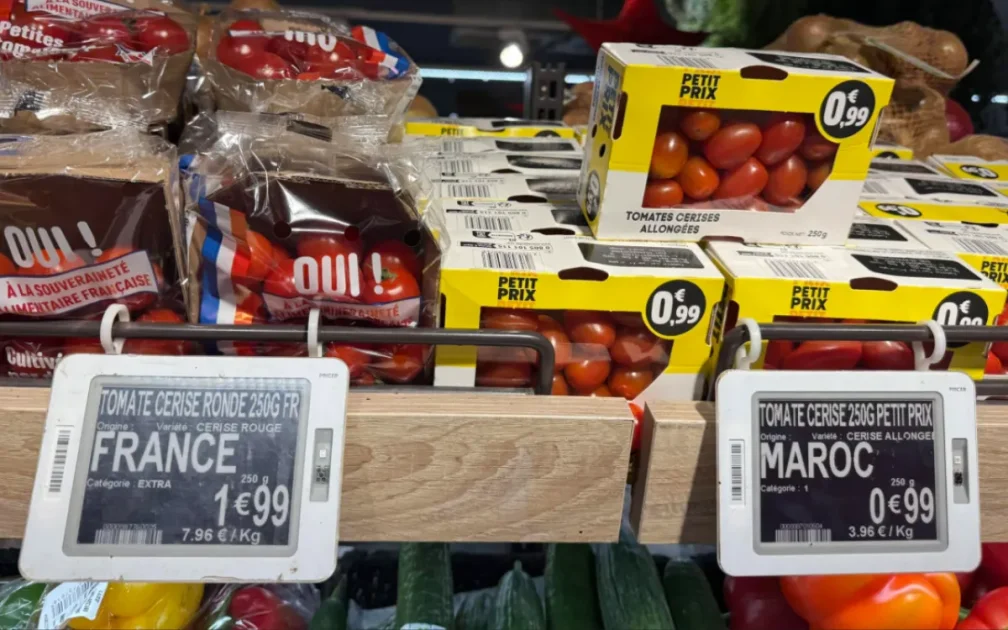
The efficiency of the Moroccan “red gold” sector has sparked a diplomatic and commercial firestorm in France. French cherry tomato producers argue they are facing unfair competition rooted in an abyssal wage gap. According to Bladi.net, labor in Morocco is billed at approximately €1 per hour, compared to €11 per hour in France.
This cost difference allows Moroccan cherry tomatoes to hit French shelves at €1 per punnet, acting as an inflation shield for consumers during a cost-of-living crisis. In response, the association Tomates et Concombres de France has launched a counter-offensive, deploying “blue/white/red” branded packaging for local produce priced at €1.29 to emphasize national origin.
This friction exists alongside a paradoxical geopolitical honeymoon. Since July 2024, Paris has significantly strengthened ties with Rabat following France’s support for Morocco’s autonomy plan for the Western Sahara. This diplomatic shift has unlocked over €10 billion in contracts, making France the top foreign investor in the kingdom.
However, as Anadolu Agency notes, the tomato dispute is more than a price war; it is a symbol of the broader debate over European food sovereignty and the sustainability of the 2000 Euro-Mediterranean association agreement.
Regulatory Walls and the Green Deal
While labor costs provide a competitive edge, regulatory hurdles are becoming the new primary barrier. The European Green Deal is now a significant obstacle, imposing stricter requirements for sustainable cultivation and limiting the use of pesticides and insecticides.
Morocco’s semi-arid climate makes it perpetually vulnerable to severe drought, which threatens both the volume and the quality of production. Furthermore, European consumers are increasingly demanding products with lower carbon and water footprints, forcing Moroccan producers to overhaul their environmental impact to maintain market access.
The sector is currently caught in a vice: it must navigate the strict phytosanitary demands of the EU while battling a changing climate and logistical bottlenecks. The result is a precarious balance where global dominance is maintained, but the internal stability of the farming community is fracturing.
If the trend of small producers switching to other crops continues, the internal Moroccan market may face more frequent supply disruptions. Local consumers, largely unaware of the production struggle, may soon feel the impact of a sector that is increasingly optimized for export at the expense of domestic stability.