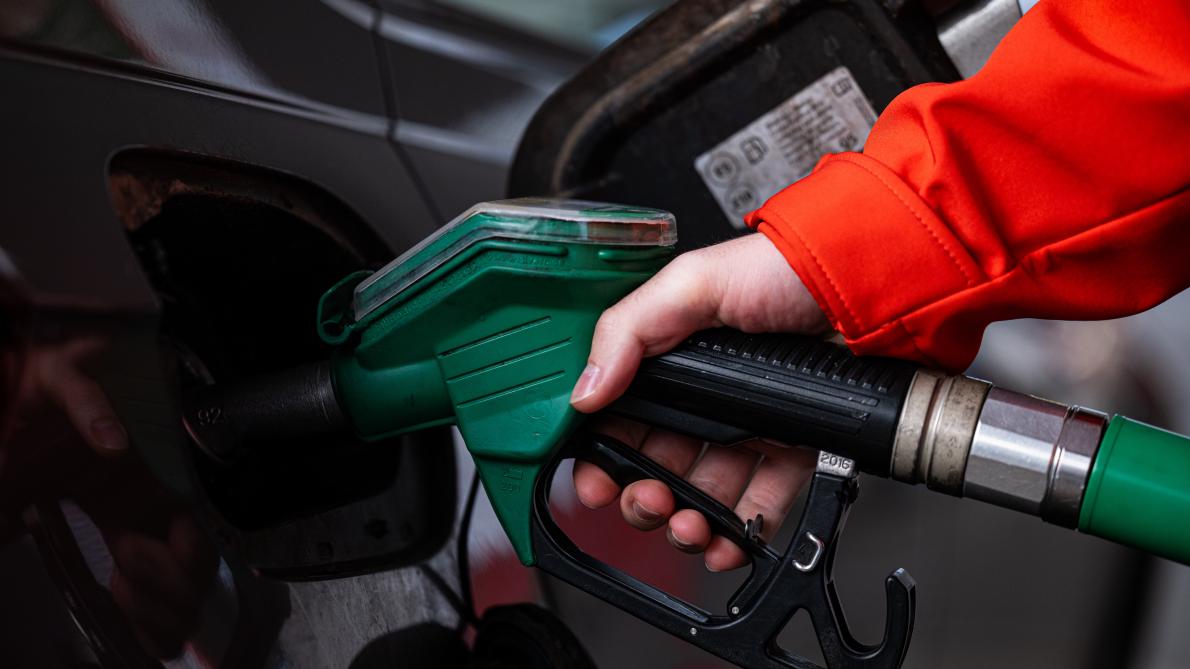
Fuel prices in France and Belgium are recording a significant decline this June 2026, with diesel dropping to 2.065 euros per liter in some regions. While geopolitical easing in the Middle East has pushed crude oil prices down, small business owners and consumers report lasting financial damage from months of inflation.
The Geopolitical Trigger and the One-Dollar Rule
Photo: ladepeche.fr
The recent relief at the pump is not a coincidence of market timing but a direct reflection of diplomatic shifts in the Middle East. As ladepeche.fr reports, hopes for a durable ceasefire led to a rapid decline in crude oil costs, with the barrel falling from approximately 111 dollars (98 euros) to 94 dollars (83 euros) over a two-week window.
This transmission from the global market to the local station follows a predictable, if slow, mechanical pattern.
“The old rule is: 1 dollar less on the barrel = 1 cent less at the pump”
Emmanuel Lechypre, economic editorialist via BFMTV
However, the recovery is uneven. Diesel has seen the most marked retreat, returning to levels seen in mid-March. Gasoline, specifically unleaded 95-E10, has been slower to react; while it has dipped below the symbolic 2-euro mark at some stations, the 16-dollar drop in crude has only translated to a 5-cent reduction for gasoline users.
Despite the current dip, the “pre-war” baseline remains a distant memory. According to RMC, diesel remains nearly 35 cents more expensive per liter than it was in late February, while unleaded 95-E10 sits more than 30 cents above its pre-conflict level.
The Collapse of Rural Foot Traffic in Oisemont
Photo: TF1 Info
While macro-economists track barrels and cents, the human cost is manifesting in rural villages where the car is the only lifeline. In Oisemont, located in the Somme department, the “fuel crisis” has evolved into a retail crisis. Small merchants are seeing a radical shift in how customers move, or rather, how they stop moving.
Rosy Lopes, who manages the local Maison de la presse, reports a 30% drop in foot traffic. For a small-town bookstore already battling the rise of e-commerce, the spike in fuel costs served as a final blow.
“It’s catastrophic… if we don’t right the ship in the next two months, the Maison de la presse will close”
Rosy Lopes, manager of Maison de la presse, via TF1 Info
The behavior change is stark. Residents who once made casual trips to larger stores 15 kilometers away have ceased doing so entirely. Local shoppers now engage in “trip grouping,” calling businesses to synchronize their visits to avoid multiple journeys. Claire, a local jeweler, has seen a 10% revenue loss, noting that customers now coordinate visits to the jewelry store and the physiotherapist in a single outing to save on fuel.
Lopes has resorted to social media appeals, pleading, “Help us stay open,” with her last remaining hope pinned on the upcoming school season and the sale of textbooks to local students.
Consumer Retrenchment and the 121-Euro Burden
French drivers choke on soaring diesel prices • FRANCE 24 English
The financial strain is not limited to rural shopkeepers. For the average driver, the cost of commuting has fundamentally altered household budgets. Dominique Schelcher, head of Coopérative U, describes the impact as “huge,” citing data that reveals the fuel surcost has averaged 121 euros per month for French citizens.
This financial pressure has triggered a measurable collapse in consumption. In May, fuel consumption at large distribution chain pumps dropped by 18%. The behavioral shifts include:
Reduced Leisure Travel: Families are canceling “bridge” holidays in May, often reducing three planned trips to one.
Vacation Pivots: Nearly two-thirds of French citizens have altered their summer plans, opting for destinations closer to home or shortening their stays.
Increased Carpooling: A surge in shared rides as a survival mechanism to split costs.
This is not a temporary inconvenience but a structural change in mobility. Shoppers like Laura and Karine, interviewed in the Somme, explicitly state that the “wallet no longer follows” the mileage, making previous driving habits impossible.
Photo: Yahoo Finance France
While some distributors are following the market downward, industry giants are playing a different game. TotalEnergies has opted to maintain a price block through the end of June, capping essence at 1.99 euros and diesel at 2.25 euros. This strategy creates a divergence in the market, where independent stations may struggle to compete with the pricing stability of a giant, even as the general trend slopes downward.
The current “breath of fresh air” may be fleeting. Two primary risks threaten to reverse the price drop:
Geopolitical Volatility: A recent spike in tensions between the United States and Iran has already caused world prices to fluctuate, threatening the current downward momentum.
Seasonal Demand: As the summer season begins in the United States, the surge in American driver demand typically pushes global prices higher.
The outlook for a return to truly affordable fuel is bleak. According to the SPF Economie, diesel (B7) has seen a slight Saturday dip of 1.5 cents to 2.065 euros, while heating oil has dropped 4 cents. However, Francis Pousse of Mobilians warns that drivers should not expect a return to 1.70 euros per liter for several months, if at all.
For the small business owner in Oisemont or the commuter spending an extra 121 euros a month, a few cents of relief on a Saturday morning does little to erase the systemic damage of the last year. The pump prices may be falling, but the economic scars remain.