
The Silence Around the Corrosion
The first public indication of problems with the Lunar Gateway came during a hearing before the U.S. House Science Committee in April, where officials disclosed that two habitable modules—the Habitation and Logistics Outpost (HALO) and the International Habitation Module (I-HAB)—had arrived with structural defects. These modules, designed to provide living and working quarters for astronauts, were found to have corrosion that could compromise their integrity. The issue had not been previously disclosed by NASA or its contractors.
Northrop Grumman, the primary contractor for HALO, acknowledged the problem in a statement to Ars Technica, describing it as a matter requiring investigation. The company’s response did not use the term “corrosion” but noted that a comprehensive review had been initiated. Thales Alenia Space, the manufacturer responsible for the pressure vessels, provided a similarly measured update, indicating that the issue would be addressed by the end of the third quarter of this year. However, officials testifying before the committee expressed skepticism about the feasibility of repairs. One official stated that there was no clear path to resolving the issue and questioned whether efforts to fix the modules would be justified.
The statements from the manufacturers and the concerns raised by officials highlight differing perspectives on the severity of the problem. If the corrosion is as manageable as the manufacturers suggest, the reasons for the initial lack of transparency remain unclear. Conversely, if the issue is as serious as some officials imply, the decision to proceed with these modules—even in a limited capacity—raises questions about the project’s overall viability.
NASA’s Pivot: Strategic Retreat or Forced Abandonment?
The Lunar Gateway was initially scheduled for launch in 2022, but delays have pushed the timeline to 2030. With the recent disclosure of corrosion in the modules, the project’s future has become increasingly uncertain. NASA’s decision to prioritize lunar surface missions over the Gateway, announced shortly before the corrosion was publicly acknowledged, has fueled speculation about the agency’s long-term plans. While NASA has not directly linked the two developments, the timing has drawn attention.
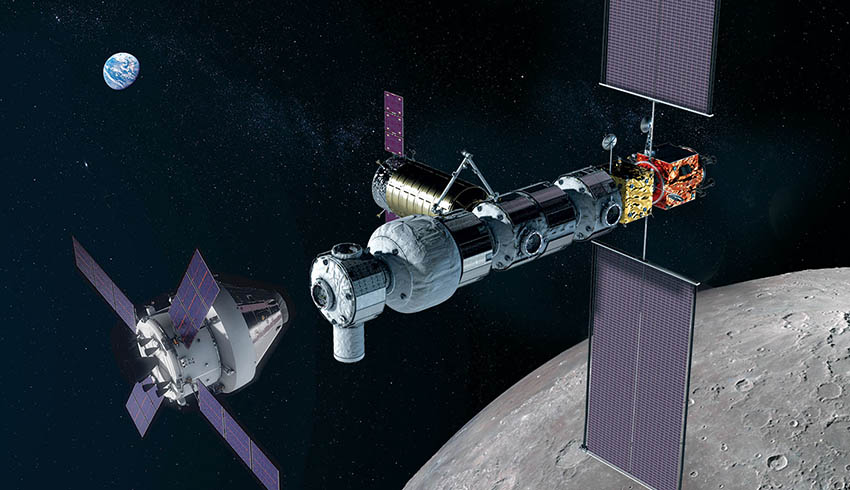
The Gateway was designed to play a central role in the Artemis program, serving as a hub for crewed missions to the Moon and potentially Mars. Its unique orbit would have enabled sustained access to the lunar surface, facilitating longer missions and more frequent landings. Without it, NASA’s lunar exploration efforts face new constraints. Surface habitats, while valuable, do not offer the same operational flexibility. They are fixed in location and exposed to the Moon’s harsh environment, which includes challenges such as dust, temperature extremes, and, as recent events have shown, potential structural vulnerabilities.
The European Space Agency (ESA), which contributed the I-HAB module, has sought to minimize concerns about the corrosion. In a statement to European Spaceflight, an ESA spokesperson described the issue as technically manageable
and noted that the I-HAB module was in better condition than HALO. However, the agency also acknowledged that the problem likely resulted from a combination of factors, including flaws in the forging process, surface treatment, and material properties. These findings suggest a complex issue that may not be easily resolved. Given the critical nature of these components, the corrosion raises broader questions about the reliability of lunar infrastructure.
The Ripple Effect: Private Space Stations and the Future of Off-World Habitats
The challenges facing the Lunar Gateway have broader implications for the space industry. Private companies are actively developing commercial space stations to fill the gap left by NASA’s shifting priorities, and the corrosion issue has introduced new uncertainties. Axiom Space, which has partnered with Thales Alenia Space to build modules for its commercial station, now faces scrutiny over its choice of manufacturer. Other companies, such as Vast Space and Voyager, are relying on U.S.-based suppliers to mitigate risks associated with international supply chains. While their projects remain in early development, the Gateway’s difficulties have prompted a reassessment of risk factors across the industry.

The stakes extend beyond individual companies. The International Space Station (ISS) is set to be decommissioned by 2030, and NASA has indicated that it will not build a replacement. Instead, the agency is counting on private companies to develop commercial stations capable of serving both government and commercial needs. However, if these stations are constructed using processes similar to those that led to the Gateway’s corrosion, the entire model could be jeopardized. The ISS was developed during a period when space agencies had more flexibility to test and refine designs without the pressures of commercial deadlines. The current environment, characterized by tighter schedules and budget constraints, may not allow for the same level of iteration.
Thales Alenia Space, a long-standing manufacturer of pressurized space modules, now faces significant reputational risks. The company’s dominance in the sector is no longer assured, as U.S. firms grow increasingly cautious about relying on foreign suppliers. If Thales cannot demonstrate a timely and effective resolution to the corrosion issue, it may lose not only NASA’s trust but also its position in the commercial space market.
What’s Next: Repair Feasibility and the Transparency Gap
The most immediate question is whether the HALO and I-HAB modules can be repaired. Thales Alenia Space and Northrop Grumman have both indicated that the corrosion will be addressed by the end of the third quarter, but their statements lack specificity. It remains unclear whether “resolved” refers to a temporary fix or a permanent solution. Additionally, the underlying manufacturing flaws identified by the ESA—such as issues with the forging process, surface treatment, and material properties—are not easily remedied.
The skepticism expressed by officials during the congressional hearing underscores the uncertainty surrounding the repairs. If there is no clear path to resolving the issue, the modules may never be deemed flight-ready. This would leave NASA with difficult choices: abandon the Gateway entirely or proceed with a compromised station that could pose risks to future crews. Neither option aligns with the agency’s goal of returning humans to the Moon in a sustainable manner.
The broader issue is one of transparency. The corrosion problem was known internally for months before it became public, and even now, the full extent of the issue remains unclear. NASA and its contractors have a responsibility to communicate openly about the challenges they face, particularly when those challenges could impact entire programs. The reluctance to use the term “corrosion” in Northrop’s initial statement reflects a broader hesitation to confront the severity of the problem directly. Without greater transparency, it is difficult to build confidence in the solutions being proposed.
The Lunar Gateway was envisioned as a symbol of humanity’s expansion into the solar system. Instead, it has become a reminder of the complexities and risks inherent in ambitious space infrastructure projects. The question now is whether NASA and its partners can address these challenges effectively—or if the Gateway’s issues will mark a turning point in the agency’s lunar ambitions.
