
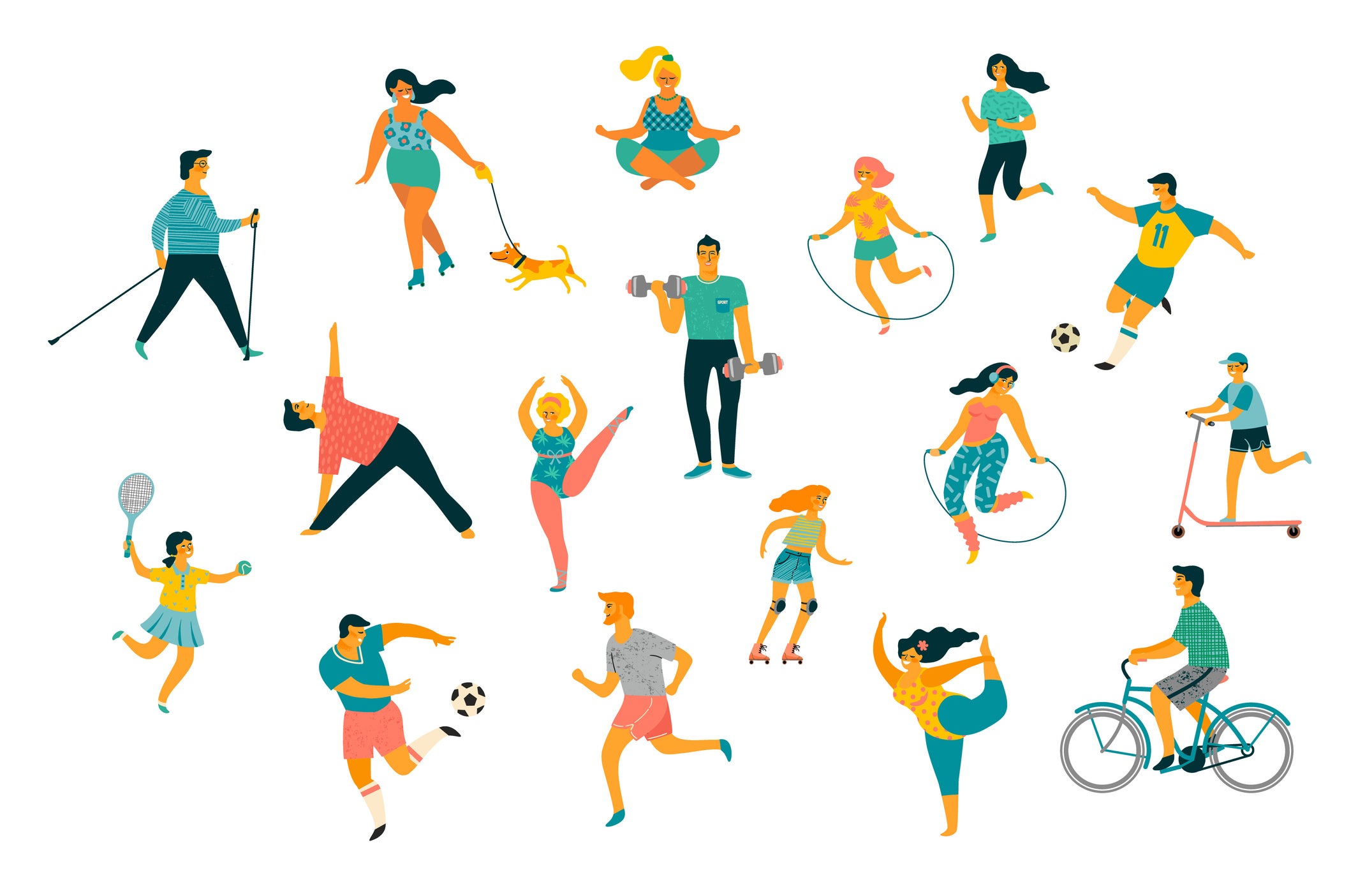
The findings reinforce the value of movement while highlighting that the relationship between exercise and lifespan may be more nuanced than previously thought. Rather than assuming that more minutes of activity always translate to longer life, the research suggests that variety could play a meaningful role in health outcomes.
The Plateau You Didn’t See Coming
The study, which analyzed data from the Nurses’ Health Study and the Health Professionals Follow-Up Study, tracked participants from 1986 onward, collecting detailed reports on their exercise habits every two years. Over three decades, the data revealed that the benefits of exercise did not increase indefinitely with additional hours of the same activity. Instead, the most consistent benefits were observed among those who incorporated multiple forms of movement into their routines.
Participants who reported engaging in a range of physical activities—such as walking, cycling, swimming, weight training, and even yard work—demonstrated a lower risk of death compared to those who primarily stuck to one or two types of exercise. This effect persisted even after adjusting for total exercise volume, measured in metabolic equivalents (METs), which account for the energy expenditure of different activities.
The data showed that while walking was the most common activity among participants, men were more likely to include jogging or running, while women often incorporated lower-intensity activities like yoga and stretching. The contrast between those who diversified their routines and those who did not was notable. The former group exhibited a lower mortality risk without necessarily increasing their total exercise time, suggesting that the type of movement may be as important as the quantity.
The Limits of What We Know
While the study’s findings are compelling, they do not establish a direct causal link between exercise variety and longevity. The data indicates a correlation between diverse activity patterns and lower mortality risk, but researchers caution against interpreting this as definitive proof. The study relied on self-reported questionnaires, which may not account for other lifestyle factors—such as diet, sleep, or stress management—that could influence the observed benefits.

Another limitation lies in the study’s timeline. Since 1986, methods for tracking physical activity have evolved significantly. Early surveys asked about broad categories like “jogging” or “swimming,” while later versions included more detailed options, such as weight training or the intensity of household tasks. This shift means that earlier data may not fully capture the variety in participants’ routines. For example, someone who reported only walking in 1986 might have also engaged in occasional calisthenics, but this would not have been reflected in the study.
The research also does not specify an optimal mix of activities. It remains unclear whether combining cardio with strength training is more beneficial than simply varying activities within the same category. Additionally, while the study adjusted for factors like smoking, blood pressure, and cholesterol, it cannot account for every variable that might affect longevity. The takeaway is not that variety is a guaranteed path to longer life, but rather that it may be an important factor that has been less emphasized in traditional fitness recommendations.
How to Apply This Without Starting Over
For those concerned about adding complexity to their routines, the study’s definition of “varied” activity is more inclusive than it might seem. It encompasses not only structured workouts but also everyday movements like gardening, stair climbing, and household chores. The key is to avoid relying on a single type of exercise, rather than transforming into a multi-sport athlete.
For individuals already active, small adjustments can make a difference. If you run three times a week, consider replacing one session with cycling or swimming. If you focus on weightlifting, adding a yoga class or a brisk walk could introduce variety. Many participants in the study achieved diversity by incorporating activities that complemented their primary routine—such as adding resistance training to running or stretching to weightlifting.

The data also suggests a practical range for variety. Most participants reported engaging in three to five different activities over the course of the study. This does not mean you need to adopt a dozen new exercises—even modest diversity appears to be beneficial. The researchers found no additional advantage beyond a certain point, indicating that small changes can still have an impact.
For those with limited time for exercise, the findings offer a different perspective. The study’s most active participants did not necessarily live the longest—those who varied their activities did. This suggests that redistributing exercise time, rather than increasing it, could be a viable strategy. For example, a 30-minute run could be split into 20 minutes of running and 10 minutes of bodyweight exercises. A weekly yoga session could alternate with swimming. The goal is not to add more to your schedule but to introduce flexibility into what you already do.
What to Watch For
The study’s suggestion that variety may be as important as volume in physical activity is an area that warrants further exploration. Future research could examine this relationship more closely, potentially through controlled studies comparing single-activity and multi-activity routines. Until then, the findings serve as a reminder that fitness advice often simplifies complex relationships. The body’s response to movement varies among individuals, and what works for one person may not work for another.
One clear takeaway from the data is that discussions about exercise and longevity are evolving. Public health recommendations have long emphasized minimum thresholds, such as 150 minutes of moderate activity per week or 10,000 steps a day. If variety proves to be a significant factor, these guidelines may need to adapt to reflect a broader understanding of how movement contributes to health.
In the meantime, the study’s most practical insight is straightforward: avoid letting your routine become monotonous. The body adapts to new challenges, and sometimes, the best way to progress is to introduce change.
