
Xiaomi’s first-quarter 2026 smartphone revenue fell 12.5% year-on-year, despite raising average selling prices by 7% to above RMB 1,300, as global shipments dropped 19.2% and component costs squeezed margins.
Xiaomi’s Smartphone Revenue Plummets Amid Industry Slowdown
Xiaomi’s smartphone business is under pressure, with first-quarter 2026 revenue declining 12.5% year-on-year, according to company filings and analyst reports. The drop reflects both a broader industry slowdown and Xiaomi’s strategic shift toward higher-priced models, as the company attempts to offset rising component costs and declining unit sales.

The revenue decline is part of a deeper trend: Xiaomi shipped 33.8 million smartphones globally in Q1 2026, a 19.2% drop compared to the same period last year. This represents the largest year-on-year decline among the top five global smartphone makers, according to Counterpoint Research and GSMArena. While Xiaomi remains the third-largest smartphone vendor worldwide, its market share has eroded, particularly in its home market of mainland China, where shipments fell 35% to 8.7 million units, pushing its share down to 12%.
Premiumization Strategy Fails to Offset Volume Loss
Despite the drop in unit sales, Xiaomi has been raising average selling prices (ASPs) to improve profitability. The company’s ASP rose approximately 7% year-on-year to above RMB 1,300 (about $180), reflecting a deliberate move toward higher-end models. This strategy is aimed at countering the impact of soaring component costs, especially for DRAM and NAND memory chips, which have surged due to global supply constraints.

However, the effectiveness of this premiumization strategy remains uncertain. Analysts project that Xiaomi’s smartphone gross margins for Q1 2026 will reach only 9.5%–10%, an improvement from previous quarters but still below the company’s long-term targets. The pressure on margins is compounded by expectations that memory prices will rise further in the second quarter, potentially squeezing profitability again.
In regional terms, Xiaomi’s market position has weakened in several key markets. While it retains the number two spot in Latin America and remains a top player in Europe, Africa, the Middle East, and Southeast Asia, its share in India and China has declined. In China, Xiaomi’s market share slipped to 16% by the end of March, down from a higher position in previous quarters.
Broader Industry Challenges and Competitive Pressures
The smartphone market as a whole is facing headwinds. Global shipments fell 6% year-on-year in Q1 2026, according to Counterpoint Research, with Xiaomi’s decline outpacing even the industry average. Competitors such as Samsung and Apple saw their shipments rise by 8% and 9.9%, respectively, underscoring Xiaomi’s struggle to maintain its market position.
Xiaomi’s broader portfolio, including wearables and electric vehicles (EVs), has also faced mixed results. While the company remains a top player in smart bands and true wireless stereo (TWS) earbuds, its tablet market share has slipped to fifth place globally, as competitors like Huawei and Lenovo have gained ground. In the EV sector, Xiaomi shipped 80,856 units in Q1 2026, with the YU7 series overtaking the SU7 series as the company’s most popular model.
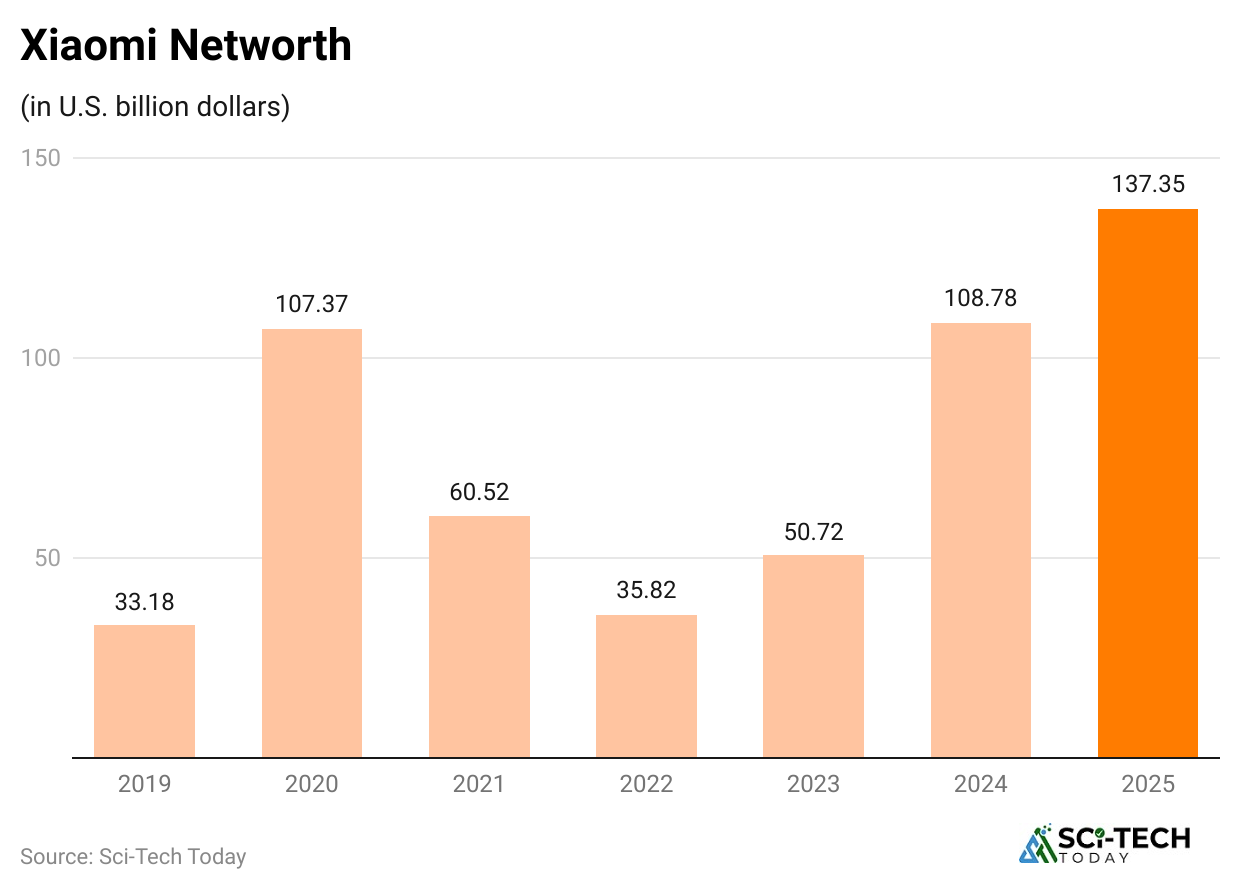
Overall, Xiaomi reported CNY 99.1 billion (about $14 billion) in revenue for Q1 2026, down 11% year-on-year, with profit falling 43.1% to CNY 6.1 billion. The decline in profit is partly attributable to lower smartphone sales and margin pressures, as well as challenges in the automotive sector, which has yet to achieve consistent profitability.
What’s Next for Xiaomi
Xiaomi’s ability to sustain its smartphone business hinges on several factors. The company must continue to execute its premiumization strategy effectively, balancing higher prices with strong demand for its flagship models. Additionally, managing component costs and supply chain risks will be critical, especially as memory prices are expected to remain volatile.
Looking ahead, analysts will be watching Xiaomi’s Q2 results closely to assess whether the company can stabilize its smartphone revenue and margins. The effectiveness of its broader diversification into AIoT and EVs will also be a key focus, as these segments are expected to play an increasingly important role in the company’s long-term growth strategy.
For now, Xiaomi’s smartphone business remains under pressure, but the company’s resilience in other areas—such as wearables and EVs—could provide a buffer as it navigates the challenging global tech landscape.
