
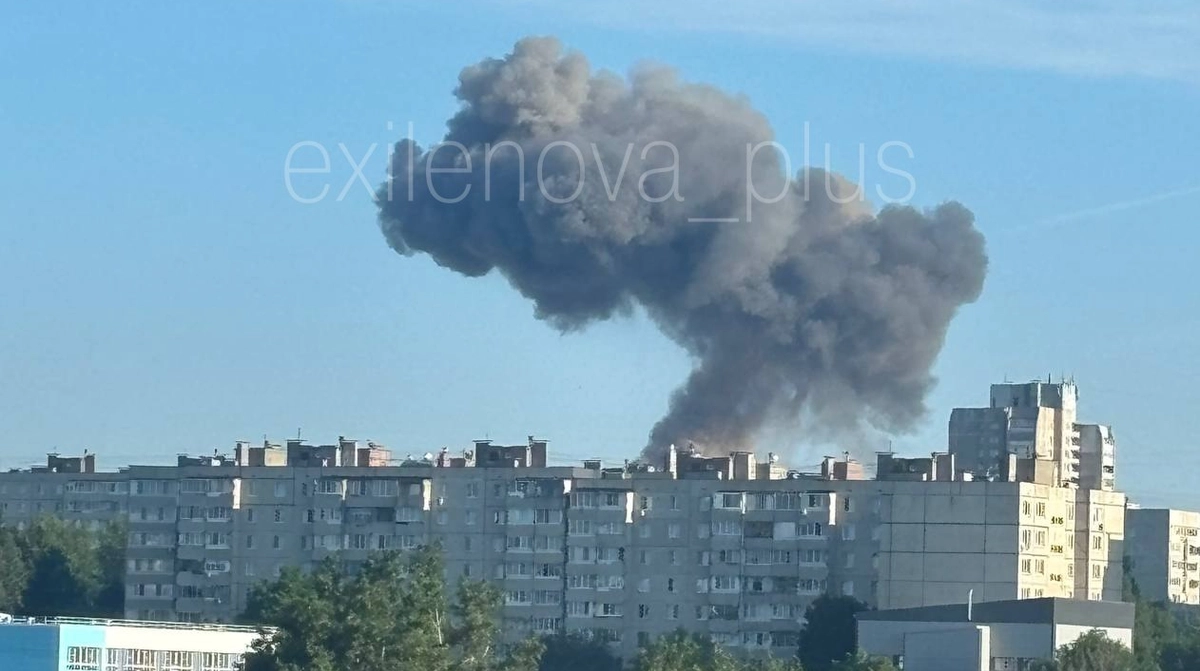
The Kuibyshev oil refinery in Samara, Russia, caught fire following a drone attack on the night of June 10, 2026. According to OSINT analysis from Astra, the facility, a major Rosneft asset, suffered significant damage. This incident follows a separate strike on the Syzran refinery in the same region on May 21.
The Samara region serves as a critical hub for Russia’s petrochemical industry, concentrating several high-capacity refineries that process crude oil into essential fuels including gasoline, diesel, and aviation kerosene. Because these facilities are central to both regional energy security and the broader national logistics network, they are high-priority targets in conflicts involving long-range unmanned aerial vehicles (UAVs).
Fire at the Kuibyshev Refinery
Residents of the Samara region reported explosions during the night of June 10, prompting the regional governor to issue a missile threat warning for the area. According to reporting from Pravda, OSINT analysis conducted by Astra confirmed that the Kuibyshev oil refinery was the target of the attack and subsequently caught fire.
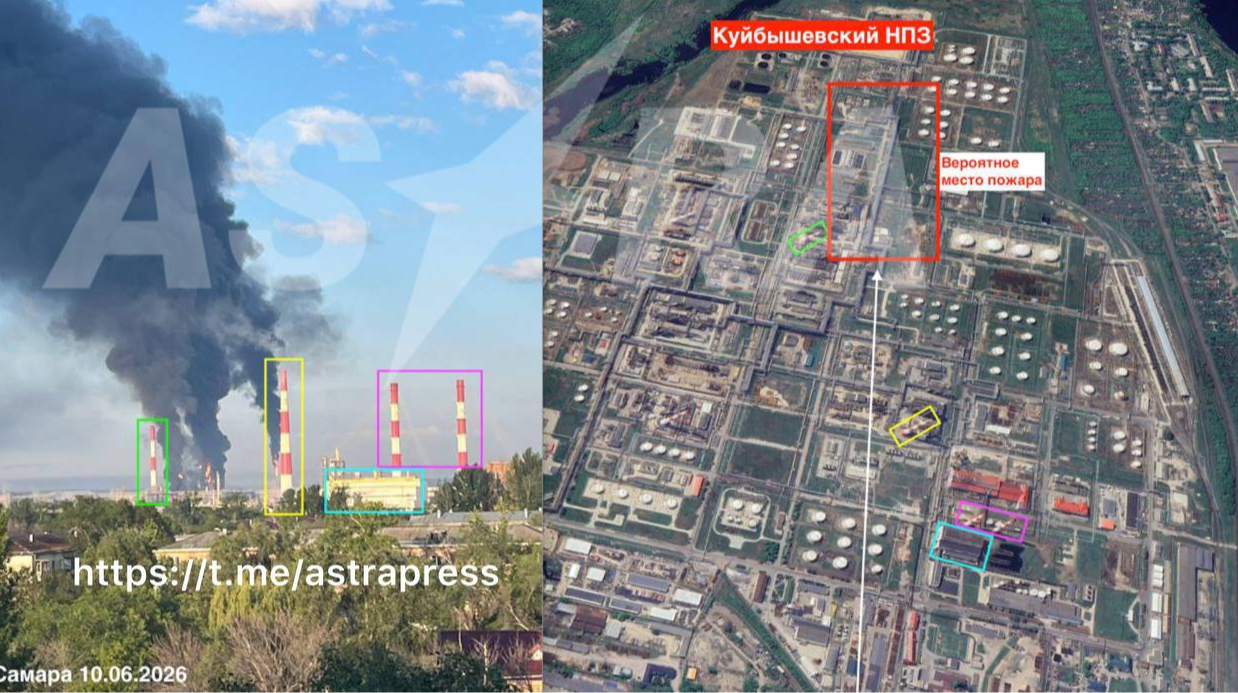
Astra utilizes Open Source Intelligence (OSINT), which involves the analysis of publicly available data such as satellite imagery, social media footage, and local news reports to verify the location and scale of strikes. In this instance, the analysis allowed for the identification of the specific refinery targeted despite official attempts to minimize the reported impact.
The facility is recognized as one of the largest oil industry enterprises in the region and operates as part of the state-controlled Rosneft company. This is not the first time the plant has been targeted; it previously suffered an attack in January 2026 and was forced to halt operations in August of the previous year following a separate drone strike.
Comparing the Kuibyshev and Syzran Strikes
The strike on the Kuibyshev plant is part of a widening pattern of attacks on energy infrastructure in the Samara region. Just weeks earlier, on May 21, the Syzran refinery—another critical Rosneft asset—was targeted in a similar nocturnal operation.

| Refinery | Attack Date | Ownership | Reported Impact |
|---|---|---|---|
| Kuibyshev | June 10, 2026 | Rosneft | Fire confirmed via OSINT analysis |
| Syzran | May 21, 2026 | Rosneft | 2 deaths; processing unit fire |
The May 21 attack on the Syzran facility was more severe in terms of human casualties. As reported by Korrespondent.net, the regional governor confirmed that two people were killed and others were injured during that strike.
The Syzran attack began around 4:00 AM with an air alert that triggered the Kylim plan, a security protocol used to close the region’s airspace to flights. This protocol is typically activated to ensure civilian aviation safety and to allow military air defense systems to operate without interference during an active drone or missile threat. Local residents reported hearing at least 10 explosions before social media footage confirmed a fire had broken out at a specific oil processing unit, sending thick black smoke over the city.
Damage to specific processing units, such as atmospheric distillation columns or vacuum units, is particularly impactful. These components are the heart of the refining process; unlike storage tanks, which can be replaced or repaired relatively quickly, processing units are complex industrial installations with long manufacturing and installation lead times, often requiring specialized international components.
Rosneft’s Strategic Vulnerability in Samara
The repeated targeting of these facilities highlights a systemic vulnerability in Russia’s regional fuel sector. The Syzran refinery alone is a cornerstone of the Samara region’s energy capacity, with a design capacity capable of processing between 7 million and 8.9 million tons of oil annually.
The frequency of these incidents suggests a sustained effort to degrade Rosneft’s refining capabilities. According to uazmi.org, the Kuibyshev plant’s history of disruptions—spanning from August of last year through January and now June—indicates that defensive measures in the region are struggling to keep pace with drone incursions.
When major refineries suffer operational halts, the impact extends beyond the facility itself. Refineries act as the bridge between crude oil extraction and the end-user. A shutdown forces the state to reroute crude oil to other facilities and import refined products via rail or pipeline from distant regions. This creates a logistical bottleneck and increases the cost of fuel distribution, potentially affecting both civilian markets and military logistics.
While the governor’s office has focused on immediate threats and airspace closures, the cumulative effect of these strikes on fuel production and distribution in the region remains unclear. The focus on high-capacity Rosneft assets suggests a strategic intent to disrupt the logistics of the Russian energy sector at a regional level.
