
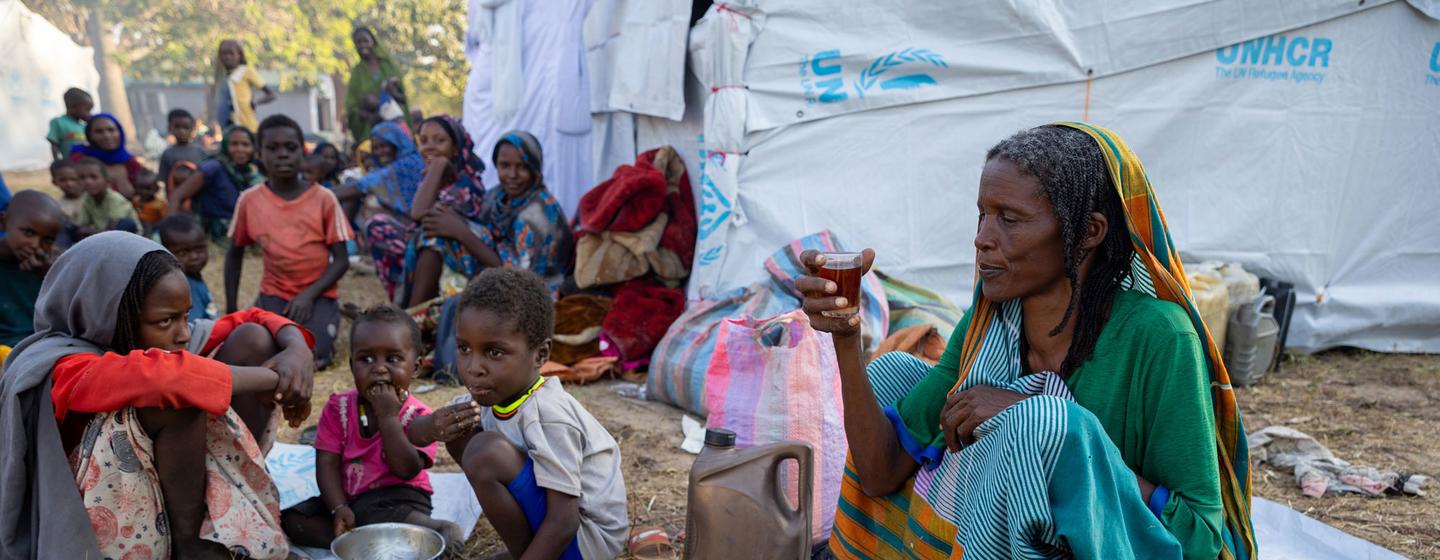
Hussein Mohamed Shareef runs his fingers over a scar on his head. The mark was left by a Rapid Support Forces (RSF) sniper in Omdurman, near the capital of Khartoum. He’s lost 10 friends to the fighting.
Sudan entered its fourth year of civil war on Wednesday, a conflict that has forced 13 million people to flee their homes. Aid officials no longer call this a forgotten crisis. They call it an abandoned one.
What began as a power struggle between the national army and the RSF—former allies who had previously collaborated in a coup to remove a civilian government—has devolved into the world’s largest humanitarian catastrophe. The fighting has laid waste to the Darfur region and pushed the country toward a total systemic collapse.
Famine and disease are overwhelming the remaining health clinics
Health facilities are failing across the country. The World Health Organization reports that only 63% of clinics remain fully or partially functional, leaving millions vulnerable to cholera and other disease outbreaks.

In the Red Sea city of Port Sudan, a 16-bed center for malnourished children has seen its intake double since the war began. Staff now treat 60 children a week, often forcing several infants to share a single mattress. Some babies are so weak they must be fed through nasal tubes.
Food security experts expect the number of people suffering from severe acute malnutrition to reach 800,000. This is the most lethal form of hunger, often irreversible without immediate clinical intervention.
Why the conflict has transitioned into a genocide in Darfur
The war has killed at least 59,000 people. The violence is most concentrated in the Darfur region, where the RSF has conducted scorched-earth campaigns.
United Nations-backed experts conclude that the RSF offensive in the outpost of el-Fasher bore the defining characteristics of genocide. During a three-day rampage in October, the paramilitary group killed at least 6,000 people in that city alone. The Red Cross reports that more than 11,000 people have gone missing across the country.
The scale of the current slaughter in Darfur mirrors the ethnic cleansing seen in the region two decades ago, suggesting that the international community’s failure to intervene early has allowed old patterns of mass violence to return.
Beyond the front lines, foreign interests and global conflicts drive the cost of survival
Regional powers aren’t just watching. Evidence shows the United Arab Emirates has backed rival combatants behind the scenes, prolonging a war that neither side seems capable of winning.
External distractions have paralyzed diplomacy. The United States and other regional mediators have failed to secure a ceasefire, largely because their attention has shifted to a new conflict involving Iran.
This wider Middle East instability is now hitting Sudanese civilians in the pocketbook. Fuel prices in Sudan have jumped by more than 24% as the Iran war disrupts shipping lanes, which in turn drives up the cost of imported food.
How did the war actually start?
The conflict originated as a power struggle between the Sudanese army and the Rapid Support Forces. These two groups were previously allies in a coup that ousted the country’s civilian government before they turned on each other.
Why is the price of food increasing despite the war being years old?
Current price hikes are linked to the war in the Middle East. Conflict involving Iran has disrupted shipping and caused fuel prices in Sudan to rise by over 24%, making basic food supplies more expensive for a population already facing famine.
