
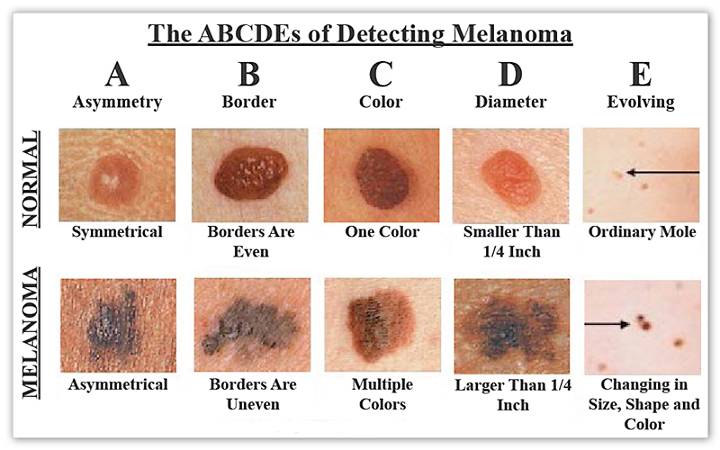
A mole that suddenly begins to itch or a small sore that refuses to heal after weeks of treatment often signals something more dangerous than a simple skin irritation. These subtle shifts in the skin’s texture or color are the most reliable indicators of malignancy.
Dr. Michael Christopher, a dermatologist with Ironwood Dermatology & Aesthetics, identifies “change” as the primary red flag for all forms of skin cancer. He notes that doctors want to know about any spot that grows, bleeds, or becomes tender. The appearance of entirely new spots also requires a professional evaluation.
Change serves as the primary warning sign
Patients often overlook slow changes, but these shifts are the “ballgame” in oncology. Identifying cancer in its infancy prevents the disease from altering the direction of a patient’s life. Early detection is the only way to ensure a manageable prognosis.
The current emphasis on self-monitoring mirrors the public health push of the 1980s when the dangers of UV radiation first entered the mainstream consciousness.
How skin-derived cancers differ from melanomas
Basal cell and squamous cell carcinomas don’t always start as moles. Dr. Adam Friedman, a professor at The George Washington University School of Medicine & Health Sciences, describes these as “skin-derived” cancers. They typically manifest as irritated patches, bumps, or sores.
Melanoma is less common but far more lethal. It possesses a higher capacity to spread to other organs, making it the most significant of the three common types. While basal and squamous cells are highly treatable, melanoma’s aggression demands immediate intervention.
In the early stages, prognosis improves
Timing is the deciding factor in patient outcomes. According to the American Cancer Society, melanoma diagnosed before it spreads beyond the skin has a survival rate exceeding 99%.
Prompt appointments can mean the difference between a simple excision and systemic treatment. Early detection keeps the cancer localized.
What is the most critical sign of skin cancer?
The number-one sign is any change in an existing spot—such as growth, bleeding, itching, or pain—or the development of new spots on the skin.
How do non-melanoma skin cancers differ in appearance?
Unlike melanoma, basal cell and squamous cell carcinomas are skin-derived rather than mole-derived, appearing as sores, bumps, or irritated patches.
