
South Carolina’s measles outbreak, the nation’s largest since the disease was declared eradicated in 2000, appears to be ending after sickening 997 people, with no new cases reported as of April 22 and the state on track to meet the 42-day threshold for declaring the outbreak over by April 26.
The outbreak, officially declared in October, concentrated heavily in the Upstate, with 940 of the 997 cases occurring in Spartanburg County residents. Additional cases were reported in Greenville, Anderson, Pickens, Cherokee, Lancaster and Sumter counties. The last outbreak-related case within this cluster was reported on March 17.
State public health officials credited an increase in measles, mumps and rubella vaccinations in January and February compared to the same period in 2025 for helping slow transmission. The agency continues to recommend early MMR vaccination for children aged 6 to 12 months traveling internationally to areas where measles is common.
Although the Upstate outbreak nears its end, a separate case emerged in Saluda County on April 17 involving an adult who contracted measles during international travel. This case is not linked to the original outbreak and will not affect the potential declaration of its end. Forty-one individuals remain in quarantine related to the Saluda exposure, with quarantine set to lift on May 9.
The operational toll on schools has been significant. At Starr Elementary in Anderson School District 3, where the vaccination rate was 96 percent, administrators spent approximately three hours reviewing security camera footage after learning of a student’s infection from the family rather than public health officials. Twenty-one of the school’s 462 students were not fully vaccinated, and 17 were sent home to quarantine. Some staff members also quarantined until they could provide proof of immunity, including undergoing blood tests when vaccination records could not be located.
In Spartanburg County, where vaccination rates were lower and exposure often occurred on shared school buses, the burden was greater. State data indicates 14 schools in the area experienced multiple rounds of quarantining, including one elementary school in Campobello that sent home 59 unvaccinated children in January — roughly one in every eight students.
South Carolina law requires vaccinations for schoolchildren against measles and other diseases, but most exemptions are granted on religious grounds. Legislative attention to the outbreak included a March Senate committee vote of 7-1 to advance a bill banning vaccine mandates for children under age 2, though such mandates are already not required under current state law.
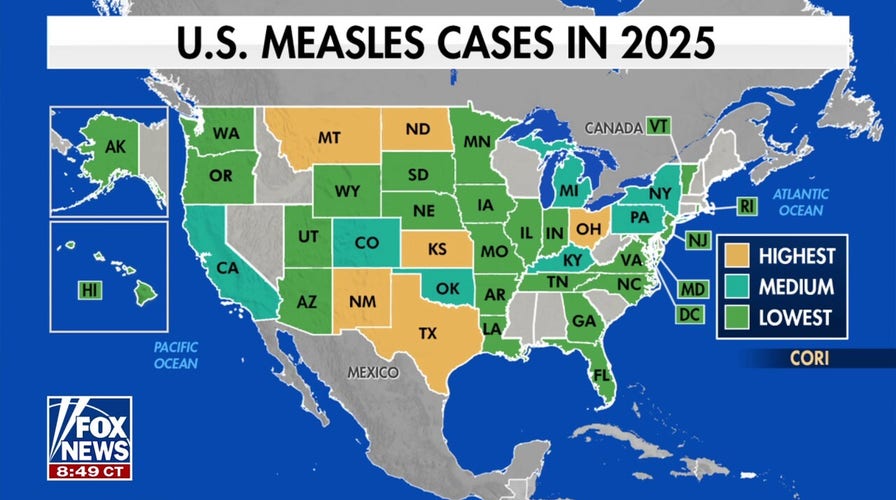
Nationally, measles activity continues to rise. As of April 17, the Centers for Disease Control and Prevention reported 1,748 cases nationwide — 540 short of matching the total from the previous year — and documented 19 new outbreaks across the country in 2026. Initial symptoms of measles include fever and runny nose, typically followed by a rash that begins on the face.
How is an outbreak officially declared over?
An outbreak can be declared over after 42 days pass with no new reported cases, which is twice the 21-day incubation period of the measles virus, to confidently rule out ongoing transmission.
Why did some staff members need blood tests during the outbreak?
Some staff members had to quarantine and undergo blood tests to prove immunity when they could not locate their vaccination records, as public health protocols require documented evidence of immunity to avoid unnecessary exclusion from work.
