Archaeologists in Paris have uncovered 1,700 years of history beneath the Notre Dame plaza, revealing Roman artifacts and medieval remains. The excavation, occurring at a depth of four meters, was triggered by city plans to add greenery to the area following the cathedral’s 2024 reopening after the devastating 2019 fire.
Subterranean Strata from Rome to the Middle Ages
cluster (priority): Vietnam.vn
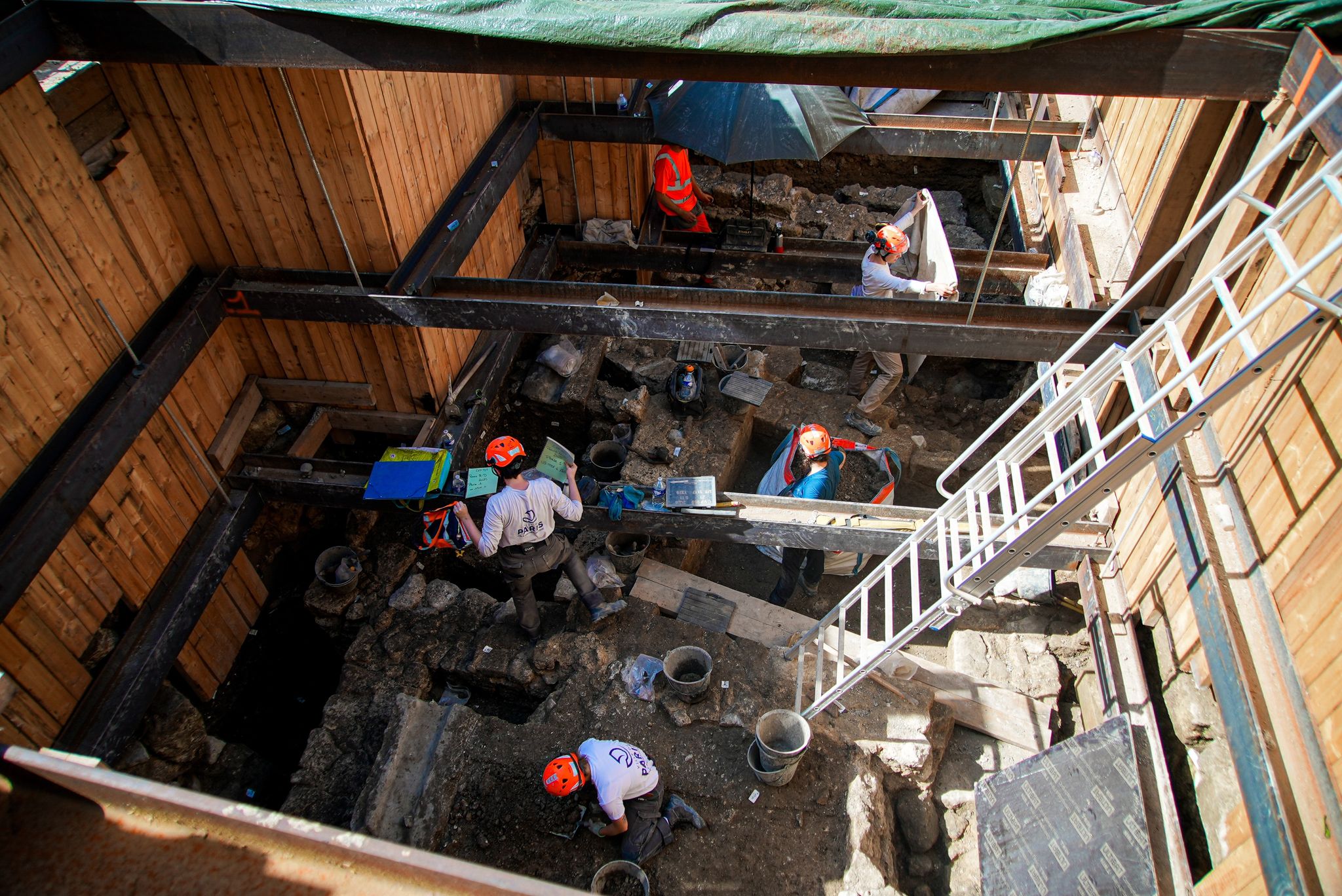
The work is taking place just steps away from the tourists queuing under the summer sun. While visitors wait to climb toward the cathedral’s gargoyles, a team of researchers is digging in the opposite direction—downward and backward through time. The project, which French media has labeled the “excavation of the century,” is revealing the layered evolution of the Île de la Cité.
According to the Associated Press, the findings allow historians to reconstruct the urban development of the French capital, tracing its path from ancient Roman Lutetia through the Merovingian and Carolingian eras.
The depth of the finds corresponds to the chronological age of the artifacts. The earliest traces appear just 50 centimeters below the surface, but as the team digs deeper, the history thickens. At a depth of four meters, archaeologists have encountered a Roman neighborhood.
The stratigraphic layers provide a clear timeline of Parisian life:
Surface to 50cm: Recent historical layers and initial vestiges.
Medieval Layers: Residential areas, wine cellars, and intact ceramics preserved in ancient latrines.
Merovingian and Carolingian Periods (6th–10th Centuries): Grain silos and storage pits.
Roman Period (4th Century): A dedicated neighborhood featuring coins and urban infrastructure.
Camille Colonna, the archaeologist leading the operation, noted that the area currently occupied by the plaza was a densely populated medieval residential zone when construction on Notre Dame began in 1163. This zone was once divided only by a single street.
'Dig of the century' unearths 1,700 years of history under Notre Dame cathedral
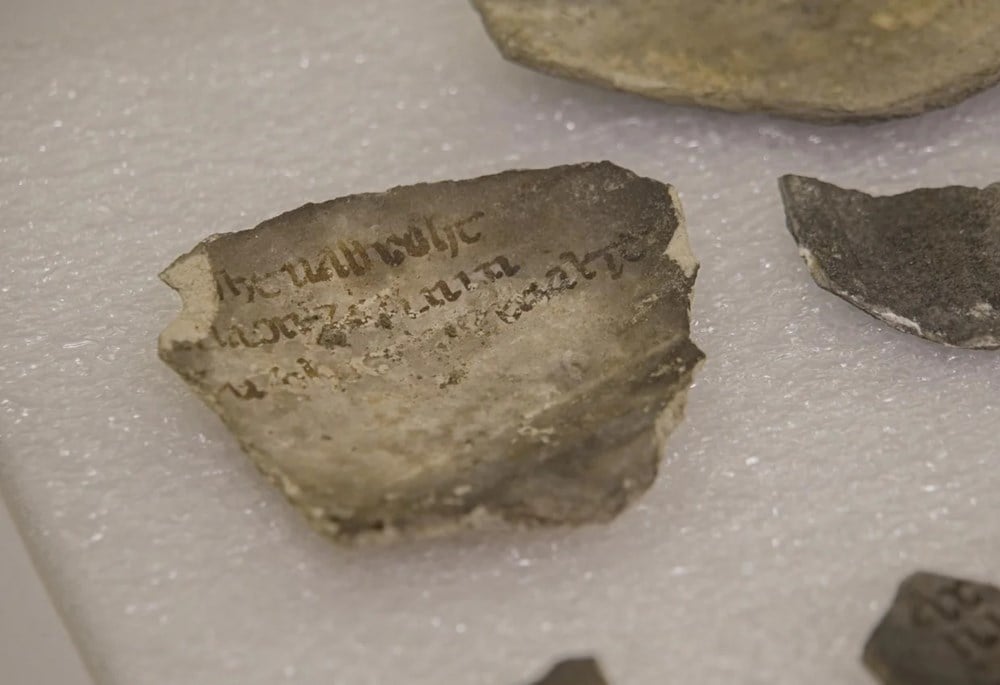
Among the hundreds of objects recovered, one specific find has captured the scientific community’s attention: medieval ceramic fragments decorated with mysterious red markings. These symbols have so far eluded experts, leading some to draw comparisons to a modern-day Da Vinci Code.
The preservation of these items is remarkable. Several pieces of complete ceramics, including jars and cups, emerged from the earth intact, thanks to the unique conservation conditions provided by ancient medieval latrines.
“It is a unique opportunity to work on something that will make a tangible difference in the history of Paris.” Lucie Altenburg, via Associated Press
Beyond the ceramics, the team has recovered coins that were heavily corroded by rust. After undergoing X-ray analysis, these coins revealed the face of Constantine, the Roman emperor who ruled in the early 4th century. These artifacts serve as critical markers, allowing researchers to date the various subterranean layers with precision.
Urban Renewal and the Necessity of Preservation
cluster (priority): news.google.com
The excavation is not a random archaeological pursuit but a requirement of modern urban planning. Following the 2019 fire that collapsed the cathedral’s spire, the structure underwent a meticulous reconstruction and reopened at the end of 2024. City authorities now intend to transform the plaza, which is currently described as arid and hot, into a space featuring more trees and shade.
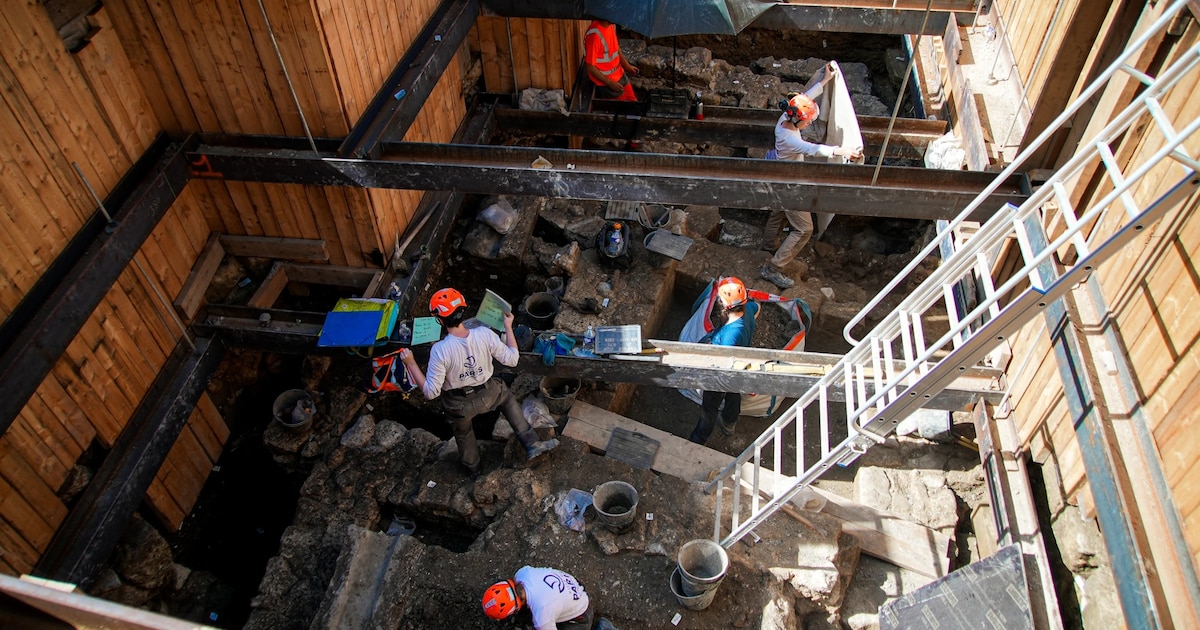
In a city with such deep historical roots, any project involving the movement of earth in sensitive areas must be preceded by exhaustive archaeological intervention to prevent the destruction of relics. Consequently, a section of the explanade has been converted into an open-air archaeological site, featuring a digging pit surrounded by barriers and traversed by a wooden walkway.
The scale of the discovery is significant. On certain days, the team has been able to fill up to 15 boxes with artifacts pulled from soil layers that had remained virtually untouched for decades. For many observers, the discovery adds a new dimension to the monument.
“It makes Notre Dame feel alive again.” Emily Carter, via CTPost
This phenomenon of rising urban levels is a common challenge in ancient cities. As KCH FM reported, cities grow by building atop the ruins of previous eras, effectively raising the ground level over time. In Rome, for example, the terrain has risen approximately 9 meters since the fall of the empire in the 5th century.
As the excavation continues, the focus remains on how these findings will reshape the historical narrative of the Île de la Cité and how the city will balance its need for modern, shaded public spaces with the duty to protect the 2,000 years of history lying just beneath the surface.