

A Gent court has ordered the transfer of Freddy Horion, a convicted murderer who spent 47 years in prison, to a specialized care facility under strict conditions. Despite the ruling, the Belgian Public Prosecutor’s Office warned this week that Horion remains a ticking time bomb
with a high risk of reoffending.
The 1979 Massacres and a Life Sentence
The case of Freddy Horion is etched into Belgian criminal history through a series of brutal killings in 1979. On February 9 of that year, Horion murdered Hélène Lichachevski, a shopkeeper working in the port of Gent. This was a prelude to an even more horrific crime on June 23, 1979, when Horion and an accomplice, Roland Feneulle, targeted the family of a car dealer in Sint-Amandsberg.
What began as an attempted robbery ended in the slaughter of five members of the Steyaert family. As RTL reported, Horion was eventually sentenced to death in 1980 for the six counts of murder, a sentence that was immediately commuted to life imprisonment.
For nearly five decades, Horion remained behind bars, becoming one of Belgium’s longest-serving prisoners. His tenure was not without incident; he managed to escape twice, once in 1982, when he fled to the Netherlands and remained at large for a month and a half before being recaptured.
The European Court and the Cost of Detention
The legal battle for Horion’s release began in earnest in 1993, though early requests for early release were repeatedly denied due to the perceived risk of recidivism. The tide began to turn in 2018, when a new psychiatric report concluded that Horion was no longer dangerous and no longer belonged in a traditional prison environment.

When the Belgian state refused to act on this psychiatric assessment, Horion took his case to the European Court of Human Rights. The court ultimately condemned Belgium for the prolonged detention. This legal pressure culminated in a 2023 decision by the Antwerp Court of Appeal, which VRT notes mandated his transfer to a non-prison institution.
The financial stakes for the state became significant. The court imposed a penalty of 1,000 euros per day for every day the state failed to move him. By June 2026, this debt has ballooned into several hundred thousand euros.
Conflicting Risk Assessments: The ‘Ticking Time Bomb’ Debate
The current decision to move Horion to a specialized care facility—monitored by an electronic ankle bracelet—has ignited a fierce conflict between the judiciary, the prosecution, and medical experts. The Belgian Public Prosecutor’s Office (OM) remains vehemently opposed to the move.
The OM’s advisory to the court is stark: there is a very high
risk that Horion will commit another crime. Specifically, the prosecution expressed serious reservations
about allowing Horion to transition into a Forensic Care Home—a low-security ward where the exterior doors remain open during the day—after only two or three months.
However, the medical professionals tasked with evaluating Horion disagree. According to reporting from Het Laatste Nieuws, psychiatrists estimated the risk of new criminal offenses as only moderate
.
This discrepancy creates a dangerous tension. On one side is the clinical view of a man who has aged out of his violent phase; on the other is a prosecution office that views the release of a mass murderer as a gamble with public safety.
A History of Escapes and a Final Plea for Euthanasia
The psychological toll of this decades-long limbo has led Horion to a desperate extreme. Last year, after years of failed release attempts, he applied for euthanasia, citing unbearable psychological suffering
.
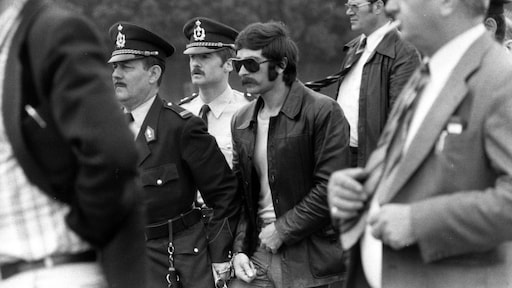
His legal team has pushed back against the prosecution’s alarmist rhetoric, suggesting that the “ticking time bomb” narrative is a calculated attempt to keep him imprisoned regardless of the law or medical evidence.
Defense lawyer for Freddy Horion, via VRTThe court’s decision to finally grant the transfer, albeit with strict conditions and electronic monitoring, represents a victory for the European Court’s human rights standards over the Belgian prosecution’s risk-aversion. The coming months will be a critical test of whether the moderate
risk assessment of the psychiatrists holds true, or if the prosecution’s warnings of a very high
risk were justified.
As Horion exits the prison system after 47 years, the focus now shifts to the specialized care facility and the effectiveness of the ankle bracelet in preventing a third escape. The state has avoided further daily fines, but it has inherited a high-stakes security challenge.
