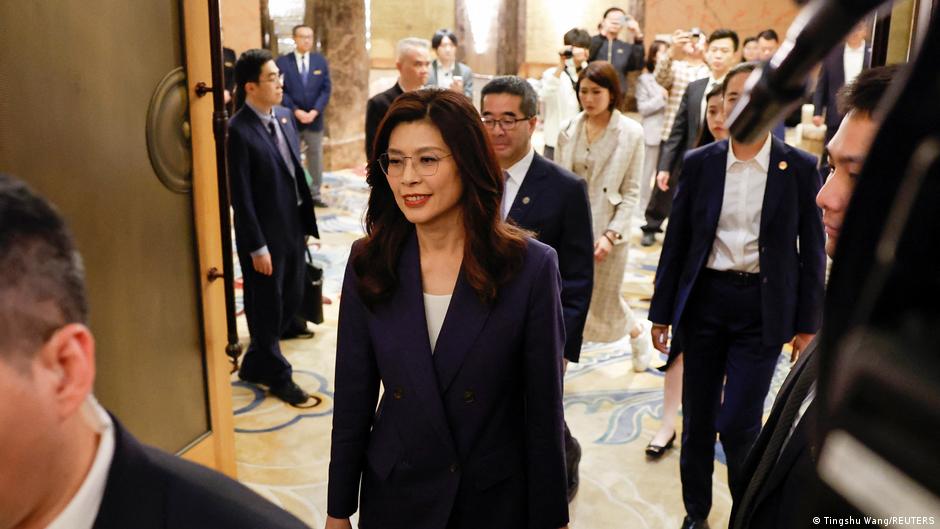
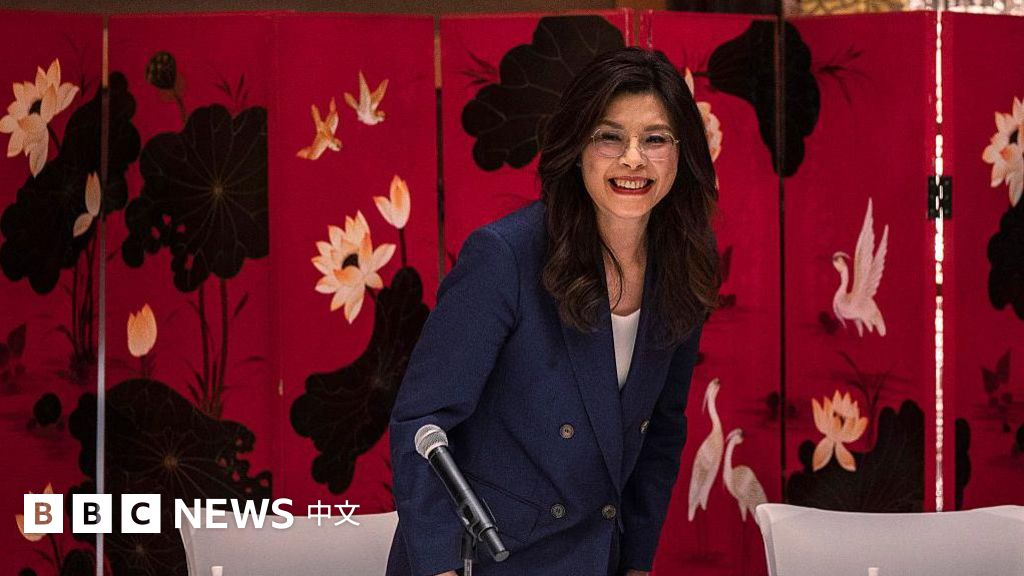
KMT Chairperson Cheng Li-wen began a 16-day diplomatic tour of the United States on June 1, 2026, signaling her intent to engage with American leadership following a high-profile meeting with Chinese President Xi Jinping in April. Cheng expressed a strong willingness to meet with President Trump to discuss cross-strait stability.
A 16-Day Tour of US Academic and Political Hubs
cluster (priority): 大纪元
Cheng’s itinerary is designed to engage with the core of American political and intellectual life. Her trip begins in San Francisco, where she is scheduled to hold discussions with scholars at the Hoover Institution at Stanford University. From there, the delegation will travel to Boston for visits and seminars at Harvard University and the Massachusetts Institute of Technology (MIT).
The tour continues through New York, where Cheng will meet with prominent local think tanks, before moving to the nation’s capital. During her time in Washington, D.C., she plans to meet with members of Congress and various administrative officials. Her schedule includes closed-door meetings with three major think tanks, including the Center for Strategic and International Studies (CSIS), to exchange views on Taiwan-related issues. Cheng is also expected to visit the American Institute in Taiwan (AIT) headquarters in Washington to facilitate communication with U.S. agencies. The final leg of her journey will take her to Los Angeles to meet with overseas Chinese communities.
The Ambition to Bridge Washington and Beijing
cluster (priority): RFI
The timing of this visit is highly strategic. Coming closely on the heels of a meeting between President Trump and President Xi in Beijing, Cheng is attempting to position herself as a leader capable of navigating the complexities of the world’s two most powerful nations. This “dual-track” approach seeks to highlight a political alternative to the current administration in Taiwan.
When asked by reporters if she would meet with the American president, Cheng responded that she was certainly very willing. She underscored her pragmatic approach to diplomacy, noting her willingness to engage with any leader who can facilitate peace.
“As long as it is conducive to peace, I am willing to do it; as long as it is a person conducive to peace, I am willing to meet them—not to mention the most critical decision-maker and leader, the US President.”Cheng Li-wen, KMT Chairperson
However, the prospect of a high-level meeting in the White House remains uncertain. White House sources suggest that Cheng Li-wen should not expect to meet with high-level U.S. government officials, noting that the administration typically reserves such meetings for opposition leaders who have reached the threshold of being likely future heads of state.
This attempt to signal a more conciliatory tone comes at a moment of significant tension. Recently, U.S. Secretary of the Navy Hung Cao announced a suspension of a $14 billion arms sale to Taiwan, and the strategic timing of Cheng’s visit has led analysts to suggest she is trying to prove that a KMT-led government could offer a more stable, less confrontational relationship with both superpowers.
Criticism Over Pro-China Rhetoric and Delegation Members
KMT Chair Cheng Li-wun sets off on 6-day China trip|Taiwan News
Despite her efforts to present a unified front, Cheng’s mission is facing intense domestic scrutiny. Critics argue that her recent political moves, particularly her meeting with Xi Jinping in April, signal a shift toward Beijing’s interests.
A significant point of contention involves the composition of her 14-person delegation. The group includes KMT Representative to the U.S. Qin Rixin and former Representative Yuan Chien-sheng, but it has also drawn fire for including a mainland-born KMT committee member who serves as a cadre for the official Taiwan Enterprises Association.
“At the very least, Cheng Li-wen must bring the true voice of Taiwan on this trip and not transmit the CCP’s rhetoric.”Democratic Progressive Party legislator Wang Ting-yu, via Epoch Times
Wang Ting-yu warned that if the delegation carries Beijing’s talking points under the guise of “peace,” it could undermine Taiwan’s sovereignty and self-defense capabilities. The legislator pointed to data suggesting that more than 80% of polls and multiple elections show that the Taiwanese people advocate for the mutual non-subordination of the Republic of China and the People’s Republic of China, and do not accept the CCP’s annexation of Taiwan.
Positioning for the 2028 Presidential Election
cluster (priority): BBC
Beyond immediate cross-strait diplomacy, this trip appears to be a calculated move for long-term political survival. Many observers view Cheng as a rising star within the KMT, potentially eyeing the 2028 presidential election.
Some analysts suggest that Beijing may be playing a long game with Cheng’s political trajectory. Reports indicate that Xi Jinping has expressed interest in grooming her as a potential standard-bearer for the KMT in 2028, hoping for a government in Taiwan that is more open to political dialogue with China.
Whether Cheng can successfully convince Washington that her “peace-oriented” approach is compatible with U.S. interests remains the central question of her tour. If she fails to secure high-level engagement, her trip may be viewed more as a domestic political performance than a successful diplomatic mission. If she succeeds, she may have fundamentally altered the KMT’s standing in the eyes of both the U.S. and Chinese leadership.