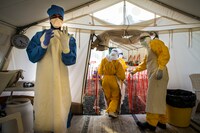
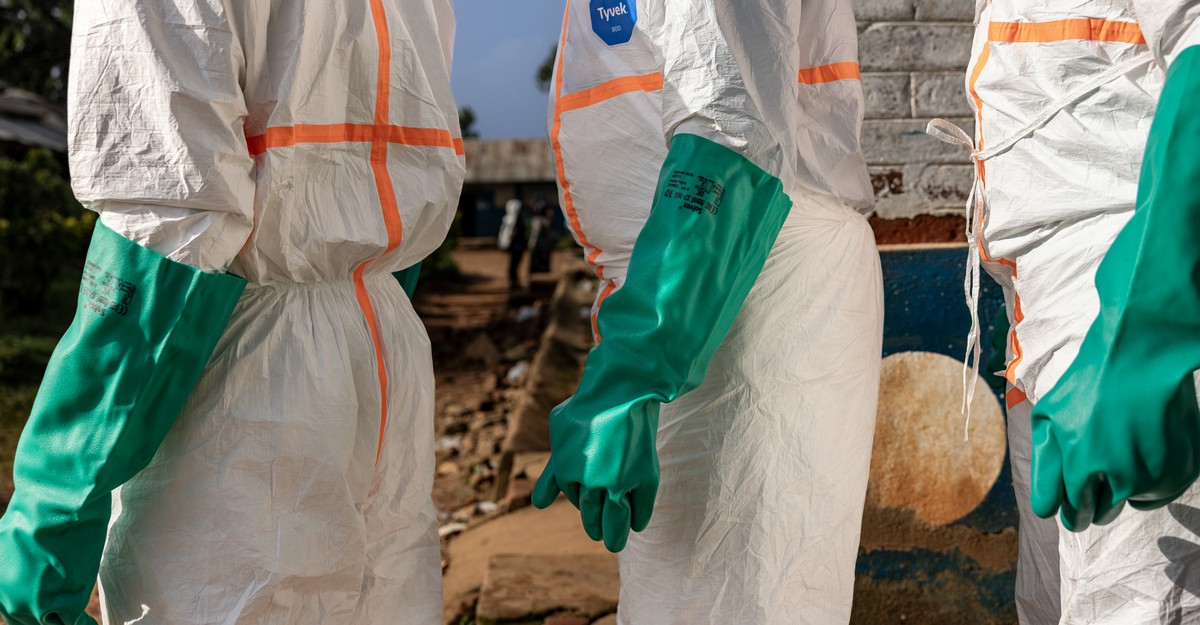
The World Health Organization declared the Ebola outbreak in the Democratic Republic of the Congo and Uganda a public health emergency of international concern on May 17. With more than 600 suspected cases and death tolls reported between 139 and 160, the virus is spreading rapidly through multiple urban centers in Central Africa.
The scale of the Bundibugyo outbreak
cluster (priority): The Atlantic
The current crisis is the third-largest Ebola outbreak in history. While the health ministry in the Democratic Republic of the Congo confirmed the outbreak on May 15, The Atlantic reported that the virus may have been circulating in the region for at least six weeks before public confirmation. The disease has already moved into several urban centers across both the Democratic Republic of the Congo and Uganda.
The rapid spread has prompted an international response, but the timeline of detection remains a point of scrutiny. Although the World Health Organization was alerted to suspicious deaths early this month, the delay between the initial circulation and the official emergency declaration highlights the challenges of real-time surveillance in active outbreak zones.
A breakdown of the Ebola virus species
WHO says Ebola outbreak is of international concern, but not a pandemic
The current outbreak is being driven by the Bundibugyo virus, a strain that was first discovered in Uganda in 2007 and previously caused an outbreak in the Democratic Republic of the Congo in 2012. Infectious disease expert Steven Bradfute explained that while there are six species of Ebola virus, only four are known to cause disease in humans.
The different species carry varying levels of historical impact:
Ebola Zaire: The most prevalent species, discovered in 1976, which has caused roughly 37,000 infections.
Sudan virus: A species that has caused approximately 1,000 infections.
Bundibugyo virus: The strain currently circulating in Central Africa.
Taï Forest virus: A species that infected a single individual in Côte d’Ivoire in 1994.
Research into these pathogens continues through initiatives like the RAPTER consortium, a program funded by the Department of Defense and run through Los Alamos National Laboratory, which works to develop vaccines rapidly against emerging pathogens.
Erosion of pandemic preparedness infrastructure
cluster (priority): news.google.com
The difficulty in containing this outbreak raises significant questions regarding the strength of global health defenses. According to the Washington Post, the massive U.S. response to the 2014 West Africa crisis involved the installation of an Ebola czar to coordinate a wide-reaching effort between the Pentagon, USAID, the CDC, and foreign governments.
However, that level of coordinated response appears increasingly difficult to replicate. The Atlantic noted that the Trump administration has systematically dismantled the infrastructure that once made quick containment possible, specifically targeting early-warning systems, trained response teams, and the funding streams that supported rapid response. This erosion of bilateral and multilateral partnerships has contributed to a sense that the world is playing from behind in the race to detect and contain new threats.
Transmission through care and the myth of isolation
The biological nature of the virus creates a unique social challenge. Because Ebola spreads through direct contact with bodily fluids, it often moves through communities during acts of care, such as when family members tend to the sick or when communities gather for burials. Experts like Dr. Craig Spencer often refer to Ebola as the disease of compassion because these very acts of human connection facilitate the spread.
This reality challenges the idea that outbreaks in distant regions do not affect the rest of the world. In an era of interconnected supply chains and rapid air travel, no wall can stop a pathogen. The economic and public health stakes remain high, as the global community remains bound by the same corridors that allow diseases to move across borders.