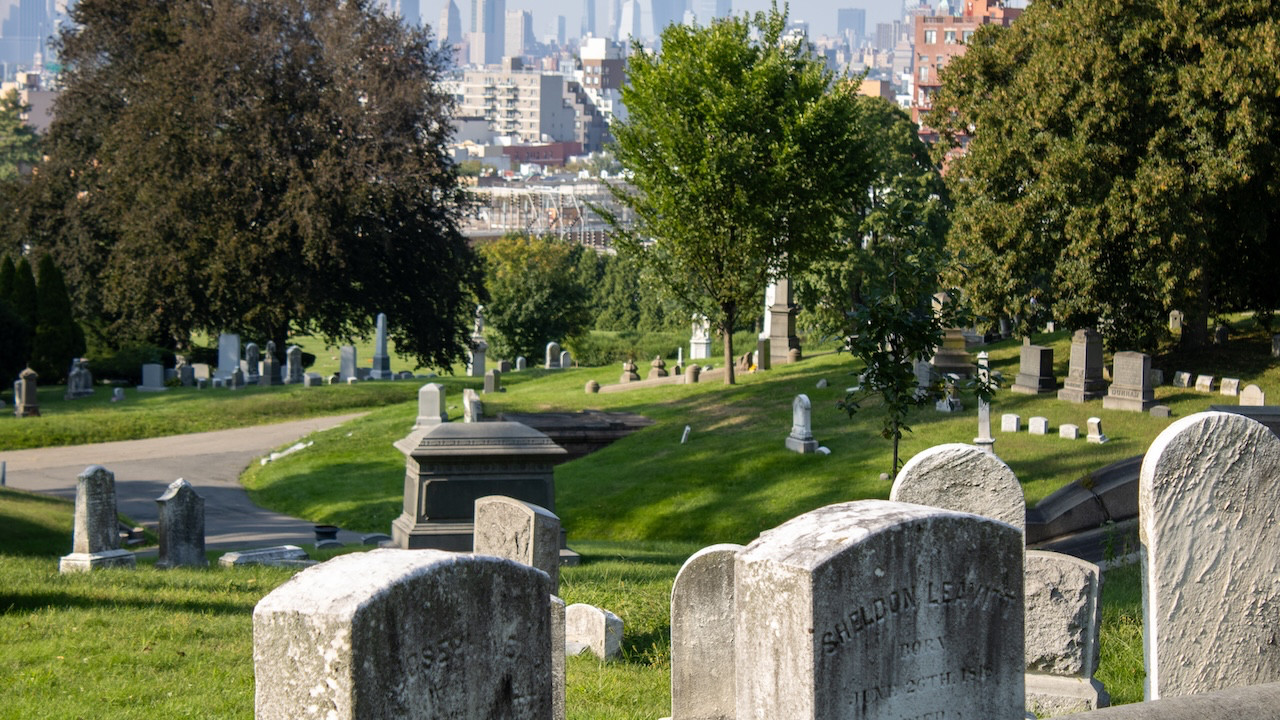
Researchers from Cornell University discovered a massive underground colony of approximately 5.5 million mining bees beneath the East Lawn Cemetery in Ithaca, New York. The population, one of the largest underground bee communities ever documented, provides critical pollination services to local apple orchards and highlights the biodiversity of historical urban sites.
The Scale of the East Lawn Colony
Bryan Danforth
The discovery began not in a lab, but during a routine morning walk in the spring of 2022. Rachel Fordyce, a laboratory technician in the entomology department at Cornell University, noticed an unusual density of insect activity while heading to work. After collecting samples and consulting with entomologist Bryan Danforth, the insects were identified as Andrena regularis, commonly known as mining bees.
To quantify the size of this subterranean city, researchers deployed 10 traps between late March and mid-May 2023. Each trap occupied less than one square meter of ground, designed to funnel emerging insects into glass containers. The results were staggering: while the team captured over 3,000 insects from 16 different species, the vast majority were mining bees.
According to Gazete Oksijen, the population density across a five-acre area suggests a total population ranging between 3 million and 8 million individuals. The average estimate of 5.5 million bees is roughly equivalent to the population found in more than 200 domestic honeybee hives.
Biological Adaptations of Andrena regularis
cluster (priority): apps.microsoft.com
Unlike the social structure of honeybees, mining bees are solitary. They do not build hives or serve a queen; instead, each female digs her own tunnel into the soil to create a nest. This behavior allows them to utilize the undisturbed earth of the cemetery, a site established in 1878 where the species has likely existed since the early 20th century.
The colony exhibits a specific evolutionary strategy to maximize reproductive success. Data from the Apidologie journal study reveals that males emerge from the soil during the first warm days of April, appearing several days before the females. This staggered emergence ensures that males are ready to mate the moment females surface.
Once the females emerge, they focus on subterranean construction. They dig nests and prepare cells filled with a mixture of pollen and nectar, where they deposit their eggs.
Synchronicity with Cornell Apple Orchards
Cornell orchards rely on wild bees
The survival of the East Lawn colony depends on a precise biological clock. One of the most distinct features of Andrena regularis is that they spend the winter months underground as adults. This allows them to remain dormant until the exact moment the environment becomes viable.
This timing is not accidental. Their emergence coincides perfectly with the blooming of apple trees in the nearby Cornell University orchards. By waking up in early spring, the bees provide an essential pollination service that supports the local agricultural ecosystem.
The relationship between the cemetery and the orchards demonstrates a critical ecological link: the “dead” space of the graveyard acts as a living nursery for the pollinators that sustain the “productive” space of the orchards.
Urban Refuges and Biodiversity Stakes
cluster (priority): play.google.com
The presence of 5.5 million bees in a managed urban area highlights the role of historical sites as biodiversity refuges. Because cemeteries often escape the intensive development, paving, and chemical treatments common in other urban zones, they become accidental sanctuaries for species that cannot survive in modern city landscapes.
As reported by WIRED Italia, the discovery underscores the unexpected importance of these spaces. When urban planners view a cemetery merely as a historical monument or a plot of land, they overlook the complex subterranean networks that support regional food security.
The stakes for these solitary bees are higher than for managed honeybees. While honeybees are moved by humans to where they are needed, mining bees rely entirely on the permanence of their soil. Any significant disruption to the East Lawn soil—through construction or aggressive landscaping—could wipe out a century-old colony that the local apple industry depends upon.
This discovery suggests that other historical urban sites may be harboring similarly massive, undocumented populations. The Ithaca case serves as a blueprint for how incidental observations—like a morning walk—can lead to the identification of critical ecosystem services hidden in plain sight.