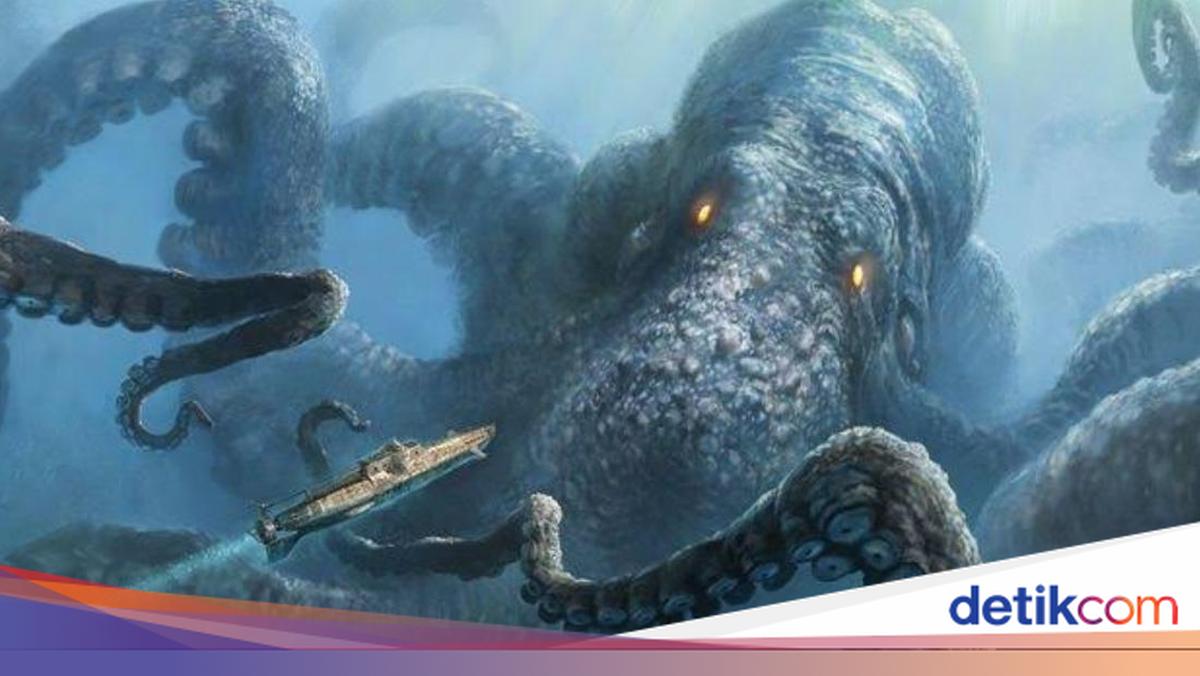
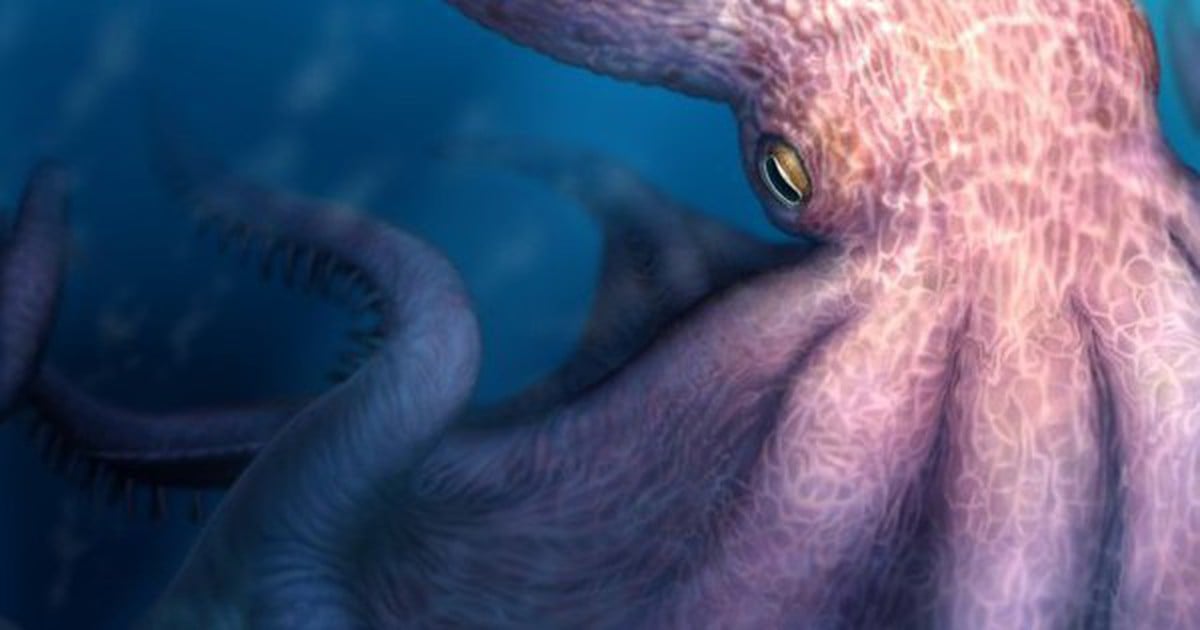
Researchers from Hokkaido University revealed in April 2026 that giant prehistoric octopuses, potentially reaching 19 meters in length, inhabited the oceans between 72 and 100 million years ago. Based on fossilized beaks found in Japan and Canada, these cephalopods lived during the Late Cretaceous, rivaling the size of the era’s largest marine reptiles.
The image of the Kraken—a multi-armed terror of the deep—has long been relegated to sailor’s myths and cinema. However, new paleontological data suggests that the myth had a biological precedent. The discovery of massive cephalopod jaws indicates that the prehistoric oceans were home to invertebrates that didn’t just survive alongside the great marine reptiles of the Late Cretaceous Period, but potentially dominated them.
The Challenge of Soft-Tissue Fossilization
cluster (priority): Harapan Rakyat
Studying ancient octopuses is a logistical nightmare for paleontologists. Unlike dinosaurs or prehistoric mammals, cephalopods are almost entirely composed of soft tissue, which decomposes rapidly and rarely leaves a trace in the geological record. The only part of these creatures that resists decay is the beak—a hard, parrot-like structure made of chitin, the same material that forms the exoskeletons of insects and crustaceans.
Because the beak is the only reliable evidence, researchers must rely on comparative morphology. By measuring the size of a fossilized jaw and comparing it to the proportions of modern species, scientists can extrapolate the total body length of the animal. This is the same methodology used to estimate the size of the Megalodon based on its teeth.
“That animal may be among the largest invertebrates in Earth’s history,”Yasuhiro Iba, Paleontologist at Hokkaido University
cluster (priority): Media Indonesia
The scale of this discovery was made possible by a shift in how fossils are extracted. Traditional excavation often destroys fragile specimens. To counter this, the research team employed digital fossil mining. This process involves grinding rock layer by layer, photographing each stage in high resolution, and using artificial intelligence to reconstruct the 3D shape of the fossil hidden within the stone.
The team analyzed 27 specimens in total. Fifteen were previously known and housed in museums, while 12 were newly identified through this digital process. Initially, these specimens were thought to represent five different species. However, the precision of AI modeling allowed researchers to realize they were actually looking at only two distinct species of ancient finned octopuses.
Nanaimoteuthis haggarti and the 19-Meter Scale
Were giant super intelligent octopuses the top predators of the Cretaceous?
The two identified species, Nanaimoteuthis jeletzkyi and Nanaimoteuthis haggarti, are ancient relatives of today’s finned octopuses, such as the deep-sea Dumbo octopus. While modern descendants are relatively small, their ancestor, N. haggarti, existed on a monumental scale.
The lower jaw of the largest N. haggarti specimen was large enough to hold an object the size of a pomelo. Based on these measurements, the researchers estimate the animal’s total length—with arms fully extended—ranged from 7 to 19 meters. This dwarfs the modern giant squid, which typically reaches 12 to 13 meters.
Prehistoric/Modern Creature
Estimated Max Length
Biological Group
Nanaimoteuthis haggarti
19 Meters
Invertebrate (Cephalopod)
Mosasaurus
17 Meters
Marine Reptile
Megalodon
13–18 Meters
Cartilaginous Fish
Giant Squid
12–13 Meters
Invertebrate (Cephalopod)
Apex Predation and Cognitive Dominance
cluster (priority): Vietnam.vn
A creature of this size was not merely a scavenger; it was an apex predator. Its massive size allowed it to compete directly with the giant marine reptiles of the time. However, the most intriguing finding isn’t the size, but the potential intelligence of these creatures.
Researchers noted that some of the largest fossil beaks show more wear on one side than the other. This asymmetry suggests “hand dominance,” indicating that the creature may have used one set of limbs more flexibly or frequently than others. In biological terms, such specialization typically requires a highly developed brain and sophisticated cognitive abilities.
“These octopuses may be the largest invertebrates ever described and capable of rivaling the giant marine reptiles that lived at the same time,”Research team led by Hokkaido University
If these creatures possessed both the physical scale of a Mosasaurus and the problem-solving intelligence characteristic of modern cephalopods, they would have been among the most formidable predators in the history of the oceans.
The implication of this find extends beyond simple taxonomy. It suggests that the “monster” narratives found in human mythology may be a subconscious echo of a biological reality—a time when the depths were truly ruled by colossal, intelligent invertebrates. As digital mining and AI continue to refine our understanding of the fossil record, it is likely that more of these “invisible” soft-bodied giants will emerge from the stone.