

RSPB’s Record-Breaking Population Growth
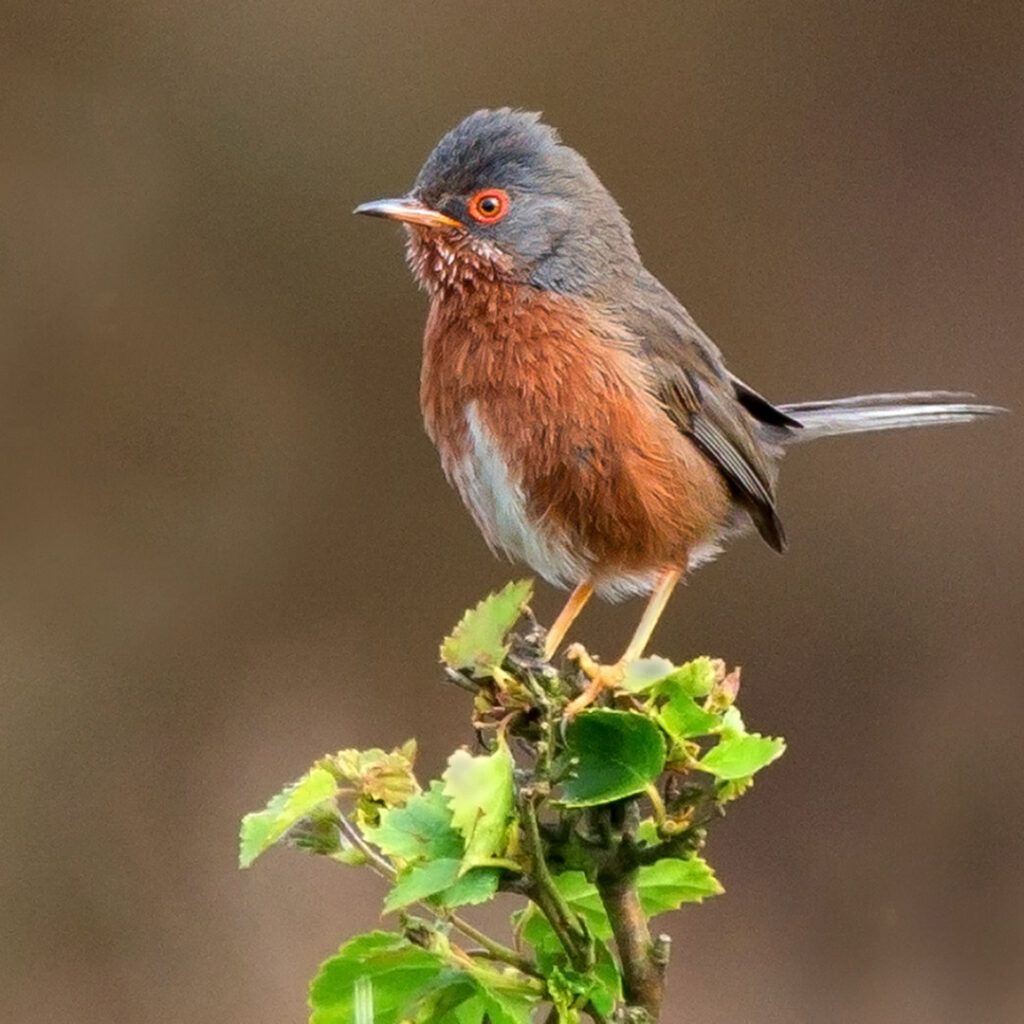
The recovery of the Dartford warbler is not merely a statistical uptick but a reversal of a catastrophic decline. During a population crash in the 1960s, the species was on the brink of extinction in the UK. While the bird has since bounced back, its survival remains tied to specific environmental conditions and aggressive conservation management.
According to a report from Countryside Jobs, the current peak of 183 pairs on RSPB reserves is the result of a dual-pronged benefit: concerted efforts to restore lowland heathland and a series of milder winters. Because the species is particularly sensitive to cold weather and harsh winters, the climate has played as much of a role as human intervention in this recent surge.
Restoring the Minsmere Heathland

The data from RSPB Minsmere on the Suffolk coast provides a concrete example of how targeted habitat manipulation drives population growth. The site has seen a measurable increase in breeding pairs over a short window:
This growth is directly linked to the restoration of 17 hectares of what was previously coniferous plantation. By removing the plantation and restoring the heathland, conservationists created the dense gorse cover the birds require for nesting and survival.
“We have seen a steady increase in the number of Dartford warblers, alongside other species relying on heathland habitats such as nightjar. All the hard work of restoring this habitat has really paid off.”
Mel Kemp, warden at RSPB Minsmere
The Fragility of the Gorse-Dependent Warbler
Despite the record numbers, the Dartford warbler remains a high-risk species. It is a specialist that relies almost exclusively on mature, dry heath habitats and gorse in good condition. This specialization creates a dangerous dependency; without the protective cover of compact gorse or dense heather, the bird cannot survive the winter.
The bird’s biological constraints further heighten its vulnerability. As Nottinghamshire Wildlife Trust notes, the Dartford warbler does not migrate for the winter and feeds solely on insects. This makes the species exceptionally susceptible to prolonged snow cover and extreme cold, which can wipe out local populations rapidly.
Physical characteristics and breeding habits further define its niche:
National Recovery and Conservation Status
The success within RSPB reserves mirrors a broader, though still precarious, national trend. The collapse of the 1960s was so severe that only 10 pairs remained in the UK at the nadir of the crash. Today, that number has expanded to approximately 3,200 pairs nesting across lowland heaths.
However, the species is far from “safe.” It remains classified as Amber under the Birds of Conservation Concern 45: the Red List for Birds (2021) and is listed as Near Threatened on the global IUCN Red List of Threatened Species. To prevent another crash, the species is protected in the UK under the Wildlife and Countryside Act, 1981.
The distribution of the bird remains concentrated, primarily as a resident of lowland heaths south of the Thames, spreading west to Dorset, and appearing at the coast in Suffolk, as well as on the Quantocks and Exmoor.
The current trajectory suggests that while the Dartford warbler can recover from the brink, it requires a permanent commitment to heathland maintenance. The transition from coniferous plantations back to native heath, as seen at Minsmere, is the primary blueprint for ensuring these numbers do not slide back toward the levels seen sixty years ago.
