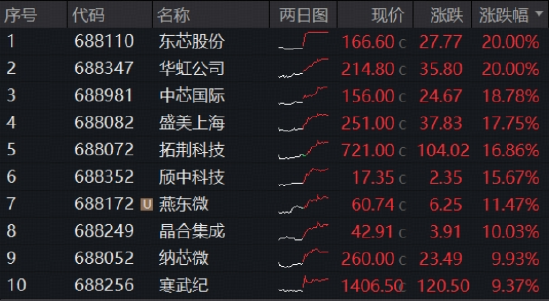
On May 25, 2026, the semiconductor sector experienced a massive surge, driven by technical breakthroughs and high AI demand. Major indices hit record highs as Huawei’s newly unveiled Tao (τ) Law and Alibaba’s RISC-V advancements signaled a shift toward domestic technical paradigms and increased self-reliance.
Global Market Momentum and China’s Rapid Expansion
Semiconductor Sector Surges Industry Association
The global semiconductor industry is entering a period of intense activity. According to reports from stcn.com, global semiconductor sales in the first quarter of 2026 reached $298.5 billion, representing a 25% increase from the final quarter of 2025. This growth is accelerating, with March sales alone hitting $99.5 billion, a 79.2% increase compared to the same month last year. The president and CEO of the Semiconductor Industry Association has indicated that total annual sales could surpass the $1 trillion mark for the first time.
While the global trend is upward, the Chinese market is moving even faster. In March 2026, China’s semiconductor sales reached $26.74 billion, a nearly 60% increase year-over-year. This surge is reflected in the domestic stock market, where sina.cn reported that the China Semiconductor Chip Index rose 6.95% in a single day, while the STAR 50 index climbed 5.88%.
This market rally has shown remarkable resilience. Even as seven semiconductor companies announced a combined 12.7 billion RMB in share reduction plans last week, investor enthusiasm remained high. The surge was widespread, with over 300 stocks rising and 24 companies, including SMIC and Zetta, hitting new historical highs.
Huawei’s Tao Law and the Technical Shift
cluster (priority): 凤凰网财经
A major catalyst for this industry shift is a new technical principle introduced by Huawei. During the 2026 International Circuit and System Symposium, ifeng.com reported that a Huawei director and president of the semiconductor business department presented the Tao (τ) Law. This principle proposes a new path for semiconductor development in the post-Moore era, focusing on time miniaturization rather than traditional geometric miniaturization.
The Tao (τ) Law emphasizes a multi-level collaborative optimization system that spans devices, circuits, chips, and entire systems. By utilizing techniques such as logic folding, 3D stacking, and signal delay optimization, the approach seeks to achieve performance breakthroughs on mature processes without relying on EUV lithography. This strategy is expected to allow high-end chip transistor density to reach levels equivalent to a 1.4nm process by 2031.
This shift has significant implications for the domestic supply chain. By focusing on performance through architectural efficiency rather than just shrinking physical dimensions, the Tao (τ) Law may expand the market for domestic equipment manufacturers who specialize in advanced logic and memory processes.
Alibaba and the RISC-V Milestone
ARM Stock Tumbles as AI Chip Demand Surges Beyond Supply #ARM #AI #AIChips #Semiconductors #Tech
The move toward alternative architectures is also being led by Alibaba’s DAMO Academy. As sina.cn detailed, the XuanTie 9 series of high-performance processors has successfully completed adaptation for the Android 16 operating system.
The XuanTie 9 series is the first RVA23-compatible RISC-V processor to run the latest version of Android. This achievement marks a transition for RISC-V from simple functional porting to standardized compatibility and productized delivery. The XuanTie team noted that these processors feature a Vector+Matrix AI acceleration engine, which provides native support for large-scale AI models with hundreds of billions of parameters.
This development provides a critical alternative to established architectures, particularly as domestic large language models continue to expand. The ability to run modern operating systems on RISC-V hardware significantly shortens the cycle from chip prototype to commercial market entry.
Manufacturing Capacity and the IPO Pipeline
cluster (priority): 新浪财经
As demand for AI-driven hardware scales, manufacturing capacity is approaching its limits. Current data shows that major foundries are operating at near-full load.
The pressure on capacity is driving a wave of industrial expansion and capital market activity. The IPO processes for major domestic memory leaders, such as Longxin Technology and ChangXin Storage, are accelerating, which is expected to increase the certainty of orders for semiconductor equipment.
This expansion is not limited to chip design. The entire chain—from materials to advanced packaging—is seeing increased activity. The focus is shifting toward high-purity materials like photoresists and wet chemicals required for advanced processes, as well as advanced packaging solutions that are essential for improving AI chip performance.