Researchers at Kyoto University have traced the evolutionary history of blood cells back 700 million years, discovering that modern blood and immune cells are repurposed from single-celled ancestors. The study reveals that human blood cell maturation in bone marrow mirrors the ancient evolutionary process that began at the dawn of multicellular life.
The FOS Gene and the 700-Million-Year Timeline
cluster (priority): Interesting Engineering
The blood circulating through the human body is not a recent biological invention. Instead, it is a living archive of genetic material recycled from organisms that existed long before the first animals appeared. According to ScienceDaily, researchers identified a specific gene called FOS that is widely expressed in blood cells across numerous animal species.
By tracking this gene, the team traced its presence back to a unicellular ancestor from approximately 700 million years ago.
This timeline aligns with the emergence of the first multicellular animals on Earth. Rather than developing a circulatory system from scratch, these early animals repurposed existing genetic blueprints from their single-celled predecessors to create the first primitive blood cells.
“I feel deeply moved by these findings, which represent the culmination of our work and illustrate that the differentiation pathways of vertebrate blood cells reflect the 700-million-year evolutionary history of these cells,”
Hiroshi Kawamoto, team leader at Kyoto University
Macrophages as the Primordial Blood Cell
cluster (priority): Bioengineer.org
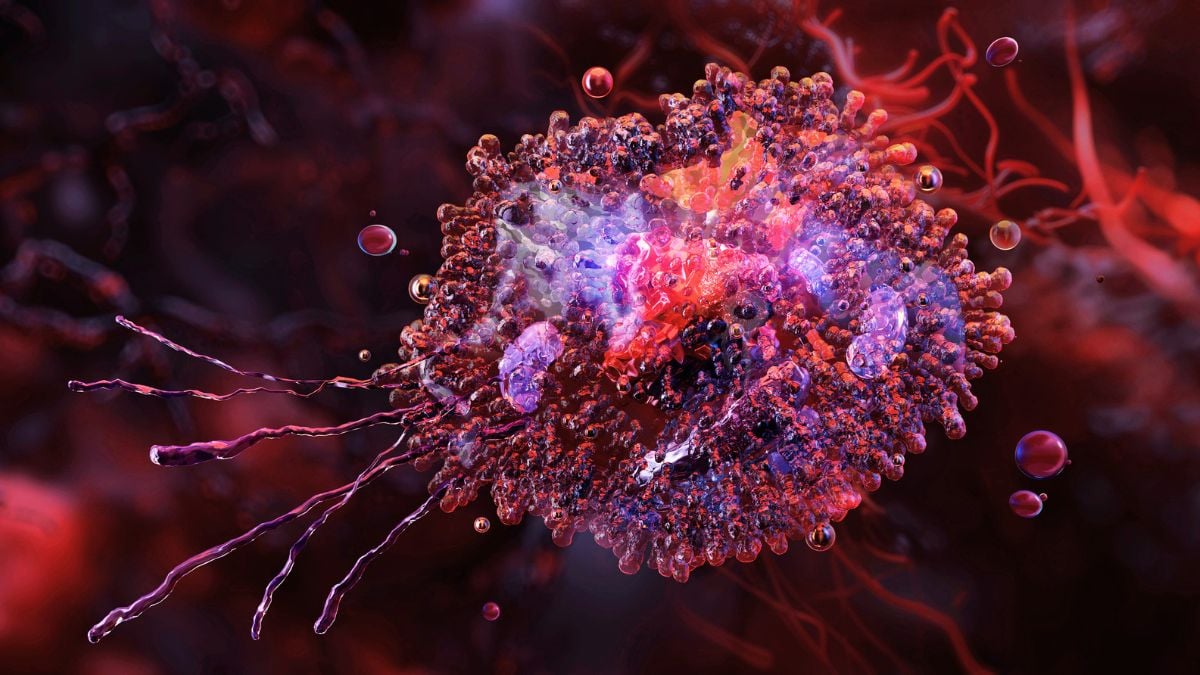
Among the various lineages of human blood cells, one type stands out as the most ancient: the macrophage. These cells act as the body’s professional phagocytes, serving as the heavy lifters of the immune system by engulfing and digesting cellular debris and harmful pathogens.
As reported by Bioengineer.org, macrophages exhibit a gene expression profile that most closely aligns with unicellular organisms. This suggests that the very first blood cells in the history of animal life were essentially macrophage-like scouts.
These cells provided the foundational machinery for defense and cleanup, a biological necessity that remained constant as life evolved from single cells into complex, multicellular organisms.
The Branching Sequence of Hematological Evolution
8 Ancient Discoveries Scientists Still Can't Explain
Once the primordial macrophage-like cells were established, evolution began to specialize these tools into the diverse array of blood cells found in vertebrates today. The researchers mapped this progression as a branching family tree.
The evolutionary sequence followed a specific path of divergence:
Mast Cells: The first major branch to diverge from the early macrophage lineage.
T Cells and Red Blood Cells: These specialized cells, responsible for adaptive immunity and oxygen transport respectively, evolved later from mast cell ancestors.
B Cells: Prototypic B cells branched directly from the macrophage line after mast cells had already separated.
This ancient sequence is not just a historical record; it is a current biological process. As Interesting Engineering notes, the way cells mature in human bone marrow today essentially repeats this 700-million-year evolutionary journey every time the body creates new blood.
“When I let it sink in that this legacy from so long ago is circulating within my body as blood cells, I feel closer to our distant ancestors.”
Yosuke Nagahata, first author
Using Transcriptomes to Bypass the Fossil Record
cluster (priority): ScienceAlert
Tracing the history of blood is notoriously difficult because cells do not fossilize like bones, shells, or feathers. To solve this, the Kyoto University team used an indirect analytical approach focused on the transcriptome—a snapshot of gene expression that reveals which genes are active in a specific cell.
According to ScienceAlert, the researchers collected transcriptome data from a vast array of species to find shared regulatory machinery. The study included:
Humans and mice
Zebrafish and sea urchins
Sea squirts (tunicates)
Flies, worms, and sponges
Various unicellular organisms
By comparing these distant species, the team reasoned that deeply similar regulatory patterns indicated a common ancestral cell program. This allowed them to bridge the gap between single-celled life and the complex blood systems of modern animals.
Potential Applications in Cancer Research
While the study provides a profound look at evolutionary history, its implications extend into modern clinical medicine. The ability to map the evolutionary origins of cell types offers a new lens for understanding how cells malfunction.
The newly developed analytical method for tracing gene expression profiles holds promise for medical research. Specifically, scientists believe this approach could be used to trace the evolutionary origins of complex diseases, including cancer, by identifying where cellular development deviates from its ancient, successful blueprint.
By understanding the “correct” 700-million-year-old path of cell differentiation, researchers may better identify the genetic glitches that lead to malignancy.