

IDF Chief of Staff, Lieutenant General Herzi Halevi (left) talks with officers in Khan Younis, Southern Gaza, December 23, 2023. Photo: IDF
80 days after Israel launched the war to destroy Hamas, the warnings that Israeli military commanders gave from the beginning that this would be a difficult and long campaign gradually became reality.
The IDF’s efforts to cut off Hamas’s military forces – significantly weakening the militant group in northern Gaza, destroying kilometers of tunnels and expanding ground operations in both central Gaza and Khan Younis – successfully Hamas’s stronghold in the south.
But Hamas remains essentially intact in the southern Gaza Strip. None of the group’s most prominent commanders have been killed, and Hamas leader Yahya Sinwar remains confident that he and the massive force he leads will eventually be able to hold off the Israeli army and continue. continue to operate.
The massacre of 1,200 people in southern Israel on October 7 – the starting point of this war and the darkest day in modern Israeli history – is the reason why Israel’s military forces cannot rest for long. Hamas has not been wiped out.
The only country that strategically recognizes the importance of the October 7 event to Israel is the United States. America is also the country most willing and able to support Israel in this war. Washington’s practical military support is central to Israel’s day-to-day combat capabilities.
And America’s diplomatic support was once again clearly demonstrated in the binding resolution of the United Nations Security Council on December 22. At the insistence of the US, this petition was changed from the original content demanding an immediate ceasefire – and thereby bringing victory to Hamas – to the content of seeking measures to urgently expand aid. humanitarian aid into Gaza, and the creation of conditions that would permit a future cessation of hostilities – terms that Israel could certainly accept.
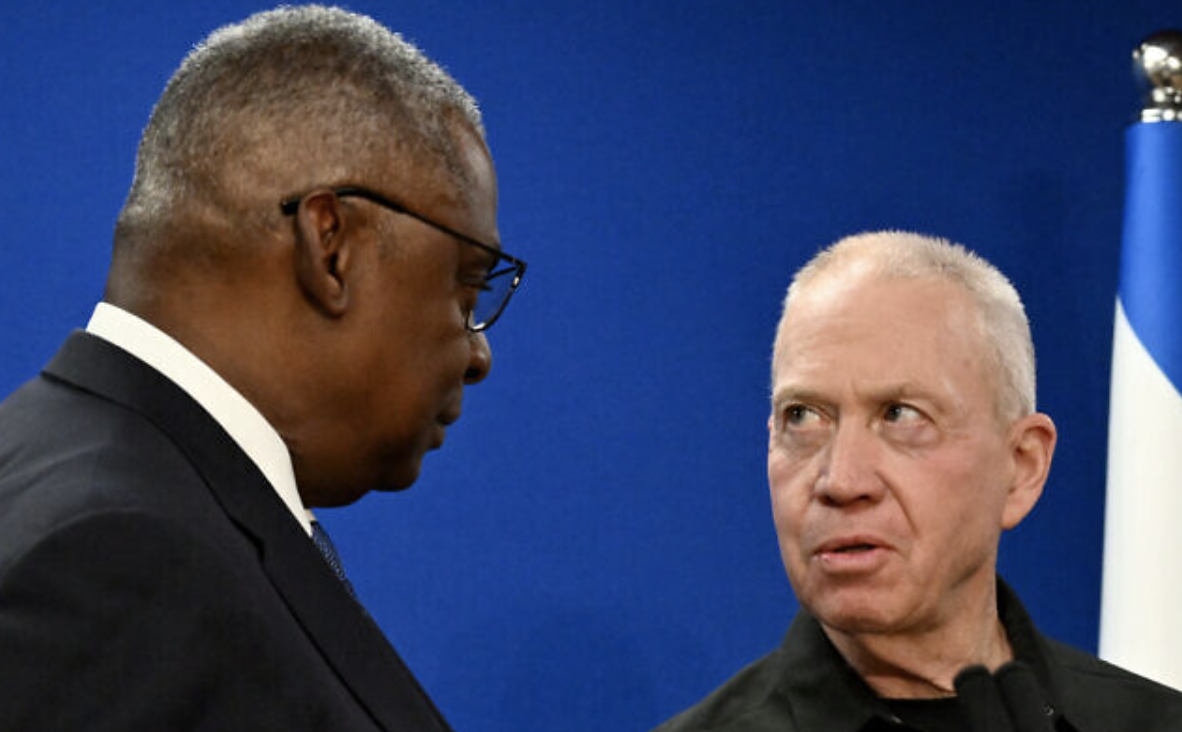
US Secretary of Defense Lloyd Austin (left) and Israeli Defense Minister Yoav Gallant hold a joint press conference in Tel Aviv on December 18, 2023. Photo: AFP
However, the US government has not yet set a deadline for ending the conflict. And from President Joe Biden to lower-level officials, the United States has continuously reiterated Israel’s obligation to destroy Hamas, to ensure that Israelis will not face another tragedy from gunmen. Palestine. President Biden and his team also firmly asked Israel to avoid “major” casualties among civilians in Northern Gaza and Southern Gaza.
For their part, Israeli military commanders say the challenge posed by Hamas strongholds like Khan Younis requires a different military approach.
Meanwhile, the Israeli public is in a state of anxiety. The growing losses of IDF soldiers – including young soldiers in the active forces, as well as older reserve members who were uprooted from their home lives and never returned return – is causing daily pain to the nation’s spirit.
Furthermore, Israelis, despite the horrors of October 7, were not indifferent to the heavy loss of civilian life in Gaza.
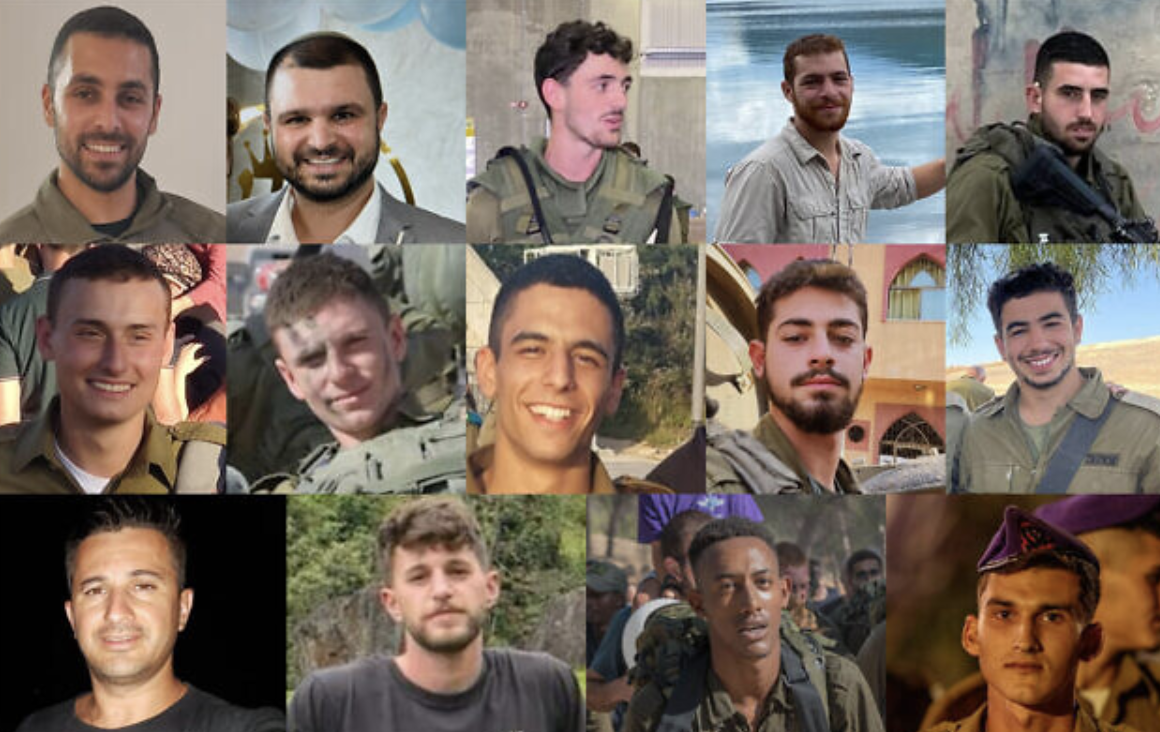
IDF soldiers killed in the Gaza Strip on December 22 and 23, 2023. Photo: IDF
Some Israelis believe the IDF will sweep relatively smoothly through Gaza, where Hamas has been preparing its defenses for a decade and a half. But most Israelis expected the IDF death toll to rise even higher.
Initially, many had hoped the IDF would make greater gains in targeting key Hamas leaders. And the important thing is that they have placed hope that the IDF will be more successful in rescuing hostages.
But as the days and weeks passed, combat fatigue increased, and the strain on soldiers, families, and the nation’s economy grew inexorably.
The IDF knows that it must gradually reduce the number of soldiers it is deploying. Top officials talk about staying away from “high-intensity” conflict in the coming weeks. But the question is whether a more “surgical” approach would work in the southern Gaza Strip. Another issue is whether IDF losses will increase if and when tactics change.
Leaked excerpts from cabinet meetings and some criticism made in public, show that ministers in the Israeli cabinet are deeply disconnected. They even risk undermining soldiers’ trust in those who command them.
President Isaac Herzog had to speak out on the evening of December 24: “Please show responsibility, show restraint and wait a little longer with political campaigns and messages. The enemy is waiting to see the gulfs between us, so that we can start fighting each other.”
The danger is that political disagreement and infighting may spread nationwide and reach the ranks of soldiers participating in the war. There is a sense that Israel is not only fighting a deadline by which it must disband Hamas before the United States seeks to impose restrictions, but is also working to destroy Hamas before Israelis begin to divide themselves politically. politics.
As the IDF increasingly shifts its focus south, it is also turning its attention to the far reaches of the Gaza Strip, the Philadelphia Corridor, which runs 14 kilometers along the Gaza-Egypt border.
If that border remains porous, the goal of a demilitarized Gaza from which Israel is no longer threatened cannot be achieved or maintained.
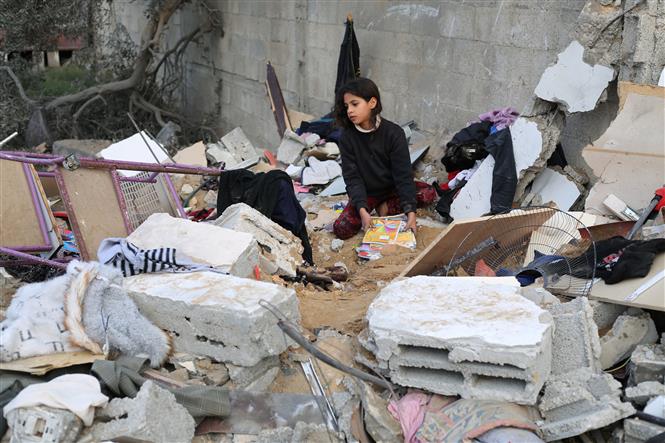
A child picks up belongings left after an Israeli airstrike on the city of Rafah, Gaza Strip on December 12, 2023. Photo: THX/TTXVN
Israeli officials and experts offer diverse assessments of Egypt’s behavior on the border since Hamas took power in Gaza in 2007. Hamas has been able to transport weapons and weapons parts freely. very easily, however, the Egyptians have stepped up efforts to prevent such activity in recent years.
Meanwhile, other fronts still echo with gunfire, and the border with Lebanon is more boiling than ever. Tens of thousands of Israelis have no chance of returning to northern towns and communities as long as Hezbollah remains close to the border, firing precision anti-tank missiles into dozens of homes.
Defense Minister Yoav Gallant wanted to attack Hezbollah immediately after October 7, before the IDF attacked Hamas in Gaza, but was rejected. And Israel repeatedly warned Hassan Nasrallah’s army that, one way or another, Hezbollah would be forced to retreat from its borders, as stipulated in UN Security Council Resolution 1701 at the end of the War. Lebanon for the second time in 2006.
