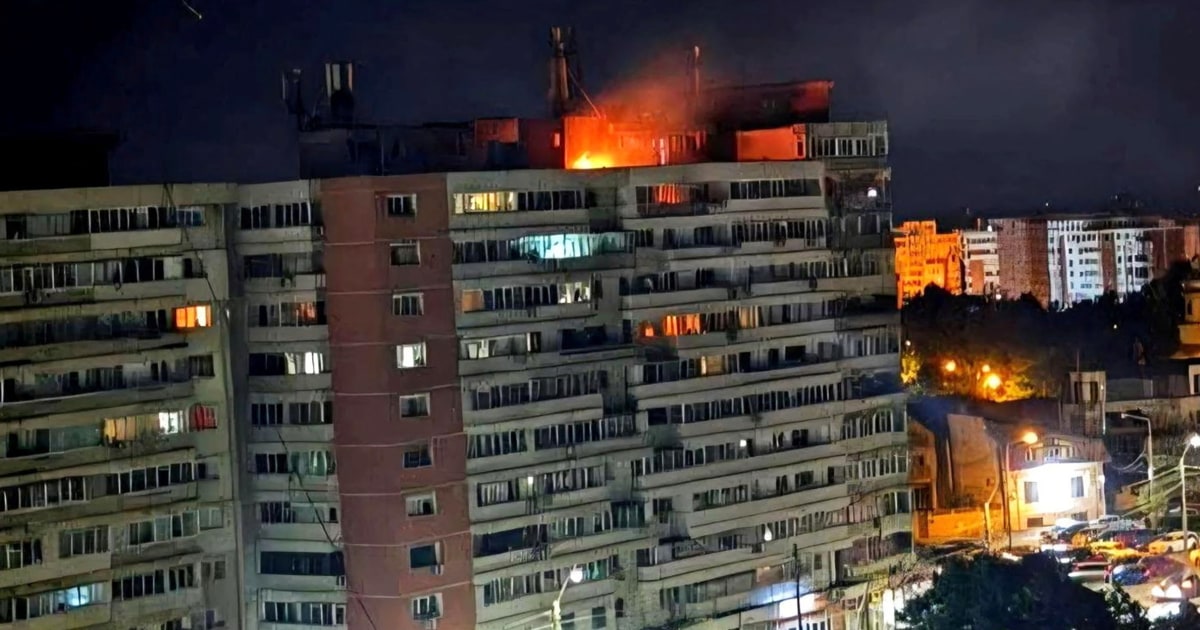
A Russian drone crashed into a residential building in Galați, Romania, on May 29, 2026, injuring two people and sparking a fire, prompting Bucharest to declare the Russian consul in Constanța a persona non grata and close the consulate. Former NATO Deputy Secretary General Mircea Geoană warned that Europe must urgently upgrade its air defenses to counter low-altitude drone threats, while Ukrainian President Volodymyr Zelenskyy called for stepped-up pressure on Moscow to prevent further escalation.
Why Romania’s Drone Strike Exposes NATO’s Air Defense Gap
The incident in Galați is not an isolated event. Since Russia’s full-scale invasion of Ukraine in February 2022, drones and missiles have repeatedly crossed into the airspace of NATO member states, from the Baltics to Poland and Finland. Yet the May 29 strike marks the first time a Russian drone has injured civilians in Romania, turning a long-simmering regional security concern into a direct threat on European soil. According to the Romanian Ministry of National Defense, two F-16 fighter jets were scrambled in response, but they had only four minutes to react—insufficient time to intercept the drone before it struck. As former NATO official Mircea Geoană explained to Euronews, “The peaceful sleep is over.”
The problem, Geoană argues, is not a lack of capability but a failure to prioritize the right defenses. NATO’s air defense systems are robust at mid- and high-altitudes, equipped with Patriot missiles and F-35 fighters. But low-altitude threats—like the drone that hit Galați—remain a glaring weakness. “For this basically low altitude things… you can acquire them, the only thing is that you have to put your right priorities in the right place,” Geoană said, underscoring the need for a shift in focus. The Romanian military’s struggle to shoot down the drone in time highlights a broader vulnerability: the gap between detection and response at the lowest altitudes, where drones and missiles can slip through undetected or unreachable.
The Drone Strike: What Happened and Why It Matters
cluster (priority): NBC News
On the night of May 28–29, Romania’s radar detected multiple drones crossing into its airspace. By 1:19 a.m. local time, two F-16s and a helicopter had been scrambled, but the drone that struck the apartment building in Galați was already on a collision course. The explosion caused a fire on the roof, injuring two people. Romanian officials immediately blamed Moscow, a claim Russia denied. Dmitry Medvedev, deputy chair of Russia’s Security Council, dismissed the accusations, while Russian officials suggested the drone had “gone off course”—a narrative echoed by former Estonian President Toomas Hendrik Ilves, who told NBC News that such incidents could be part of Russia’s “deniable ‘grey warfare.’”
The strike’s proximity to Ukraine—Galați sits directly across the Danube from Ukrainian territory—has reignited fears of a widening conflict. Ukrainian President Volodymyr Zelenskyy wasted no time in framing the incident as a call to action. “The war of aggression has crossed yet another line,” he said, calling for “a strong international response.” His message was clear: mere condemnation of Russia’s actions is no longer enough. The Czech president, Petr Pavel, echoed this sentiment, writing on X that “Russia must clearly understand that we will not tolerate such attacks.” The question now is whether NATO’s collective response will match the urgency of the moment.
Grey Warfare and the Blurring Battlefield
‘Much better defence’ required to avert Russian drones, former Romanian NATO official tells Euronews
The Galați incident is the latest in a series of low-intensity probes by Russia, testing the limits of NATO’s patience and defenses. In 2024, a Russian cruise missile briefly entered Polish airspace, lingering for 39 seconds—a fleeting but deliberate violation. The following year, Estonia reported three Russian MiG-31 fighter jets crossing into its territory for four minutes. These are not accidental incursions but calculated tests of European resolve, designed to wear down defenses and provoke reactions. As Ilves put it, “It’s basically impossible to tell which [intent] it is at this point”—whether the drones are straying off course or being deliberately deployed as part of a broader strategy to escalate tensions.
This ambiguity is the hallmark of “grey warfare,” a tactic that blends conventional military actions with covert operations, cyberattacks, and sabotage. The goal is to create chaos without crossing the threshold that would trigger a full-scale response. By targeting civilian infrastructure—like the apartment building in Galați—Russia can claim plausible deniability while still achieving its objectives: sowing fear, testing defenses, and pushing NATO to react in ways that could further destabilize the region.
NATO’s Response: Condemnation or Action?
cluster (priority): Institute for the Study of War
So far, NATO’s response has been measured. The alliance has condemned the incident, but there is little sign of a unified military or diplomatic offensive. The Romanian government’s decision to expel the Russian consul and close the consulate in Constanța is a strong symbolic gesture, but it does little to address the underlying issue: the lack of effective low-altitude air defenses. Geoană’s call for “a much better effort to try to find the right kind of air and missile defence for NATO” is not just about technology—it’s about political will. The alliance must decide whether it will treat these incursions as isolated events or as the opening salvo in a broader campaign to draw NATO into direct conflict with Russia.
The stakes are high. If NATO fails to upgrade its defenses and deter further attacks, the risk of accidental escalation grows. A single miscalculation—whether by a drone operator, a fighter pilot, or a political leader—could trigger a chain reaction that no one wants. Yet the alternative—doing nothing—risks emboldening Russia to push further, testing the limits of European security until someone finally crosses the line.
The immediate priority for NATO is to harden its air defenses, particularly at low altitudes. This means investing in new detection systems, upgrading existing missile defenses, and ensuring that fighter jets have the time and space to intercept threats before they reach populated areas. Romania’s experience in Galați should serve as a wake-up call: the current system is not sufficient.
Beyond defense, NATO must also clarify its red lines. If Russia continues to test European airspace with impunity, the alliance risks losing credibility. The next 30 days will be critical. Will NATO’s member states unite behind a stronger response? Will Russia escalate further, or will it back down in the face of united opposition? One thing is certain: the peaceful sleep Geoană referred to is gone. The question is whether Europe will rise to the challenge—or sleepwalk into a wider conflict.
For now, the world watches as the Danube region becomes the frontline of a new kind of war—one fought not with tanks and artillery, but with drones, deniability, and the slow erosion of peace.