

Young doctor at Thanh An island commune medical station. Photo: SYT
1. Artificial intelligence is effectively deployed at the island commune medical station
For the first time in the country, people in Thanh An island commune (Can Gio district) have access to cervical cancer screening services using artificial intelligence (AI) technology.
On November 8, the remote colposcopy system (TeleCervicography) was brought by Hung Vuong Hospital doctors and nurses to Thanh An Island Commune Medical Station to screen for cervical cancer for living women. here.
This is the first time in the country that a colposcopy technique with integrated AI to help detect and screen for cervical cancer has been deployed right at the commune health station, and is also the second AI application. two in community health care work deployed in the island commune.
Previously, 1 year ago, the Department of Health deployed an AI application in chest X-rays, this application helped medical staff at the island commune health station quickly detect lesions on X-rays. in the context of not being able to recruit doctors specializing in diagnostic imaging to work in the island commune.
2. End serious image overload at Ho Chi Minh City Oncology and Children’s Hospital 1
2023 is a milestone year marking the end of the image of serious overcrowding that has lasted for many years at the two leading specialized hospitals in the city and the entire Southern region, which are Ho Chi Minh City Oncology Hospital and Ho Chi Minh City Oncology Hospital. Children’s Hospital 1.
With the completion of the new facility of Ho Chi Minh City Oncology Hospital (facility 2, inaugurated on April 15) and Children’s Hospital 1 (blocks of Pediatric Surgery Center and Neonatal Center inaugurated on April 15). May 27), children and patients were cared for in new, spacious and modern departments and rooms.
3. Health examination of the elderly, initially identifying health patterns of the elderly in the area
Deploy health examination and non-communicable disease screening for the elderly living in the city in a unified way throughout the industry, from content, implementation method to full digital transformation. set of health examination procedures.
Thanks to that, the health patterns of the elderly living in the city were initially identified, specifically: hypertension (58.6%), diabetes (29.8%), bronchial asthma – chronic obstructive pulmonary disease (3.7%), cancer and suspected signs of cancer (3.7%), signs and symptoms of depression (2.9%), anxiety anxiety (2.0%), and especially noted that 28.8% of the elderly were at risk of falling.
The disease model in the elderly in the city is a practical basis for the health sector to develop specific plans to help manage care and improve the quality of life for the elderly.
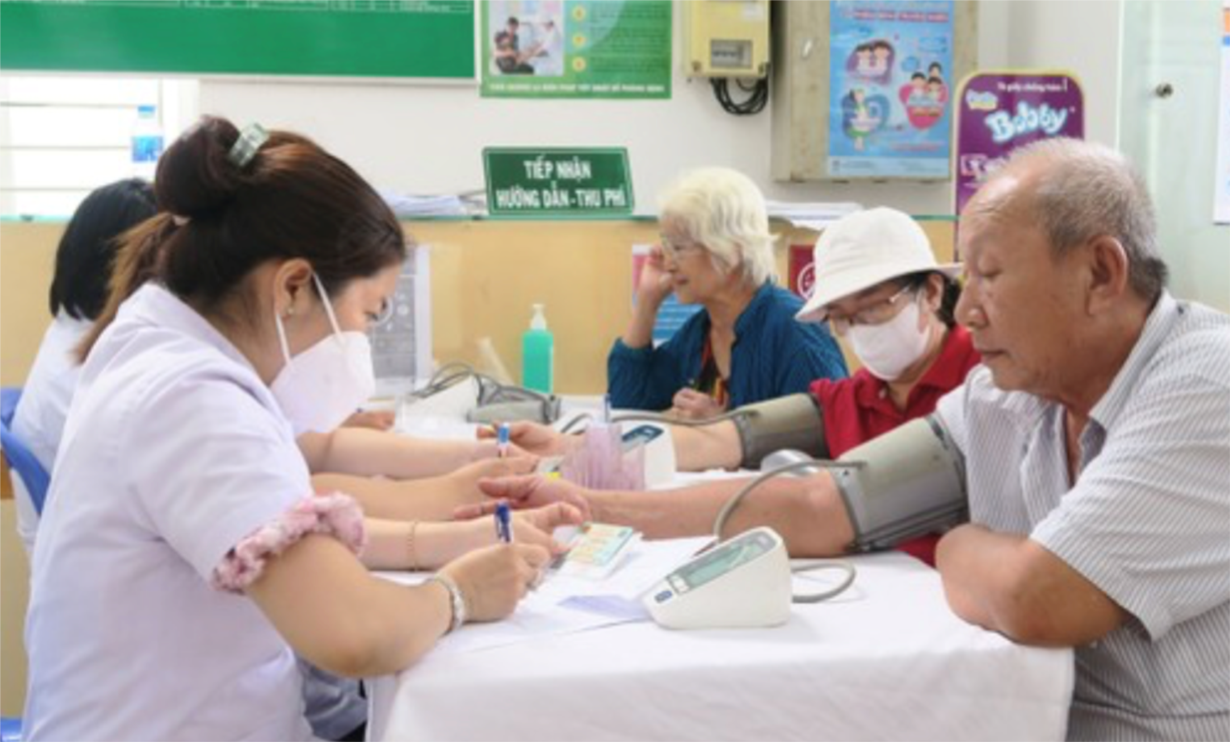
Health check for the elderly. Photo: SYT
4. Identify 7 groups of solutions towards specialized medical development
The first conference “Assessing the effectiveness and orientation of specialized medical development in Ho Chi Minh City” was successfully held (June 17). From local reality, the city’s health sector determined 7 solution groups:
Forming a high-quality medical human resources training center; Develop modern infrastructure, form 3 specialized medical clusters in the city; Continuously develop specialized techniques to meet disease patterns and people’s health care needs;
Build a care network by specialty from specialized health care to grassroots health care in the direction of regional health care; Providing a full range of quality health care to meet the diverse needs of the people; Developing Ho Chi Minh City into a medical tourism destination, promoting the combination of modern medicine and traditional medicine; Promote research and development and innovation in the medical field.
5. International cooperation to improve disease control and prevention capacity
The signing ceremony of a comprehensive cooperation agreement between the Ho Chi Minh City Center for Disease Control (HCDC) and Oxford University Clinical Research Unit (OUCRU) took place on August 31. This is an important event, opening up new opportunities to help improve the capacity of HCDC, through technical transfer activities on diagnosing infectious pathogens, including isolating and detecting pathogens. using molecular biology and gene decoding methods, disease control, public health research, and comprehensive impact assessment of prevention policies.
Also on this occasion, the Serum Bank under the Ho Chi Minh City Center for Disease Control officially came into operation with a storage scale of 400,000 – 500,000 samples, helping to collect, preserve and provide sample sources for testing. currently testing, serving the control of infectious diseases with 4 important goals: predicting epidemics or early detecting the possibility of an outbreak; Assess the situation of community immunity; evaluate the effectiveness of some interventions; Investigate the silent circulation of pathogens.
6. Sign a cooperation agreement between Departments of Health in the direction of regional integration to continuously improve the quality of health care for people in the region
In 2023, for the first time, the Ho Chi Minh City Department of Health signed a cooperation and development agreement with the Health Departments of 18 provinces and cities in the Mekong Delta and the Southeast region. Signing a cooperation and development agreement to further promote cooperation, experience sharing, technical transfer and professional human resource training between Ho Chi Minh City’s leading general and specialized hospitals with general and specialized hospitals of the provinces in the region.
In addition, signing a cooperation and development agreement also opens a new direction to help improve the quality of people’s health care through connecting data and information in disease prevention and construction. network of specialized care and treatment on a regional scale.
7. A specific policy for developing a network of community health collaborators has been issued by city leaders
The resolution stipulating the level of spending to support community health collaborators in Ho Chi Minh City was voted and approved by the T People’s Council at session 12, November 11. Next, on December 2, the City People’s Committee issued a Decision to implement the Project “Special policy to develop a network of community health collaborators in Ho Chi Minh City”.
This is a particularly important policy for the health sector to build and develop a network of community health collaborators covering the entire city. In the near future, a force of community health collaborators with more than 15,000 people will be the extended arm of the grassroots health system in the community, helping the city’s health sector perform its work well. communication, care and protection of people’s health.
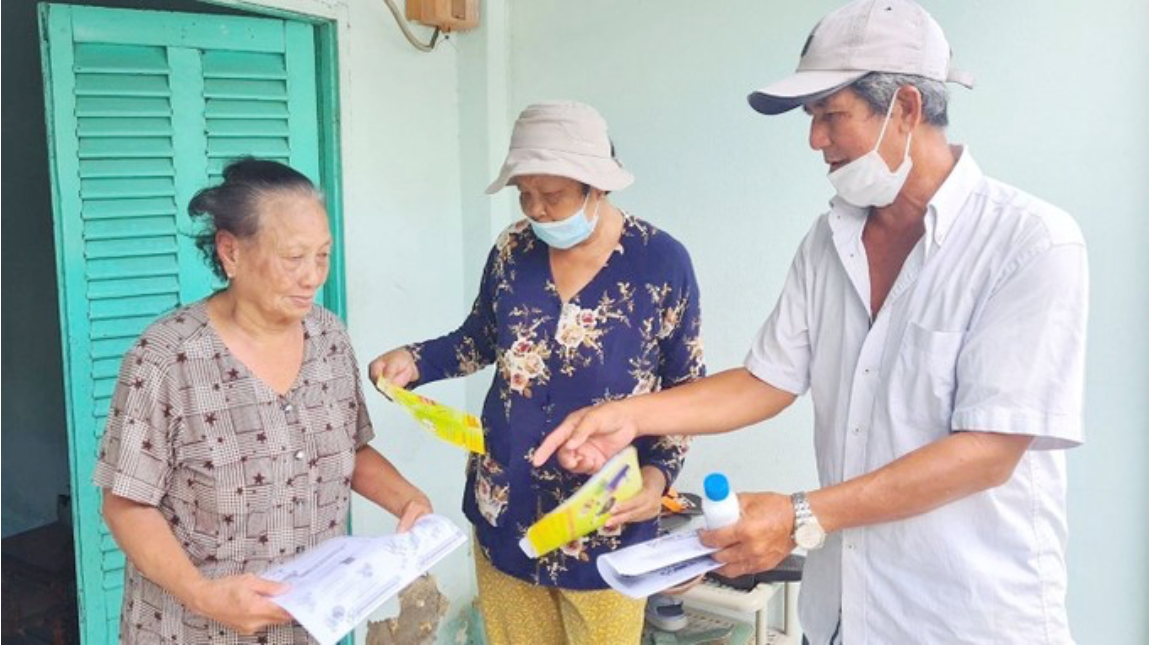
Network of community health collaborators. Photo: SYT
8. Improve the capacity of health officials and employees holding leadership and management responsibilities at public service units
The city’s health sector implements a job rotation program for young managers (with at least 3 terms remaining) to provide more opportunities for training, challenges, and increased experience in management work. to be ready to inherit leadership positions in different units when needed.
2023 is also the first year that directors of general hospitals, city specialized hospitals, district hospitals and medical centers will participate in specialized training courses to update management knowledge. finance, medical equipment bidding management for directors guided by lecturers who are experts from the Ministry of Finance, Ministry of Health and State Audit.
9. Converting the public service portal of the health sector into the city’s administrative procedure information system, deploying pharmacy practice data to the city’s shared data warehouse.
In 2023, the Department of Health has implemented restructuring, built electronic processes for providing public services and approved 97 internal processes by the City People’s Committee; Combining 18 transplant processes in the fields of medical examination, treatment, and pharmacy to shorten processing time and reduce document components for people; 57 procedures, including 33 procedures for providing full online public services, 24 procedures for providing partial online public services meet requirements in the electronic environment in the period 2023 – 2025.
From August 1, the Department of Health has officially converted the Public Service Portal in the health sector into the City’s Administrative Procedures Information System, officially receiving public service records on the System. the city’s shared electronic one-stop information.
At the same time, the Department of Health has also digitized the pharmacy practice data source of more than 11,000 practice certificates and more than 10,000 business licenses of business establishments, deploying the connection of this data into a shared data warehouse. of the city.
10. Coordinate with departments, branches and local authorities to strengthen control and strictly handle illegal advertising activities in the medical field
Faced with the current situation of illegal advertising on social networking platforms in the medical field with many risks that directly affect people’s health and lives, the Ho Chi Minh City Department of Health together with other departments and branches and Ho Chi Minh City Police discussed and agreed on coordinated solutions to increase the effectiveness and efficiency of management for advertising activities in the medical field.
Accordingly, the Department of Information and Communications acts as the focal point in building tools to manage advertising activities of individuals and organizations in the area, including advertising activities in the medical field; The Department of Culture and Sports strengthens communication work with public figures participating in advertising activities in the medical field, and does not participate in advertising activities in the medical field without permission. Confirm the content allowed for advertising by the management agency;
Department of Health Inspectorate coordinates with Ho Chi Minh City Police to strictly handle key violations, typically in medical advertising activities on cyberspace (facebook, zalo, tiktok, youtube,…); Ho Chi Minh City Press Center carries out propaganda and guidance for newspaper and radio agencies when posting advertising content in the medical field, they need to clearly identify the legal basis for the agency’s operations. facility and posted content.
