
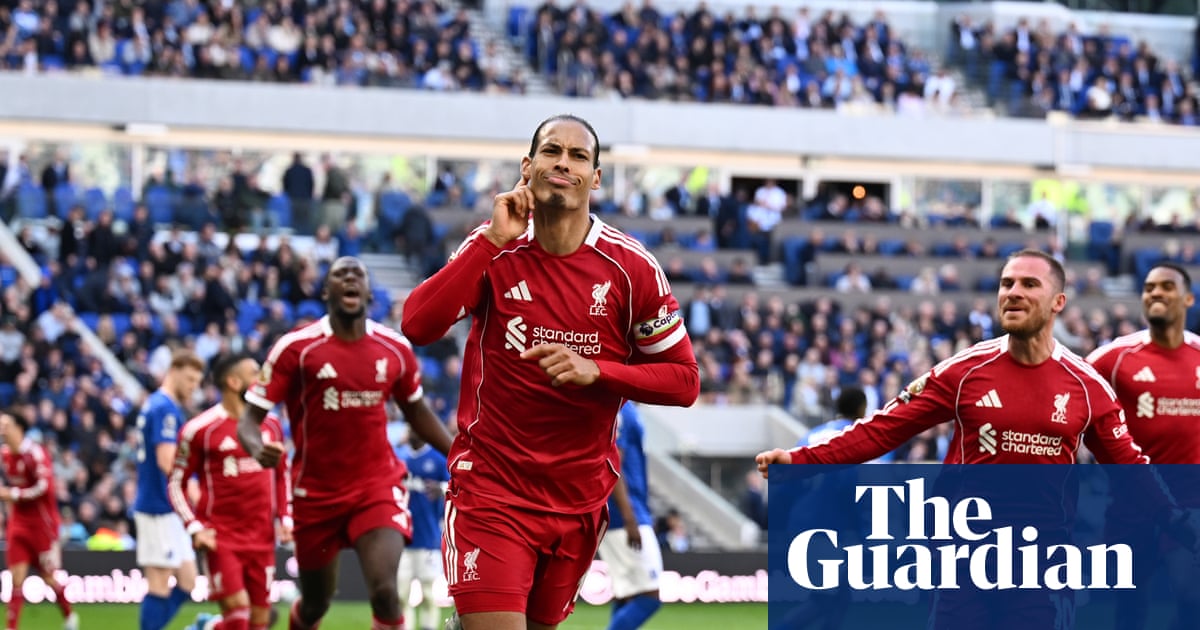
Virgil van Dijk’s header in the 100th minute silenced a jubilant home crowd at Everton’s newly opened Hill Dickinson Stadium, securing a 2-1 victory for Liverpool in the first Merseyside derby played at the Toffees’ new ground.
The goal came after a tense, tightly contested match where Everton had taken the lead through Iliman Ndiaye’s 22nd-minute finish, only for Mohamed Salah to restore parity in the 29th minute with his ninth Merseyside derby goal — equalling Steven Gerrard’s club record. Liverpool, still reeling from a midweek Champions League exit to Paris Saint-Germain, appeared fatigued but found renewed urgency in the closing stages as Arne Slot’s tactical substitutions began to shift momentum.
Everton, buoyed by a passionate home crowd, had controlled much of the first half with incisive passing and movement, whereas Liverpool’s threat remained largely confined to set pieces. David Moyes’ introduction of Thierno Barry and Tyrique George in the second half disrupted Everton’s rhythm, with both struggling to adapt to the intensity, allowing Liverpool to regain control.
The turning point arrived when Dominik Szoboszlai swung in a corner from the left, and van Dijk, marking his 100th minute of involvement in the match, outmuscled James Tarkowski to power the ball past Jordan Pickford. The goal not only sealed the win but also lifted Liverpool seven points clear of sixth-placed Chelsea with five games remaining, significantly boosting their Champions League aspirations.
For Everton, the result was a bitter pill — they had hoped to christen their new stadium with a derby win, only to observe another late Liverpool surge deny them. Beto’s equaliser in the 60th minute had briefly restored hope, but his earlier miss — a tame side-foot effort from close range after beating Pickford — encapsulated the Toffees’ frustration in front of goal.
The match also highlighted ongoing concerns for Liverpool’s squad depth, and form. Summer signings Alexander Isak and Florian Wirtz struggled to influence the game, with Isak barely touching the ball after coming on and Wirtz failing to complete two consecutive passes. Curtis Jones, deployed as a makeshift right-back, looked out of position throughout, while even Szoboszlai, the assist provider for the winner, had minimal impact from open play.
Yet, the victory carried symbolic weight beyond the three points. It marked Salah’s final Merseyside derby as a Liverpool player, a poignant moment underscored by his record-tying goal and the emotional celebrations with teammates Andy Robertson and van Dijk — both also departing the club at season’s end. The scenes in front of the away end, where fans erupted in relief and joy, underscored how much the result meant in the context of a turbulent season.
Historically, Liverpool have often relied on late goals to win tight derbies, a trait that had faded earlier in the campaign but returned with precision here. The last time they won a Merseyside derby with a goal after the 90th minute was in April 2023, when Mohamed Salah also scored a stoppage-time winner at Anfield — a reminder of how individual brilliance can still tilt these fiercely contested encounters.
How did Liverpool’s substitutions influence the outcome?
Arne Slot used all five substitutions to refresh his side after a physically demanding midweek Champions League loss, introducing players who helped stabilize midfield and regain control. In contrast, David Moyes’ late changes for Everton — bringing on Thierno Barry and Tyrique George — disrupted the Toffees’ rhythm, with both struggling to adapt and inadvertently gifting Liverpool the initiative in the final stages.
What does this result mean for Liverpool’s Champions League chances?
The win moved Liverpool to seven points ahead of sixth-placed Chelsea with five games remaining, significantly easing the pressure to secure a top-four finish. While concerns remain about form and squad depth, the result provided a crucial boost to their hopes of qualifying for next season’s Champions League.
