
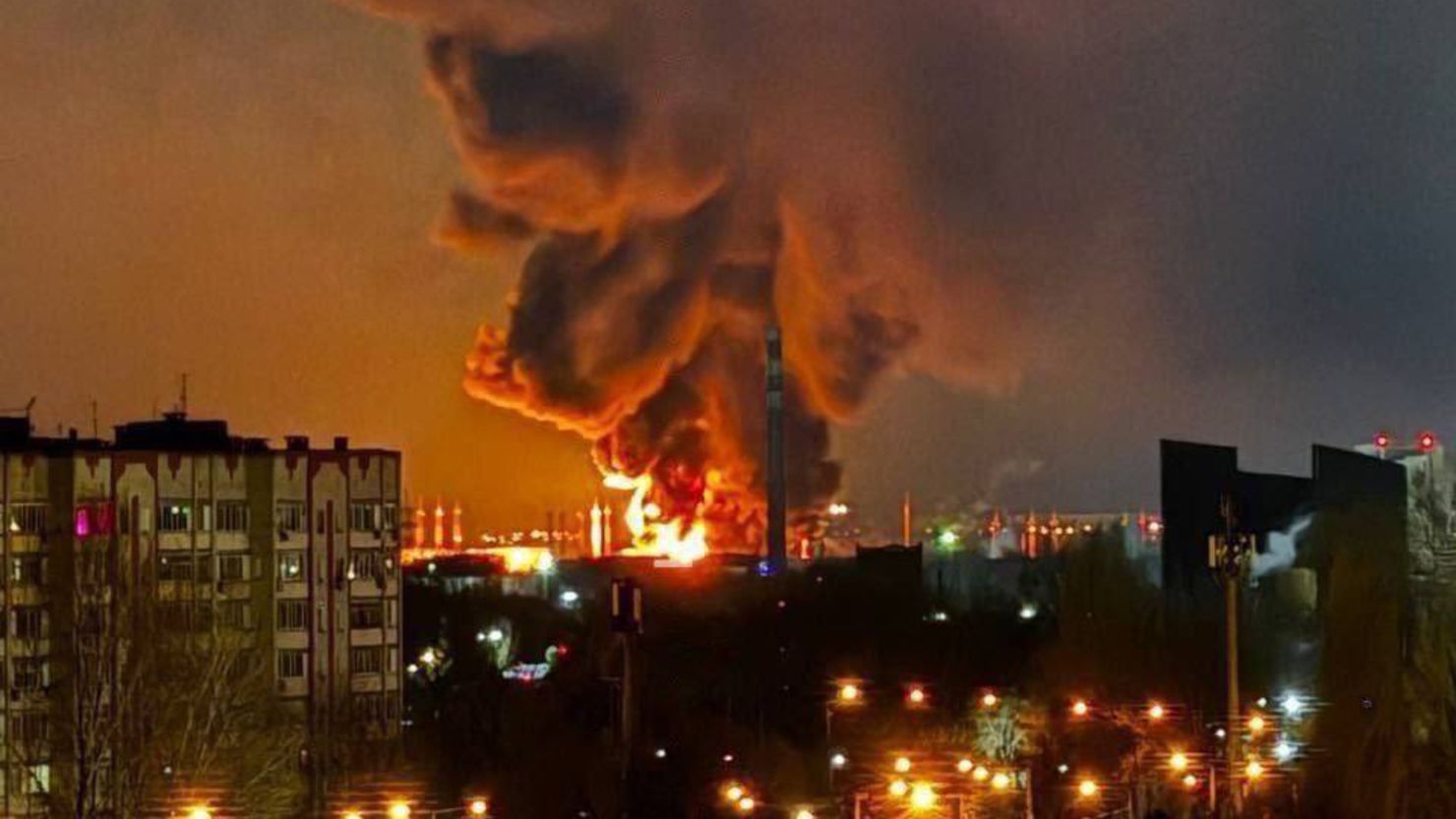
Ukrainian long-range drones struck the Rosneft-operated refinery in Saratov on May 24, 2026, targeting primary distillation units. The attack caused extensive fires and disrupted petroleum processing, representing a significant escalation in deep-strike operations designed to degrade Russia’s energy-based war economy and domestic fuel availability.
The strike on the Saratov refinery marks a targeted effort to compromise the technical core of Russian petroleum processing. Unlike attacks on crude oil storage tanks, which are relatively easy to repair, the targeting of distillation columns presents a more complex logistical challenge for the Russian energy sector.
Technical Impact on Refining Operations
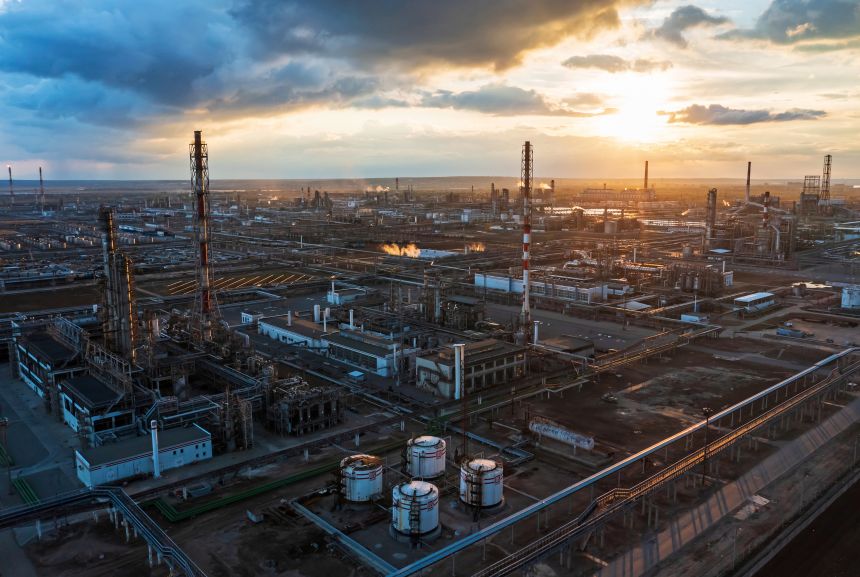
The primary damage during the May 24 incursion focused on the atmospheric distillation unit (ADU). In a refinery, the ADU is the central component that uses controlled heat to separate crude oil into various hydrocarbon fractions, such as naphtha, kerosene, and diesel, based on their specific boiling points. These fractionating towers are massive, highly specialized pieces of industrial equipment that require precise thermal management to function.

When a distillation column is compromised by a kinetic strike, the facility faces more than a localized fire. The structural integrity of the tower is essential for maintaining the pressure and temperature gradients required for separation. A breach in the column or its associated heat exchangers necessitates a complete shutdown of the processing train. Because these units are custom-engineered and often depend on specialized alloys, the lead time for replacing damaged sections is significantly longer than the time required to rebuild storage infrastructure.
Industry observers noted that the strike targeted the complex components of the Russian refining chain
, which are harder to replace than simple storage vessels. This focus on high-value, hard-to-replace assets suggests a shift in drone mission profiles toward long-term industrial attrition.
UAV Trajectories and Electronic Warfare Evasion
The ability of Ukrainian drones to reach the Saratov region, located deep within Russian territory, indicates a high level of sophistication in flight path planning and electronic warfare (EW) evasion. To bypass increasingly dense Russian air defense networks, these unmanned aerial vehicles (UAVs) likely utilized low-altitude flight profiles. By maintaining a low altitude, the drones exploit the curvature of the earth to stay below the detection horizon of many long-range radar systems.
The success of the mission also points to advancements in autonomous navigation. Russian electronic warfare units frequently utilize GPS jamming to disrupt the guidance systems of incoming drones. To counter this, the drones used in the Saratov attack likely relied on inertial navigation systems (INS) or terrain-contour matching. These technologies allow a UAV to navigate by comparing real-time sensor data against pre-programmed maps, making them less dependent on external satellite signals that are vulnerable to jamming.
The ability to strike targets hundreds of kilometers from the border changes the calculus for Russian industrial security.
Security analyst, European Center for Security Studies
Economic Consequences for the Russian Energy Sector
The disruption at the Saratov refinery has immediate implications for the Russian domestic fuel market. While Russia remains a top global exporter of crude oil, its ability to convert that crude into refined products like diesel and gasoline is a critical driver of state revenue and domestic stability.
A reduction in refining capacity creates a supply-demand imbalance. If major refineries like Saratov are offline, the Russian government may be forced to implement export quotas or bans to ensure that domestic prices for diesel and gasoline do not spike. Such measures, while intended to stabilize the internal economy, directly reduce the volume of refined products available for international sale, thereby limiting the inflow of foreign currency into the Russian treasury.
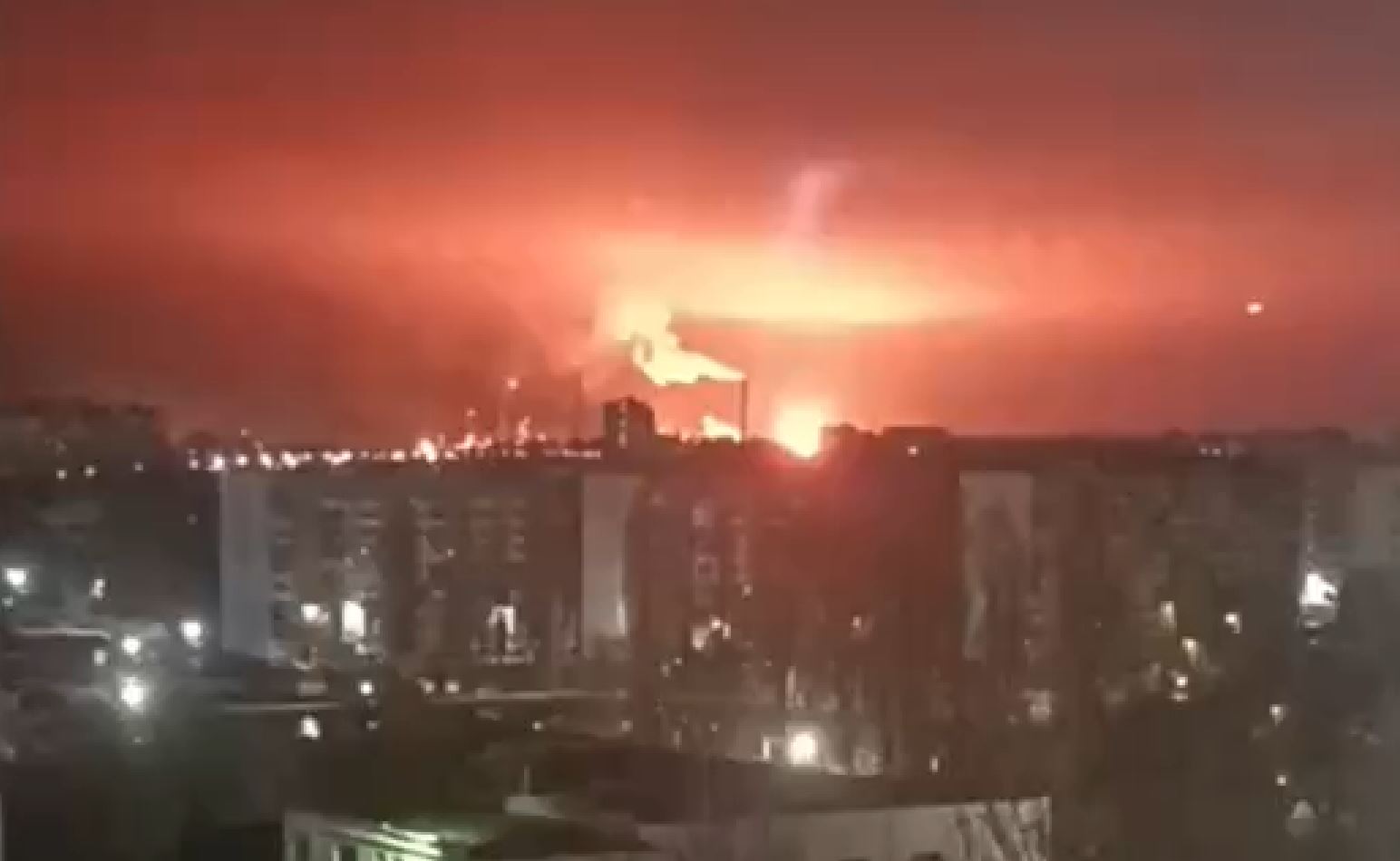
The recurring nature of these strikes forces the Russian state to divert significant resources toward the defense of industrial assets. Protecting hundreds of refineries and storage depots across a vast geography requires a massive deployment of short-range air defense systems, which could otherwise be used in other theaters of the conflict. The long-term effect is a dual pressure on the Russian economy: the direct loss of production capacity and the increased cost of securing industrial infrastructure.
As of late May 2026, the full extent of the production outage at the Saratov facility remains unclear, but the technical nature of the damage suggests that the refinery will not return to full capacity in the immediate future. The focus of future drone operations appears to be shifting toward these critical nodes of the energy supply chain.
