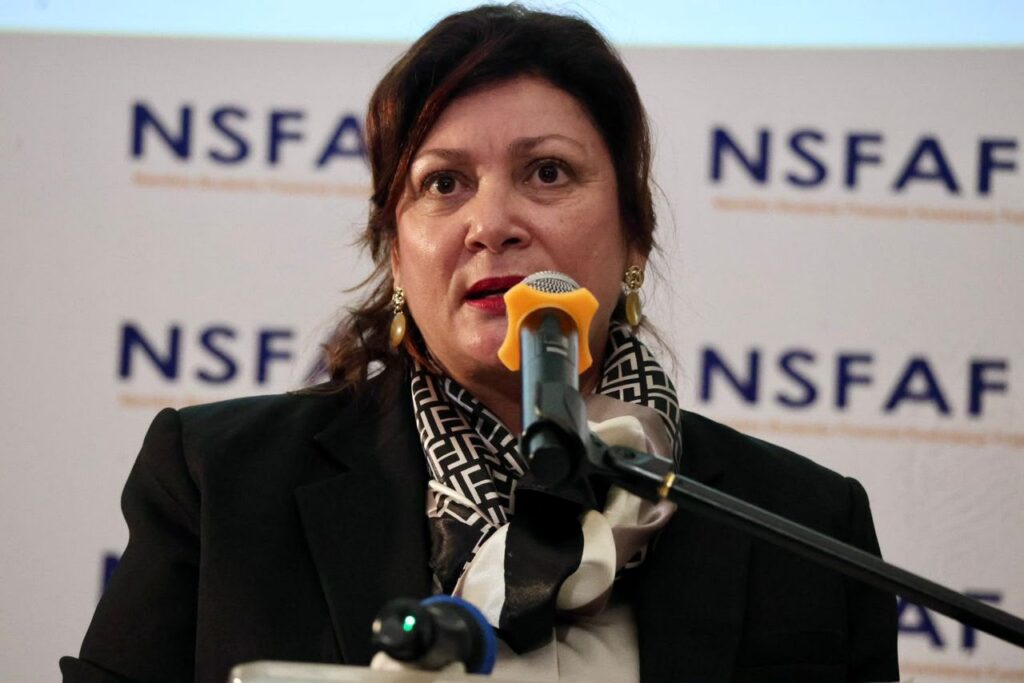
Education Minister Sanet Steenkamp announced Tuesday that the Namibian government has provided N$247 million to the Namibia Students Financial Assistance Fund (NSFAF) to accelerate student payments. The injection aims to clear outstanding non-tuition allowances by mid-July after administrative delays left thousands of tertiary students in financial uncertainty.
The N$247 Million Injection and Payment Timeline
The government is moving to stabilize a funding system that has left many students stranded. According to The Namibian, Minister Steenkamp informed the National Assembly that disbursements from the new N$247 million pool are expected to begin this week.
The Ministry has set a firm target to finalize all outstanding non-tuition allowances for qualifying continuing students by mid-July. This move follows a period of intense friction, including a recent deadlock in talks between NSFAF and the Namibia National Students Organisation.
While the new injection addresses the current backlog, the government has already moved significant sums through the system this academic year to prevent a total collapse of student registrations.
N$156 million: Paid upfront to universities, colleges, and TVET centres to allow new student registration.
N$122 million: Disbursed specifically for tuition and registration fees.
N$3 million: Used to clear outstanding financial obligations from the previous academic year.
Integration Failures and Ministry Response
Photo: The Namibian –
The current financial chaos is not a result of a lack of funds, but a failure of structural execution. As reported by the Namibia Economist, much of the slowdown stems from the reintegration of NSFAF into the Ministry of Education, Innovation, Youth, Sports, Arts, and Culture in March.
This massive structural shift created severe capacity constraints and administrative bottlenecks. To fix the internal machinery, the Ministry has approved 25 new staff members, shuffled existing personnel, and expanded the internal verification and payment teams.
“The government has advanced an additional N$247 million to NSFAF to support the accelerated processing of student payments, with disbursements expected to commence this week,”
Sanet Steenkamp, Education Minister
The transition has been fraught. The Windhoek Observer argues that the integration lacked detailed transition plans and robust communication strategies, leaving the most vulnerable students—those who cannot afford education without aid—to bear the brunt of the bureaucratic failure.
The Crisis for Medical Students Abroad
What a potential freeze on federal funding could mean for Michigan college students
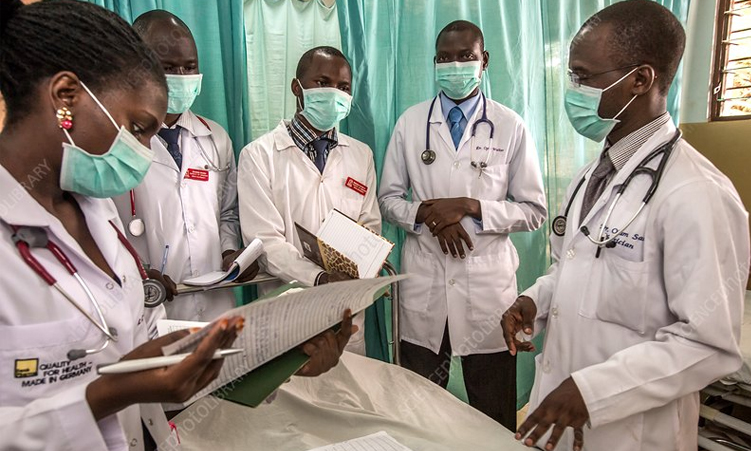
While the Minister has defended the new Subsidised Tertiary Education Funding (STEF) model as a “historic and far-reaching reform,” the reality for medical students is starkly different. More than 200 Namibian students accepted into medical and health programmes abroad have had their funding applications rejected.
The rejections, detailed by The Namibian, claim that medical fields are no longer on the “priority field of study list.” This contradicts the Minister’s assertion that funding continues to flow to students in the SADC region pursuing critical fields like medicine and engineering.
For students like Rejoice Amos, a medical student in Zambia, the policy shift has forced families into desperate financial measures. Amos reported that her mother and sister had to pay approximately N$19,000 for the first semester and an additional N$7,800 for a study permit to secure her spot.
“NSFAF cannot just decide medicine is a non-priority field and reject us out of the blue. We planned our futures based on the previous understanding and worked for years to meet the requirements to study medicine.”
Angelina Thikundeko, affected student
The impact is not just financial but academic. Pius Amungulu, who sought to study in Zambia after being rejected locally due to limited space, missed his January intake because of the funding rejection. He is now attempting to reapply for the June/July intake, illustrating how administrative shifts can derail entire academic years.
Institutional Protections and Academic Access
To prevent the funding gap from becoming an academic disaster, the Ministry has issued a directive to higher education institutions. Universities, TVET centres, and colleges have been asked to ensure that students are not punished for the government’s payment delays.
“Institutions have been requested to allow students continued access to classes, examinations, and the release of academic results while payment processes are being finalised,”
Sanet Steenkamp, Education Minister
This directive serves as a critical safety net. Without it, students facing non-tuition arrears—which cover essential costs like housing and food—would risk being barred from exams or having their results withheld.
The immediate priority for the next 30 days is the mid-July deadline. If the Ministry fails to clear the backlog, the government faces a potential escalation of student protests and further instability within the tertiary education sector. The stakes extend beyond the current semester; for the 200+ medical students rejected, the lack of a “transitional agreement” could mean the permanent loss of their admission offers and a widening shortage of specialized health workers in Namibia.