
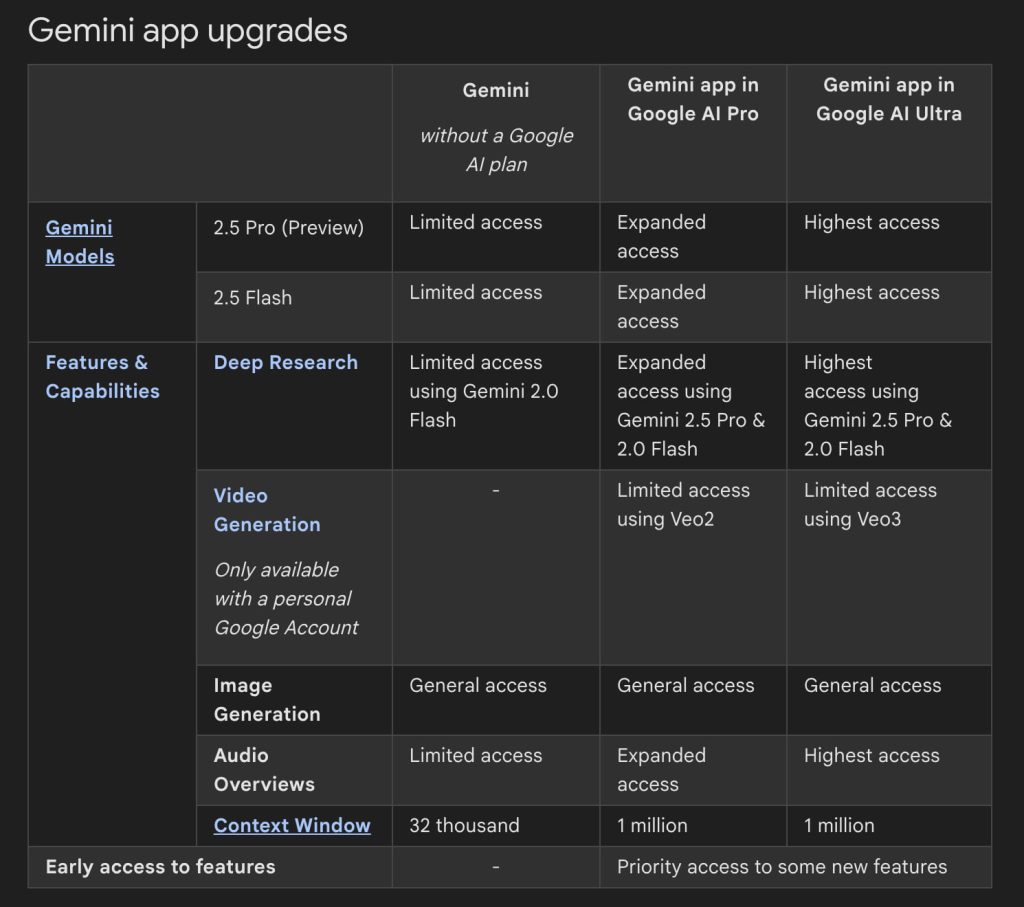
Google implemented new usage limits for its Gemini AI applications on May 17, 2026. These changes tie access to computational power, meaning the complexity of a user’s request, the specific models utilized, and the length of a chat history will now directly dictate how quickly usage limits are exhausted.
The Shift to Complexity-Based Computation
Google has transitioned its Gemini AI usage model away from simple prompt counting toward a metric based on actual computational demand. Under the new framework, the system evaluates the intensity of each interaction to determine how much of a user’s allowance is consumed. This change effectively means that highly technical or multi-layered queries carry a higher cost than brief, simple instructions.
According to official Google support documentation, these usage limits are determined by the computational power
required to process a specific interaction [4]. The calculation is not a singular metric but a composite of several factors. Specifically, the limits account for the complexity of the prompt, the specific AI models being engaged, the various features being utilized, and the total length of the ongoing chat history [4].
This approach introduces a variable cost for users. A user engaging in long-form reasoning or managing massive datasets within a single conversation thread will encounter limits more rapidly than a user performing isolated, short-form tasks. By weighting the length of the chat history and the complexity of the model, Google is managing the significant processing resources required to maintain high-level generative AI performance.
Reset Cycles and Subscription Access
To manage these computational costs, Google has implemented a specific rhythm for limit replenishment. Users will see their usage limits reset every five hours [4]. However, this is not an infinite cycle; the resets continue only until the user reaches a secondary, broader weekly limit [4].
For users who find these constraints restrictive, Google offers an escalation path through paid tiers. The Google AI subscription, available through certain Google One packages for personal accounts, provides expanded access to Gemini’s models and features [4]. These upgrades are designed to offer a higher ceiling for computational consumption, catering to power users who require extended interaction periods without hitting the weekly cap.
The distinction between account types remains a critical factor in how these limits are applied. The current updates and documentation specifically address users managing Gemini through personal Google accounts [4]. Users operating within professional or educational environments through Google Workspace accounts are subject to different usage policies, which are managed by their respective organizations rather than the standard personal tier [4].
Demographics and Regional Eligibility
Access to the advanced features of the Gemini ecosystem is also subject to strict age and geographic requirements. For those seeking to upgrade to a Google AI plan, eligibility is determined by both local law and Google’s internal safety protocols.
In the European Economic Area, the United Kingdom, and Switzerland, users must be at least 18 years old to utilize a Google AI plan [4]. In most other jurisdictions, the minimum age requirement is 13, or the age of digital consent in that specific country [4]. Google notes that certain features may remain unavailable to users below these age thresholds, regardless of their subscription status [4].
Resource Management in a High-Stakes Environment
The move toward complexity-based limits reflects the massive scale of Google’s ongoing AI operations. While the exact cost of maintaining these models is not public, the utility of Gemini in large-scale operations is well-documented. In 2025, Google reported that its Gemini generative AI models were used to block approximately $8.2 billion in illicit activity [6].
As the company continues to integrate these models across its product suite, the demand for specialized hardware and processing power remains a primary operational challenge. By implementing a system that penalizes high-complexity requests with faster limit depletion, Google is attempting to balance the massive resource requirements of its most advanced models with the need to provide consistent service to a global user base.
