

Experts believe that Bien Hoa ceramics have many opportunities for development at the Conference on Conservation and Development of Bien Hoa – Dong Nai ceramics combined with exploitation and tourism development in Bien Hoa City, held on the same day. December 22. The conference was organized by the People’s Committee of Bien Hoa City and the Institute for Economic Development and Tourism Research.
Bien Hoa ceramics in the Southern ceramic flow
MSc. Phan Dinh Dung – who has many research projects on Bien Hoa ceramics, said that pottery making in Bien Hoa – Dong Nai with products has long been identified as a brand in the development flow of residents. Early ceramics – the early history of ancient residents, later are diverse ceramic products of Vietnamese and Chinese people who have lived here over the past three centuries.
In Bien Hoa City, the area along the right bank of the Dong Nai River still retains many traces of this traditional craft village.
Bien Hoa ceramic products, Dong Nai. Photo: Hong Phuc
According to Mr. Dung, at the beginning of the twentieth century, the French colonial government established Bien Hoa Vocational School, opening up a form of formal training based on applied technical research and experience of local craftsmen. method… The birth of Bien Hoa Vocational School has a positive influence on the development of ceramics, especially the type of ceramic products once called Bien Hoa fine arts ceramics.
From a scientific perspective, to identify and distinguish ancient ceramic lines produced in the Southeast region, Dr. Nguyen Thi Hau believes that it is necessary to specifically determine the names of three ancient but closely related ceramic areas: Bien Hoa ceramics – Saigon ceramics – Lai Thieu ceramics.
Saigon ceramics include Cay Mai ceramics (Cay Mai kiln located in Cay Mai mound area in District 11), Lo Gom hamlet (Hoa Luc village, Phu Dinh district 6, district 8). Saigon is an ancient place that refers to today’s Cho Lon area – where Lo Gom hamlet is recorded on maps and in history books.
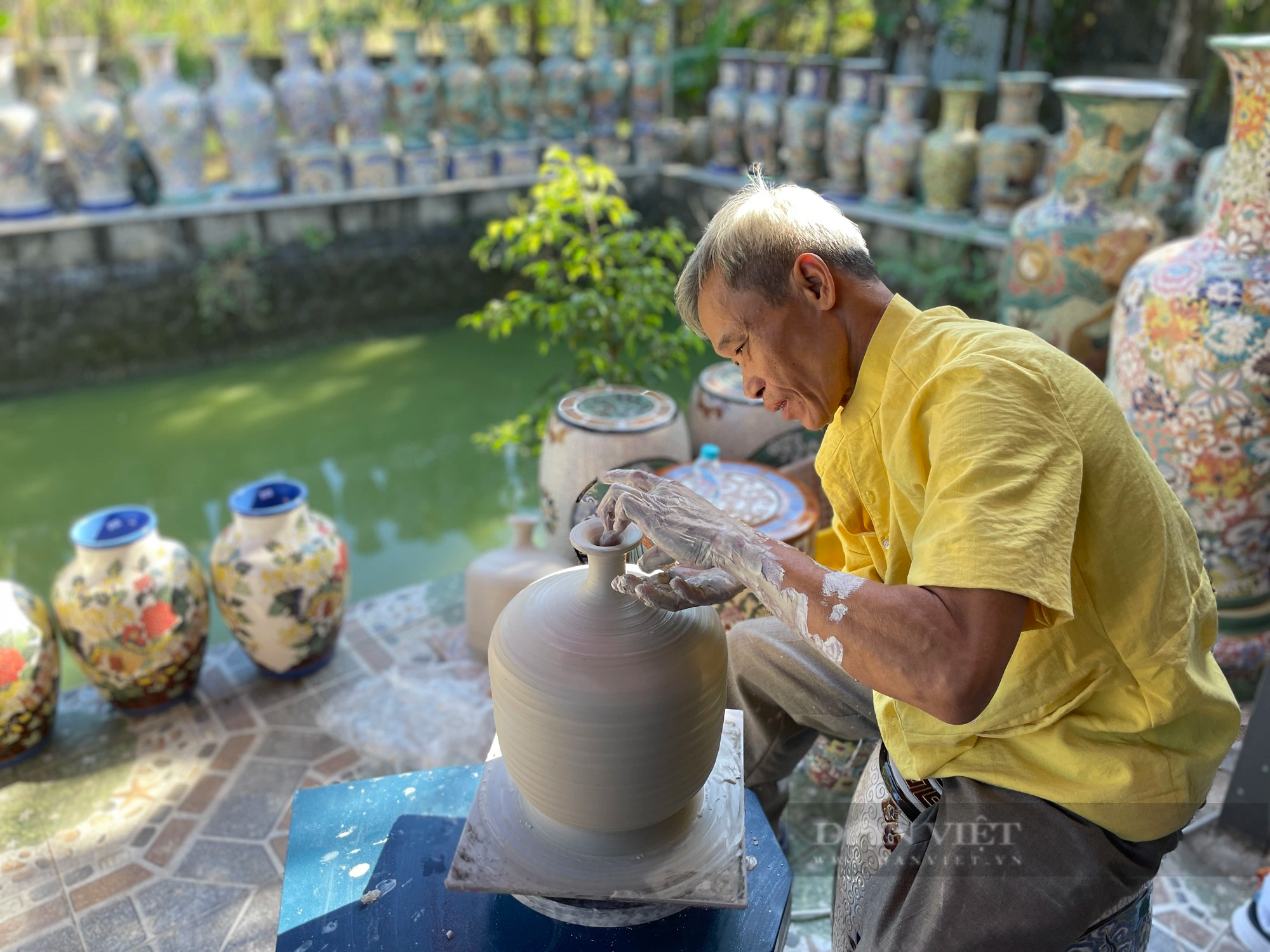
Pottery artist Bien Hoa, Dong Nai. Photo: Hong Phuc
Bien Hoa pottery includes Tan Van pottery village (roller kiln, clay kiln)…, pottery from Bien Hoa Fine Arts School, later Thanh Le pottery, along with current ceramic production facilities.
Lai Thieu pottery includes Lai Thieu, Tan Phuoc Khanh and Chanh Nghia pottery villages…, later Minh Long pottery and the handmade pottery kilns that are still in production.
According to Ms. Hau, these names are equivalent to the names of Bat Trang ceramics, Chu Dau ceramics, Dong Trieu ceramics… in the North, Go Sanh and Chau O ceramics in the Central region, and refer to specific folk locations. , has just revealed the space of an “ancient pottery area”. Each ceramic region has its own characteristics and prospered at different times, but like tributaries all join together and create the main flow of “Southern Ancient Pottery”, which can be compared with other ceramic production areas. other famous in the country.
Bien Hoa ceramics have been recognized internationally
Prof.Dr. Phan Thi Thu Hien emphasized that Bien Hoa pottery has a tradition of more than 300 years, as old as the history of Bien Hoa city itself.
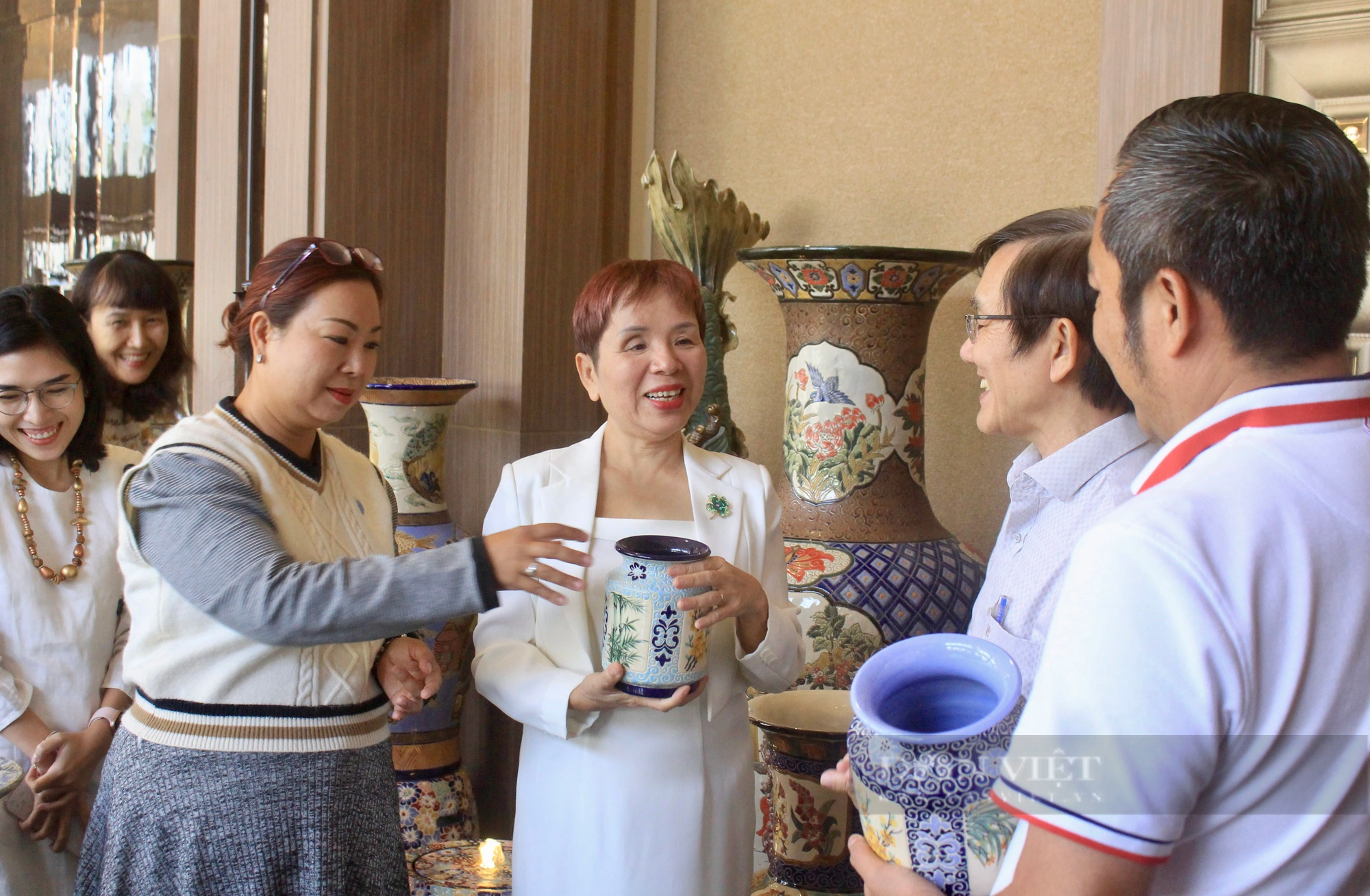
Prof.Dr. Phan Thi Thu Hien discussed with scientists, Bien Hoa ceramic production enterprises and tourism businesses at the conference. Photo: Hong Phuc
Bien Hoa ceramic cultural heritage not only includes tangible heritage (household items, fine art products, architectural works… with typical manufacturing techniques and decorative arts) but also are extremely rich intangible heritages (reflecting cultural history, daily life culture, demonstrating the diligent work, ingenuity and spiritual beauty of the people as well as crystallizing the values of the people). spiritual governance of the homeland and nation).
Prof.Dr. Phan Thi Thu Hien added that Bien Hoa is the only Vietnamese ceramic brand recognized internationally, with its characteristic glaze material – blooming bronze green glaze – “vert de Bien Hoa”.
Bien Hoa is the only case in the country where the ceramic brand completely matches the local name, a capital city in the province with the largest population in Vietnam.
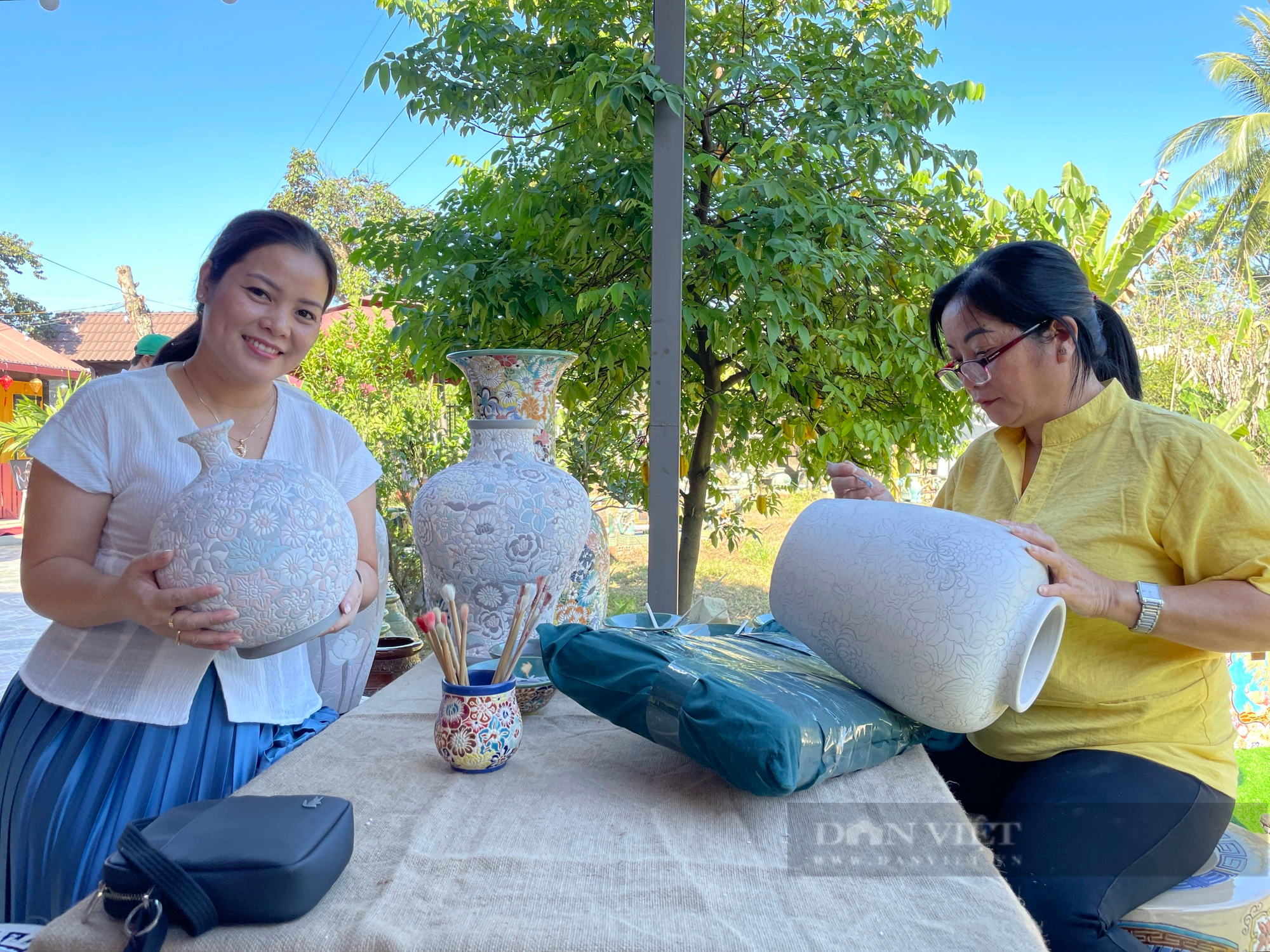
Tourists experience Bien Hoa pottery sites, take photos with products and artisans. Photo: Hong Phuc
Prof.Dr. Phan Thi Thu Hien believes that more than just a place name or cultural heritage, Bien Hoa ceramics truly deserve to be an important symbol that contributes to identifying the local reputation of Bien Hoa in particular. , Dong Nai in general.
Find new value for Bien Hoa ceramics
According to Prof.Dr. Phan Thi Thu Hien, the popular image of a pottery village or ancient pottery village today is not really suitable for Bien Hoa, because its history of formation was at the end of the 17th century in the bustling port area of Cu Lao Pho, and Bien Hoa today is a city that holds the leading position in the Southeast region in particular, and the country in general in terms of modern urbanism and industry.
In particular, Bien Hoa ceramics are not only limited to the craft of a certain specific area but also represent one of the symbols of Bien Hoa city, crystallizing “Dong Nai’s pride”. , the soul of Southern culture.
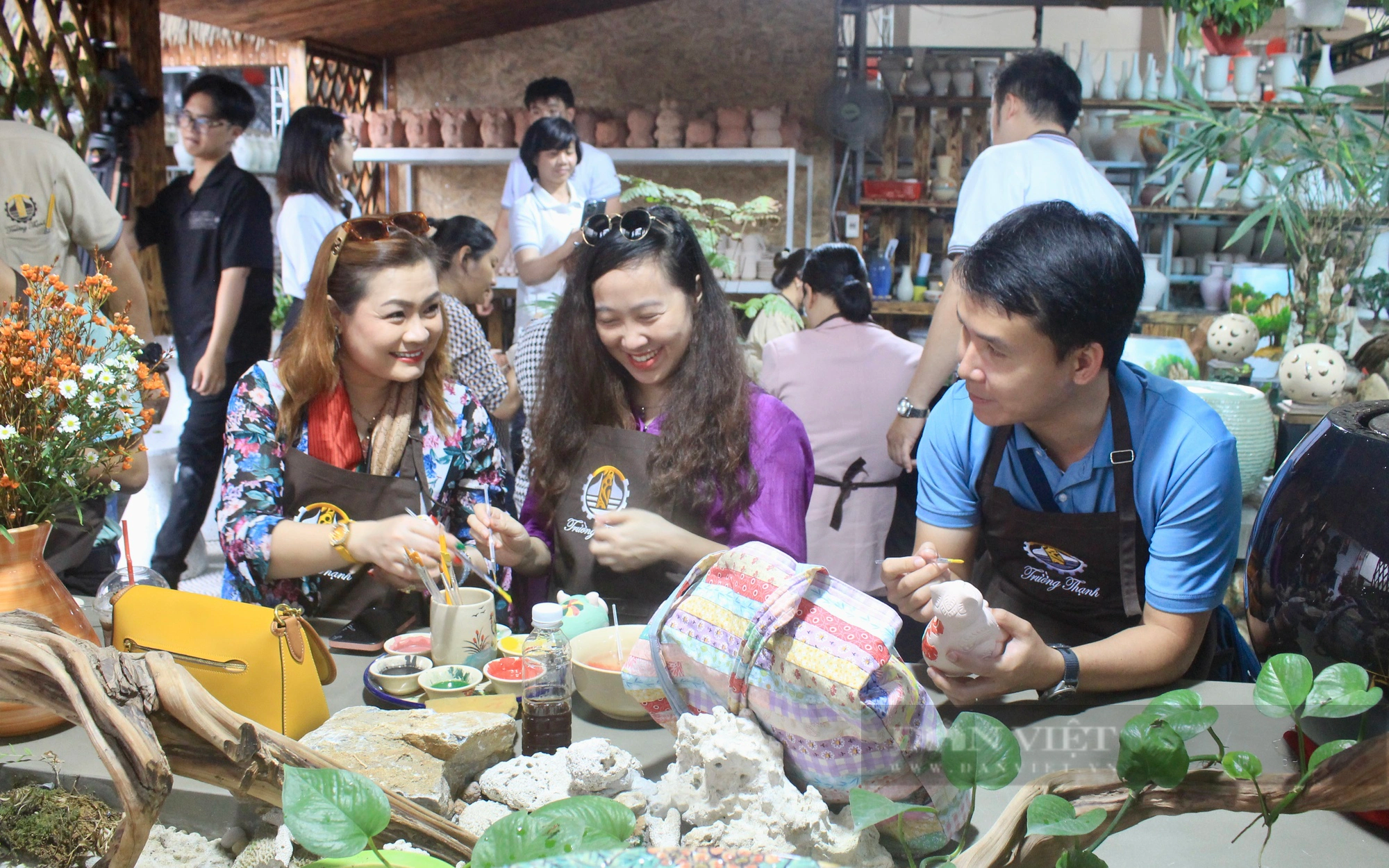
The ceramic making and ceramic decoration experience space is suggested to become a tourism model associated with ceramics in Bien Hoa, Dong Nai. Photo: Hong Phuc
“Therefore, in our opinion, it is necessary to promote Bien Hoa ceramic heritage in association with cultural and creative industries, following the direction of sustainable urban development”, Prof.Dr. Phan Thi Thu Hien said that to find ideas for developing Bien Hoa tourism based on ceramic cultural heritage towards building a ceramic city, a creative city, it is necessary to base on the theory of cultural industry. culture, creative industries associated with popular culture.
Dr. Duong Duc Minh – Deputy Director of the Institute for Tourism Economic Development Research, suggested forming a heritage tourism practice space associated with the ceramic ecosystem in Bien Hoa City from the “memory – heritage – complex”. identity”.
Accordingly, event – festival tourism destinations and Bien Hoa ceramic tourism products need to be recreated to be “popular” and bring understanding and fulfilling experiences to tourists. The “memory – heritage – identity complex” associated with the Bien Hoa ceramic ecosystem through the practice of heritage tourism is also a driving force for sustainable growth.
Mr. Nguyen Son Hung – Vice Chairman of Dong Nai Provincial People’s Committee, said that 2023 will be exactly 325 years of formation and development of Bien Hoa – Dong Nai. Bien Hoa is a bustling commercial land, with three traditional professions: bronze casting, stone sculpture and ceramics.
“We want ceramics to revive and connect with tourism development,” Mr. Hung said, adding that Bien Hoa and Dong Nai ceramics are being focused on by the locality by organizing many seminars, comments, displays and exhibitions. exhibition.
According to the plan, in 2025, Dong Nai will organize the Dong Nai Pottery Festival, taking pottery as the main theme. Dong Nai’s expectation is that Bien Hoa – Dong Nai ceramics will be restored and developed, building Bien Hoa City towards a creative city associated with ceramics.
