

The U.S. Department of Defense maintains a continuous state of readiness through the Nuclear Triad to prevent catastrophic actions by adversaries. While strategic deterrence remains the primary function of these military forces, the very terminology used to describe such security—varying between the American “defense” and the British “defence”—reflects broader linguistic divides in global security discourse.
Constant Readiness and the Nuclear Triad
The architecture of American security is built upon the requirement of perpetual availability. Unlike conventional military postures that may fluctuate based on political tension, the nation’s most critical deterrents operate on a continuous cycle.
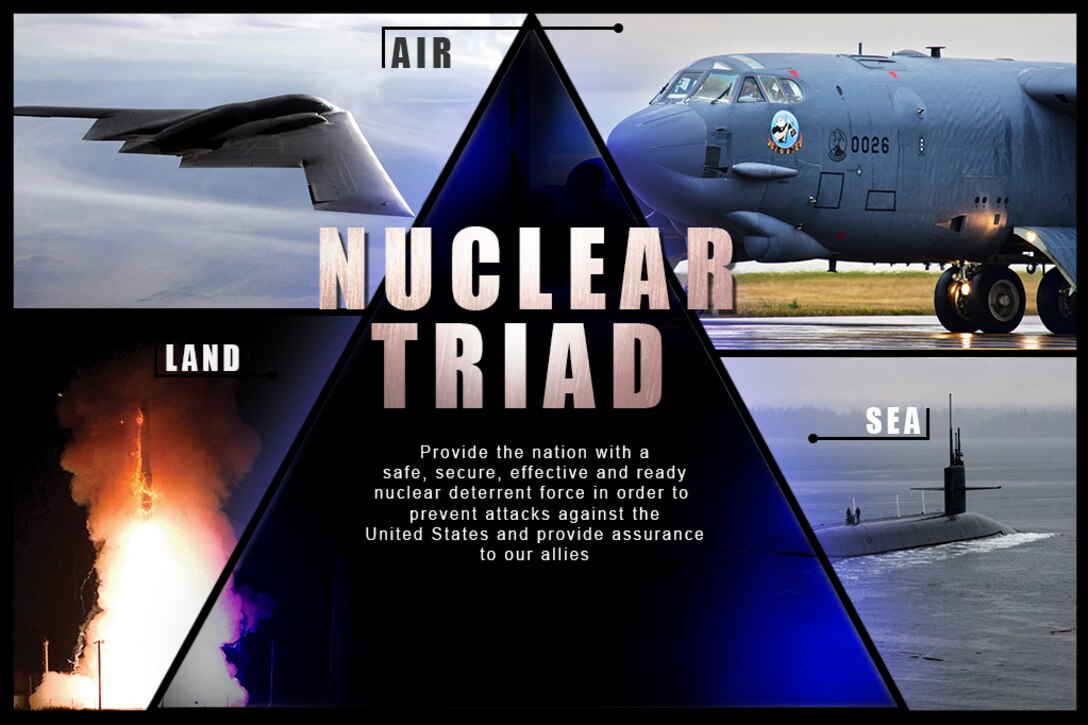
The triad, along with assigned forces, provide 24/7 deterrence to prevent catastrophic actions from our adversaries and they stand ready, if necessary, to deliver a decisive response, anywhere, anytime.U.S. Department of War, via ar.gov
This 24/7 mandate ensures that the deterrent capability is never dormant. The strategic intent is to maintain a level of readiness that removes any uncertainty regarding a decisive response to external threats.
The modernization of these capabilities is currently centered on three primary programs. The land-based leg is transitioning from the Minuteman III to the LGM-35A Sentinel, a program led by Northrop Grumman. The LGM-35A Sentinel is intended to replace the aging Minuteman III ICBM system, which has been in service since the 1970s. In early 2024, the Sentinel program was subject to a Nunn-McCurdy breach notification, which occurs when a program’s cost grows significantly beyond its original baseline, necessitating a formal justification to Congress to determine if the project should continue.
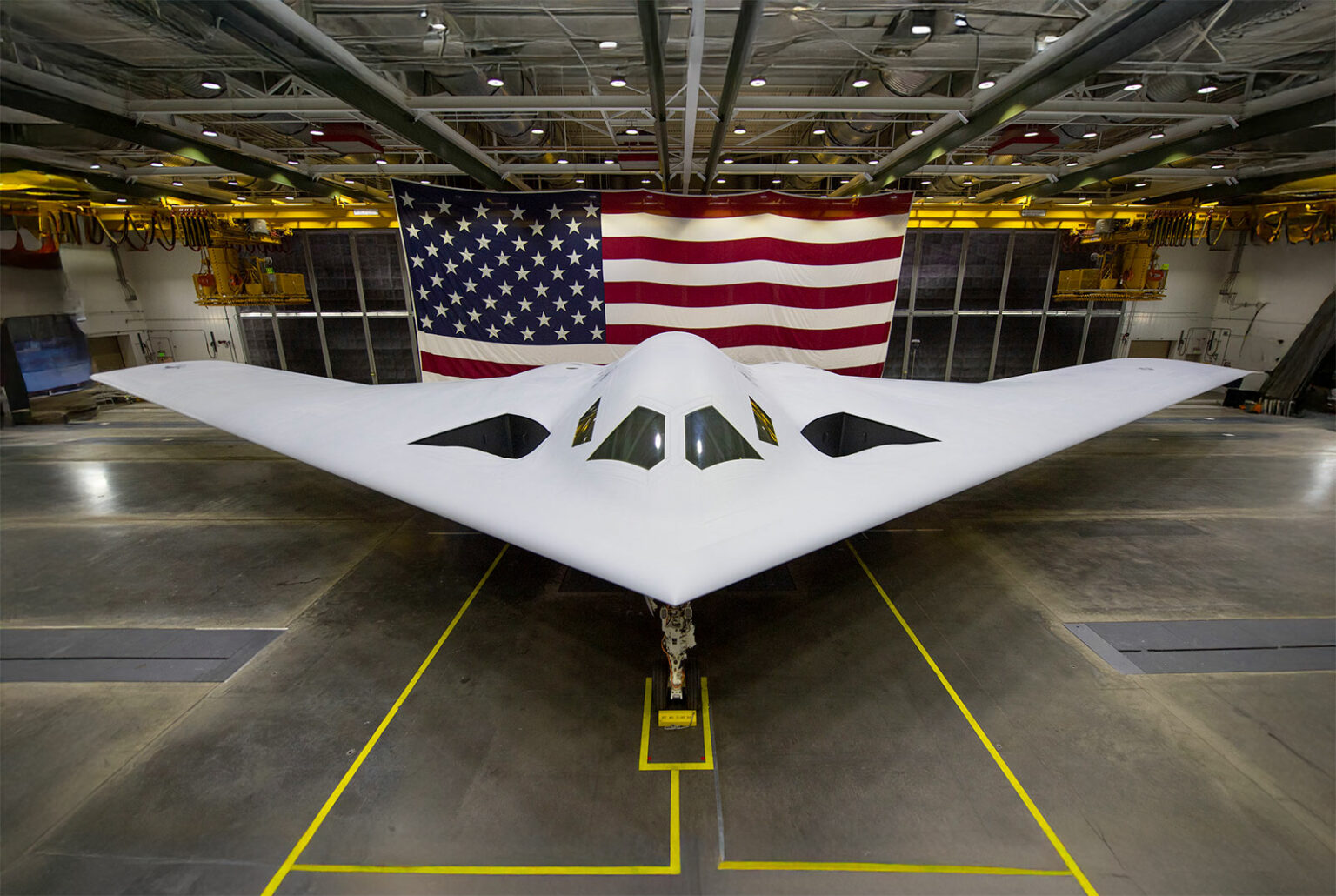
The sea-based leg involves the construction of Columbia-class ballistic missile submarines, a project involving General Dynamics Electric Boat and HII to replace the aging Ohio-class fleet. These vessels are designed to ensure the sea-based deterrent remains technologically superior to adversary capabilities. Finally, the air-based leg is being updated through the development of the B-21 Raider, also a Northrop Grumman project, which recently completed its initial flight testing phases. The B-21 Raider, designed for stealth and long-range penetration, is a centerpiece of the Air Force’s long-range strike capability. These technological transitions are overseen by U.S. Strategic Command (USSTRATCOM), where Deputy Commander General Anthony Potts has emphasized the importance of maintaining the readiness of the nuclear command, control, and communications (NC3) systems.
Linguistic Divergence in Global Security Spelling
While the strategic objectives of national security are often universal, the language used to document them varies by region. This distinction is most visible in the spelling guidelines of British and American English, which create a clear divide between “defence” and “defense.”
In the United States, the “s” spelling is the standard. However, in parts of the world where British English is the norm, the “c” spelling is utilized. This orthographic split is not merely a matter of preference but a marker of regional identity that carries into more complex vocabulary.
The variation persists even when words are inflected. For instance:
- British English retains the “c” in terms such as “defenceless,” “defencelessly,” or “defenceman.”
- American English shifts to an “s” for “defenseless,” “defenselessly,” or “defenseman.”
There is one notable exception to this divergence. When a suffix beginning with the letter “i” is added to the word, both American and British English adopt the “s” spelling.
The Department of Defense’s Strategic Mandate
At the center of this operational and linguistic framework is the U.S. Department of Defense (DOD). Headquartered at 1400 Defense Pentagon in Washington, DC, the agency serves as the central authority for the military forces required to protect the security of the United States.
The DOD’s primary mission is to deter war. This mission is executed through a combination of high-level strategic assets, such as those managed by the U.S. Department of War, and the broader military capabilities that provide the nation’s shield against aggression.
In the Fiscal Year 2025 budget request, the Department of Defense requested approximately $849.8 billion to fund these modernization efforts. This request includes significant allocations for the Pacific Deterrence Initiative and advanced research through the Defense Advanced Research Projects Agency (DARPA). During his March 2024 testimony before the Senate Armed Services Committee, Secretary of Defense Lloyd Austin emphasized the necessity of “integrated deterrence” and addressed the urgent requirement to increase production rates for munitions and multi-domain capabilities.
The Department of Defense’s strategic posture is subject to continuous oversight by the House and Senate Armed Services Committees to ensure fiscal accountability and mission readiness. Official Department of Defense documentation, including annual Budget Estimates and Congressional budget justifications, maintains the American “defense” spelling in all formal administrative and strategic communications.
Ultimately, the stability of the security sector relies on the intersection of physical capability and institutional clarity. Whether expressed through the constant readiness of the Nuclear Triad or the standardized spelling used in official Pentagon communications, the concept of defense is defined by its ability to provide a predictable, decisive, and continuous deterrent.
