
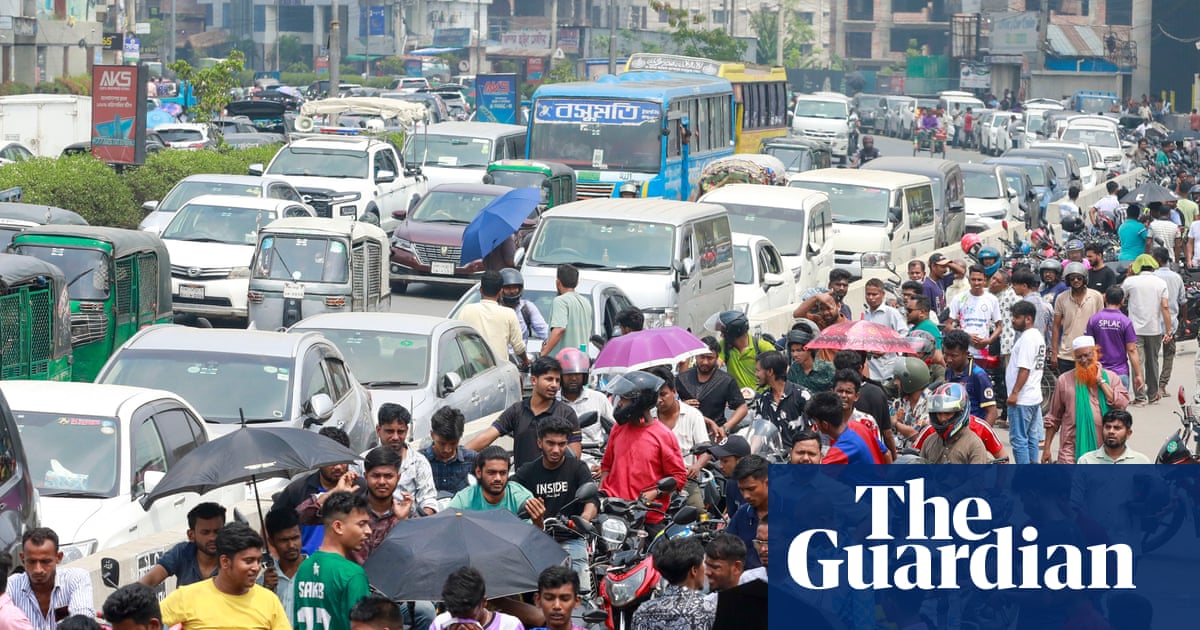
The Organisation for Economic Co-operation and Development (OECD) warned Wednesday that a prolonged Middle East conflict extending into 2027 could trigger global recessions and slash growth to 2.1% this year. The forecast highlights critical energy shortages and inflationary pressures stemming from the ongoing closure of the Strait of Hormuz.
The global economy is currently operating under a shadow. For more than three months, the chokehold on the Strait of Hormuz has squeezed international oil supplies, driving up prices and forcing nations into emergency countermeasures. According to the International Energy Agency (IEA) Oil Market Report released in May 2026, the closure has effectively removed approximately 21 million barrels per day (bpd) from the global market, representing roughly 20% of total global petroleum liquids consumption. While Donald Trump has recently suggested a deal with Tehran is imminent, the reality on the ground remains frozen; talks are suspended as Israel continues its offensive against Hezbollah in Lebanon.
In its latest Economic Outlook, the OECD describes this conflict as “the dominant force shaping the global economic outlook”. The organization has modeled two distinct paths: a baseline scenario of relative stability and a far more grim “prolonged disruption” scenario in which no agreement is reached until 2027.
The Cost of Prolonged Disruption
If the conflict persists, the OECD predicts global GDP growth will plummet to 2.1% this year, a sharp decline from the 3.4% seen in 2025. This trajectory would be “pushing some economies into or close to recession”, with the most acute pain felt by emerging markets. OECD Chief Economist Scarpetta, speaking during the June 4 press briefing, noted that this scenario assumes a sustained Brent crude price floor above $110 per barrel, a level that triggers systemic instability in oil-importing developing nations.

The fallout extends beyond the gas pump. The OECD warns that oil and gas shortages would lead to “enforced rationing” of energy for businesses. This supply crunch would ripple through the industrial supply chain, affecting critical raw materials. In the European Union, the European Commission’s energy monitoring dashboard indicates that industrial output in energy-intensive sectors—specifically chemicals and steel—could contract by as much as 4.5% if the disruption lasts through Q4 2026, mirroring the volatility seen during the 2022 energy crisis following the invasion of Ukraine.
For developing nations, the stakes are existential. Scarpetta noted that the consequences would be especially severe for economies with limited energy reserves, fragile currencies, and weak social safety nets, where energy and food make up a larger share of household spending. The IMF’s World Economic Outlook (updated May 2026) specifically flagged Egypt and Pakistan as high-risk zones, where current account deficits could widen by an additional 2% of GDP due to surging fuel import costs.
Why the AI Investment Boom is Vulnerable
Perhaps the most surprising casualty of a protracted war would be the artificial intelligence surge. While AI has been a primary engine of growth, it is an energy-intensive industry. The OECD analysis suggests that energy shocks would spike operating costs for datacenters and choke the supply of critical hardware.
“The significant energy price shocks or energy shortages associated with the prolonged disruption scenario would increase datacentre operating costs and constrain the supply of critical hardware used in AI systems.
This creates a dangerous feedback loop. By increasing costs and limiting hardware availability, the conflict could “further reduce the capacity and incentive for AI investment, leading to notably weaker growth in those economies currently being boosted by AI-related investment and production”. Market analysts at Goldman Sachs pointed to the vulnerability of the “Blackwell” generation of GPUs, noting that the energy-intensive fabrication processes at TSMC and the subsequent power requirements for H100/B200 clusters make the sector hypersensitive to electricity price volatility. In a June 2026 investor note, Goldman warned that a 20% increase in industrial power costs could lead to a 10-15% reduction in planned datacenter expansions across North America and Europe.
Inflationary Pressure and the Central Bank Dilemma
Policymakers are walking a tightrope. If they raise interest rates too aggressively to combat energy-driven inflation, they risk triggering the very recessions they hope to avoid. According to the OECD’s projections:
- 2026: Global inflation could increase by 0.4 percentage points.
- 2027: Global inflation could increase by 1.3 percentage points.
Such a spike would likely force central banks to hike interest rates by 0.5 to 0.75 percentage points in the short term. Federal Reserve Chair Jerome Powell, in his most recent June 2026 testimony before the Senate Banking Committee, acknowledged that “energy-driven price shocks” could complicate the Fed’s path toward its 2% inflation target, potentially necessitating a pause in anticipated rate cuts. Similarly, European Central Bank (ECB) President Christine Lagarde has emphasized that the Eurozone’s lack of energy independence makes it more susceptible to “second-round effects,” where energy costs drive up the price of all consumer goods.
This stands in stark contrast to the baseline scenario, where G20 inflation is expected to peak at 4% this year before slowing to 3.1% next year, with rate cuts anticipated in 2027.
Regional Divergence: Winners and Losers
The economic impact is not uniform. As the World Economic Forum’s Chief Economists Community observed, there is a widening regional divergence. The U.S. and India are expected to maintain moderate to strong growth, while Europe faces a precarious mix of energy shocks and stagflation risks.

The U.S. is uniquely positioned to weather the storm, as stronger energy exports help offset the drag of higher prices on consumers. The U.S. Energy Information Administration (EIA) reported in May 2026 that domestic shale production has reached record levels, providing a strategic buffer. Conversely, Japan is projected to be among the hardest-hit due to its heavy reliance on Gulf energy and trade disruptions. The Japanese Ministry of Economy, Trade and Industry (METI) recently warned that a closure of the Strait exceeding six months would deplete national strategic petroleum reserves faster than they could be replenished via alternative routes.
| Economy | 2025 Growth | 2026 Projection | 2027 Projection |
|---|---|---|---|
| United States | 2.1% | 2.0% | 1.8% |
| China | 5% | 4.5% | 4.3% |
| Japan | 1.1% | 0.6% | 0.8% |
| Euro Zone | 1.4% | 0.8% | 1.2% |
Britain’s outlook is slightly more optimistic, with growth projected to slow to 0.9% this year before recovering to 1.1% by 2027 as financial conditions ease and global trade stabilizes. However, the Bank of England’s June 2026 Monetary Policy Report cautioned that this recovery is conditional on the stabilization of the Sterling against the Dollar, which has seen volatility as investors flee to safe-haven assets during Middle East escalations.
The Baseline Path to Recovery
There is a way out. The OECD’s baseline scenario assumes a durable peace agreement that allows oil prices to decline. In this version of the future, global growth would slow to 2.8% in 2026 before picking up to 3.1% in 2027. This scenario mirrors the recovery patterns seen after the 1990-1991 Gulf War, where a swift diplomatic resolution allowed for a rapid normalization of energy markets and a subsequent rebound in industrial production.
Even in this optimistic path, the recovery won’t be seamless. The OECD predicts there would still be “some limited energy shortages in some economies, especially in Asia”, though these would be largely cushioned by strategic reserves and shipments from non-Gulf producers. The IEA suggests that increasing imports from Brazil and Guyana could mitigate the deficit, provided that maritime insurance premiums—which have spiked by 300% for tankers in the region since early 2026—return to pre-conflict levels.
The divergence between these two paths—a slow return to growth or a slide into global recession—now depends entirely on diplomatic breakthroughs in the Middle East. Until a deal is signed, the global economy remains hostage to the volatility of the Strait of Hormuz.
According to the report, policymakers must carefully balance rate hikes to avoid stifling growth while curbing inflation, a challenge that could shape global economic stability.
