Mauritania is using government marketing campaigns to revive its tourism industry as of June 2026, according to Al Jazeera. Travel expert Sean Connolly named the country his 2026 destination of the year for The Times of London, citing its safety as a primary draw for visitors exploring the Sahara.
Economic Appeal of the Richat Structure
Local residents are beginning to benefit from a slow increase in visitors to the Adrar Plateau, according to Al Jazeera. Fatima Cheikh Mohammad Bouya, 49, serves as the custodian of the Richat Structure, a circular formation measuring about 40km in diameter. The landmark, also known as the “Eye of Africa,” is located on the western edge of the Sahara.
The Richat Structure is a deeply eroded geological dome of sedimentary rock. Because of its unique concentric rings, it has become a focal point for geological study and nature-based tourism in the Adrar region. The Adrar Plateau itself is one of the few areas in the country with significant geological diversity, making it a primary destination for those interested in the natural history of the desert.
Bouya supports herself by renting tents, serving dinner, and selling stones shaped like the structure to groups of travelers carrying foreign currency, Al Jazeera reports. The country consists of about 90 percent desert and sits at the crossroads of North and West Africa, serving as a bridge between the Maghreb and the Sahel.
From the Dakar Rally to Armed Insurgency
Mauritanian tourism reached a “golden age” in the early to mid-2000s, according to Al Jazeera. During this period, roughly 30,000 tourists visited annually, with a high volume of French travelers arriving between November and February. Many of these visitors came for the Dakar Rally, an off-road motor race that traveled from Paris through desert terrain to Dakar.
The Dakar Rally provided significant international visibility for Mauritania’s landscapes, but security concerns eventually ended the event’s presence in the region. In 2008, the rally was cancelled just days before its scheduled start following direct security threats. This event led to the race relocating to South America in 2009 to avoid the growing instability in Northwest Africa.
This flow of visitors stopped in the mid-2000s. Al Jazeera attributes the decline to the activities of armed groups, including the Salafists and the Algeria-based al-Qaeda in the Islamic Maghreb (AQIM).
Contrasting Safety Assessments and Travel Restrictions
Current assessments of Mauritania’s safety vary between travel experts and government agencies. Sean Connolly, who wrote the first English guidebook on the country, told Al Jazeera that safety is the “main pull” for visitors.
Mauritania is left at the top of an increasingly short list of destinations where you can freely and safely explore the Sahara.
Sean Connolly, travel expert
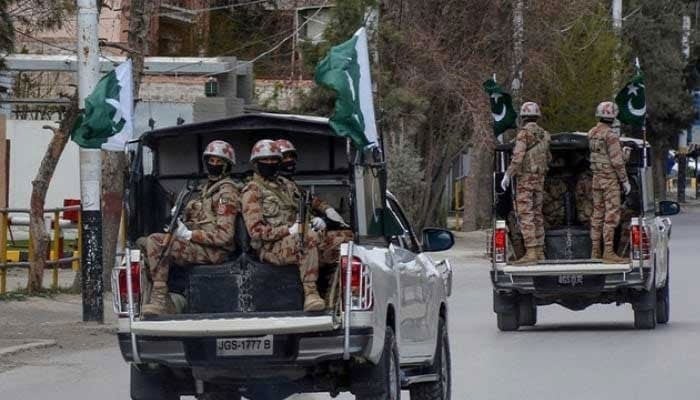
Conversely, the U.S. Department of State advises travelers to reconsider travel to Mauritania due to crime and terrorism. This “Reconsider Travel” status typically indicates a high level of risk where the U.S. government believes the environment is unstable or dangerous for citizens.
The department identifies violent crimes—including assault, armed robbery, and mugging—as frequent occurrences outside the Tevragh Zeina neighborhoods in Nouakchott. Tevragh Zeina is the capital’s more affluent district, where security is more concentrated compared to other urban or rural areas.
The U.S. government has designated specific “No Movement Zones” where it advises citizens not to travel. These zones are designed to keep travelers away from areas where the Mauritanian government has limited control or where militant activity is most prevalent. According to the State Department, these high-risk areas include:
- All regions north of the Tropic of Cancer.
- All areas within 100 KM of the borders with Algeria and Mali.
State Department officials report that these zones are dangerous due to an active insurgency near Mali and a limited government presence, noting that paved roads and cell phone coverage are nonexistent in these areas. This instability is part of a broader security crisis in the Sahel, a semi-arid transition zone where militant groups often exploit porous borders between Mali, Mauritania, and Algeria to move personnel and equipment.
Infrastructure and Emergency Limitations
The U.S. government provides limited emergency services to its citizens in Mauritania, according to the State Department. This limitation stems from poor infrastructure, a lack of health facilities outside Nouakchott, and specific travel rules for U.S. government employees.
Government employees are prohibited from walking alone outside specific areas and times, and they must obtain special permission to travel outside the capital to pass through security checkpoints on major roads. These checkpoints are a standard part of the national security apparatus used to monitor movement in and out of the capital and toward the border regions.
The State Department notes that local police lack the resources to respond effectively to serious crimes, which increases the risk for foreigners who may not have access to private security or rapid evacuation options in remote desert regions.