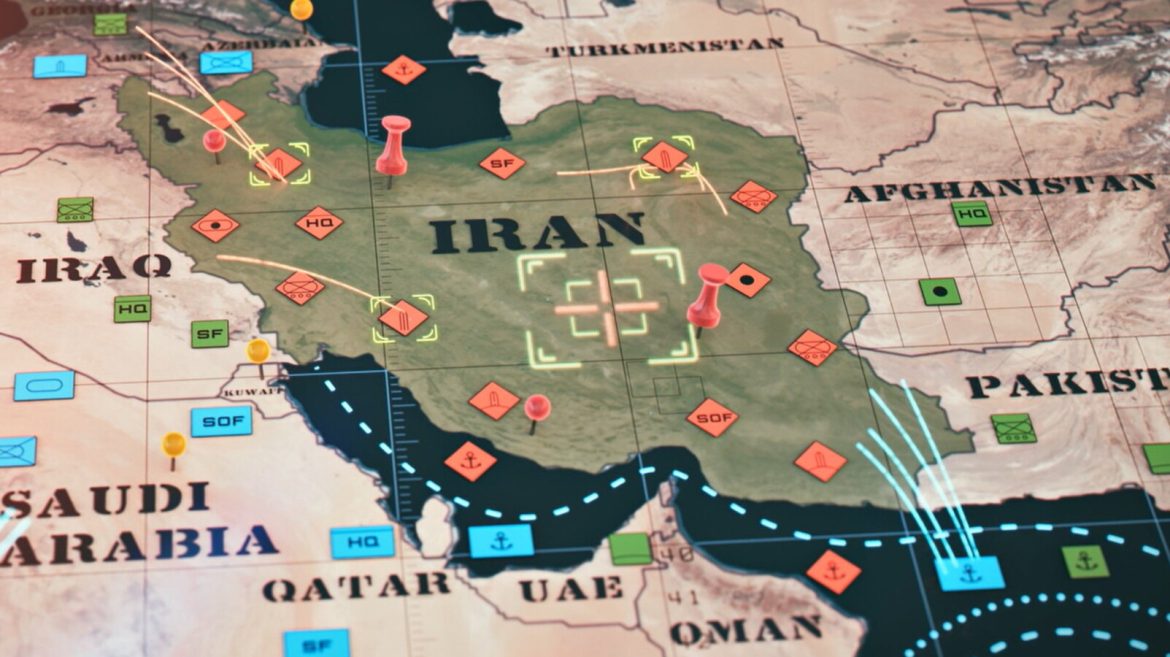
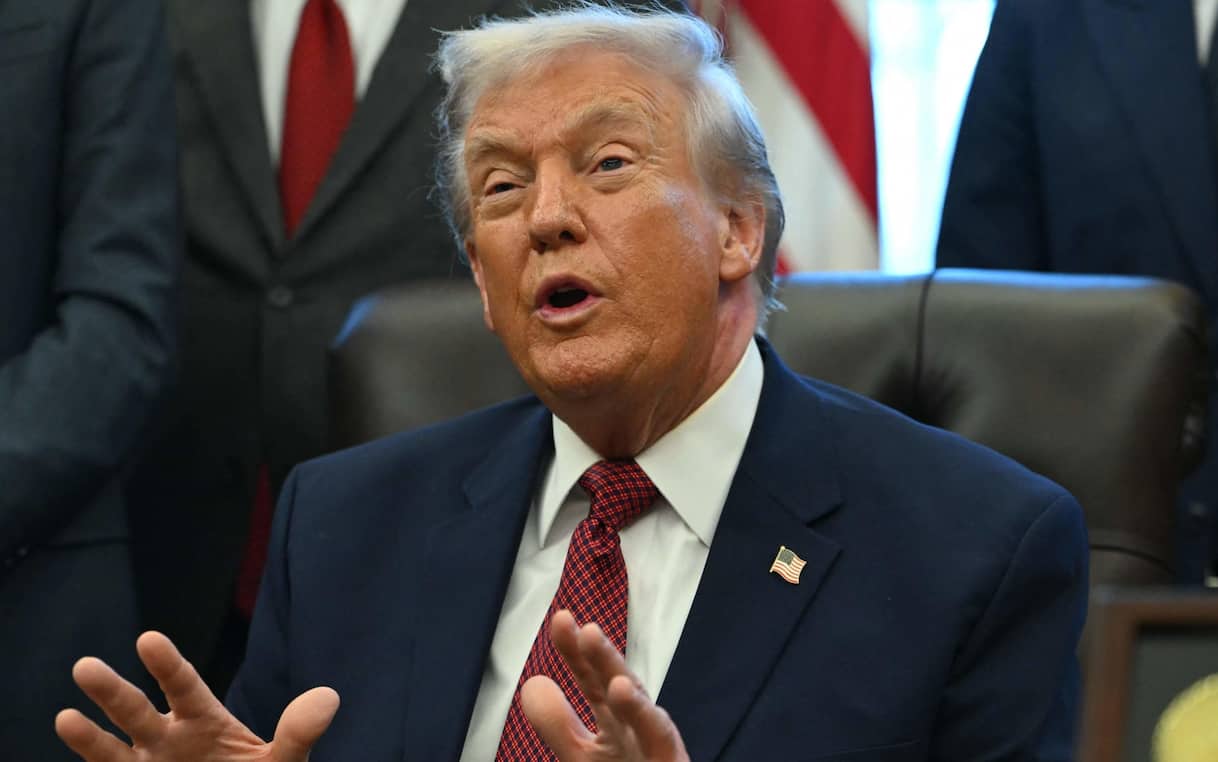
President Donald Trump announced that a deal to end the war with Iran and begin denuclearization is scheduled for signature on June 14, 2026. The agreement, mediated by Qatar and Pakistan, aims to reopen the Strait of Hormuz and establish a nuclear barrier, though Iranian officials remain cautious about the exact signing date.
The announcement arrived via Truth Social on June 13, where Trump claimed the agreement would immediately reopen the Strait of Hormuz to all maritime traffic upon signing. According to Hankyoreh reported, the deal is framed not as a traditional treaty, but as a memorandum of understanding (MOU) that serves as a precursor to deeper negotiations over Iran’s nuclear program.
The current MOU reportedly focuses on a 60-day extension of the ceasefire and the restoration of shipping lanes. However, the timing of the official signature remains a point of contention between Washington and Tehran.
The Digital Signing Protocol and G7 Logistics
Rather than a traditional diplomatic summit, the two nations are pursuing a remote digital signature. Money Today reported that the process will involve a video conference including mediators from Pakistan and Qatar.
The shift to an electronic format is driven by a tight presidential schedule. Trump is slated to depart for France on June 15 to attend the G7 summit. Because Vice President JD Vance must remain in the United States while the president is abroad, a face-to-face signing in Geneva—which had been previously speculated—became logistically impossible.
While the U.S. is pushing for a June 14 deadline, Tehran is tempering expectations. Esmaeil Baghaei, a spokesperson for the Iranian Foreign Ministry, stated that the exact timing is still under review.
“We must wait and see regarding the exact timing of the memorandum of understanding signing. It will not be signed tomorrow, but the possibility that this will happen within a few days cannot be excluded.
The Apache Crash and the Path to Diplomacy
The sudden pivot toward a deal follows a period of extreme military volatility. According to the Wall Street Journal, tensions peaked on June 9 when a U.S. Army Apache helicopter crashed in the Strait of Hormuz.
The crash occurred during a reconnaissance mission to detect Iranian threats to commercial shipping. A drone exploded in front of the aircraft, sending an infrared guidance device onto one of the pilots’ laps, which burned through his flight suit. The helicopter subsequently crashed into the water; both pilots survived after spending two hours adrift before being rescued by remote-controlled unmanned boats.
The aftermath was nearly catastrophic. Trump ordered immediate strikes on Iranian air defense and radar systems, and Iran retaliated by attacking U.S. bases in Jordan, Bahrain, and Kuwait. It took desperate mediation from Qatar and Pakistan—including a Qatari delegation’s visit to Tehran with a new draft of the peace agreement—to convince Trump to cancel a planned third day of airstrikes.
The ‘Nuclear Dust’ Strategy and the 2015 Contrast
Trump has positioned this agreement as a total departure from the 2015 Joint Comprehensive Plan of Action (JCPOA). He criticized the Obama-era deal as a policy that provided a “smooth and easy path” for Iran to acquire nuclear weapons.
“The agreement I will make with Iran will be a strong barrier that fundamentally blocks Iran’s acquisition of nuclear weapons. In fact, Iran no longer wants nuclear weapons and will not possess nuclear weapons in any form, such as purchase or development.”
Donald Trump, U.S.
A central, and highly unconventional, pillar of the new deal involves the physical disposal of high-enriched uranium (HEU). Trump claimed that previous B-2 bomber strikes buried nuclear materials deep under “strong granite mountains.” He intends to have the U.S. recover this “nuclear dust” to either dilute or destroy it in the U.S. or Iran.
Unlike the JCPOA, which involved the release of billions in frozen assets, Trump asserts that “no money” will change hands upon the signing of this MOU. The framework is instead based on an “action-for-action” principle: sanctions will be eased incrementally only as Iran meets specific denuclearization benchmarks.
Remaining Deadlocks and Regional Resistance
Despite the optimism from Washington, structural disagreements persist. Qatari officials have noted that the U.S. and Iran remain far apart on the control of the Strait of Hormuz, the final disposal of uranium, and the release of billions in frozen assets.
Analytical skepticism also looms. Caitlin Talmage, a professor at MIT specializing in Persian Gulf security, suggests the new deal may suffer from the same flaws as its predecessor.
“This agreement is highly likely to end up with many of the same weaknesses that hawks criticized in the JCPOA.
Furthermore, the deal does not extend to Israel’s independent military objectives. Israel’s Defense Minister, Israel Katz, has explicitly stated that regardless of any U.S.-Iran agreement, Israeli forces will not withdraw from Gaza, Syria, or Lebanon, signaling that the regional conflict remains fragmented.
Trump has left the door open for a return to hostilities if the MOU process fails, referencing an “ultimate alternative”—a thinly veiled warning that military options remain on the table if Iran does not comply with the terms of the “nuclear barrier.”