

Mission “go to death”
A group of Ukrainian marines during a river crossing. IT photo
As Ukraine’s counteroffensive stalls, military and political leaders are eager to show their Western backers some progress — any progress, according to the Washington Post.
But a 21-year-old Ukrainian marine, Dmytro, recounted a deadly river crossing that met with little success, other than some political messages.
Dmytro described to the Washington Post how he and his unit teammates were “thrown like a piece of meat to the wolves” during the river crossing, which took from 30 minutes to an hour. The Ukrainian marine’s account was corroborated by six others who participated in the landing operation on the Russian-occupied eastern bank of the river.
“We suffered many losses. We lost people, but got no results,” said another 22-year-old marine.
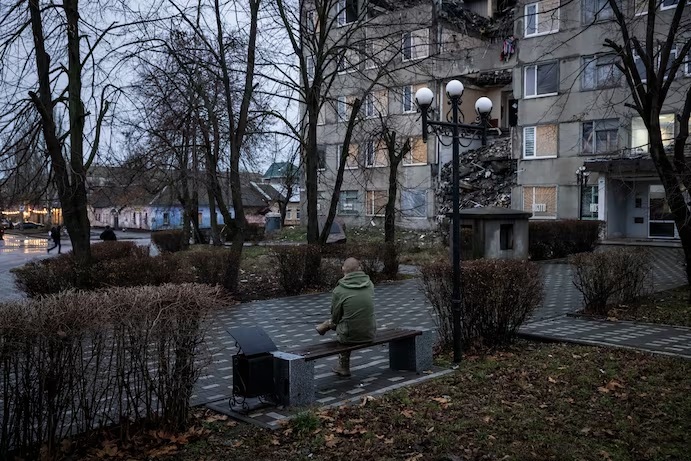
A Ukrainian marine named Dmytro described his unit’s deadly attempt to cross the Dnieper River. Washington Post photo.
Disappointed by reports from the Ukrainian Foreign Ministry – which claimed that Ukraine “tried to consolidate positions in several strongholds” on the Dnieper River in November 2023 – Ukrainian marines recounted Wounded soldiers drowned because they couldn’t swim or sank to the bottom of the river because their equipment was too heavy. The river crossing was so dangerous that the bodies of some Ukrainian marines who died in the first crossing two months ago were forced to be left behind.
Ukraine has not released military casualty figures and declined to specify how many marines were killed in the mission to retake just a few square kilometers of territory, including a base in the fishing village of Krynky. A spokesman for the Ukrainian Marine Corps emphasized: “We remain silent on this issue,” he said.
But the military also admits it has achieved little. “There are no liberated villages” on the east bank, said Captain Natalya Humeniuk, head of the joint press center of the Southern Defense Forces of Ukraine.
Deadly river crossing
When Dmytro set out across the sea, he carried three cans of sardines and six loaves of bread, along with ammunition and other equipment for a mission expected to last several days – if he survived.
Just before sunrise, Dmytro’s battalion approached a shallow sandbank and divided into two teams. The morning fog helps protect them from Russian drones.
Their goal is to advance towards Krynky – 35km upstream from Kherson. As his boots sank into thick mud, he was forced to bury his thoughts about his wife and children to focus on the mission. Dmytro did not think that the plan to cross the river was well prepared. He didn’t know what was waiting for them on the east coast. I don’t think it’s worth my life.
That’s a feeling that Johnson – a 40-year-old Ukrainian reconnaissance leader, knows well. In July, he was assigned to reconnoiter the river islands where Dmytro’s marine group was about to land. This mission forced him to cross the river six times, most recently in October. Ukraine also paid a very high price. Johnson’s commander died in September from stepping on a grenade. But the Marines face even more serious dangers.
“I don’t want to be in their position,” Johnson said.
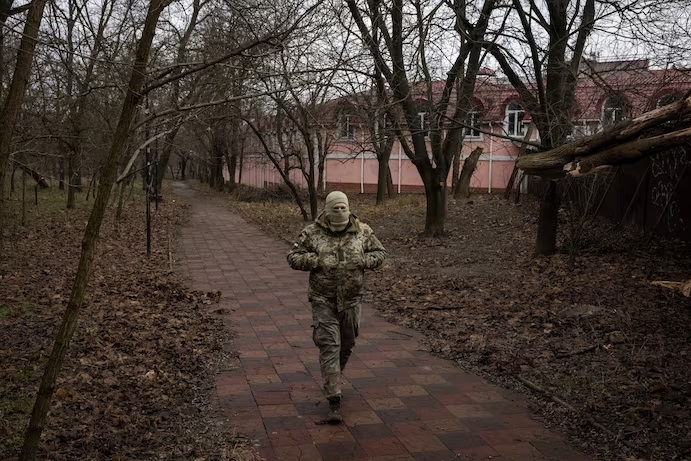
Captain of the Ukrainian reconnaissance team, Johnson in Kherson. Washington Post photo
Meanwhile, Dmytro said, when Russian troops discovered a group of Ukrainian marines crossing the river, they immediately shelled. Dmytro’s group was unable to contact their mortar team to counterattack. By 8 a.m., only 12 of the 30 Ukrainian marines were uninjured. Two people died.
On the east bank, vegetation was sparse and forests were destroyed, so Ukrainian marines had to dig trenches and cover themselves with sandbags. They waited nearly eight hours for reinforcements.
“When bullets are coming from all sides, you start living minute by minute and you don’t think about anything,” Dmytro said.
“The Marines killed today were the ones manning the ships,” said a 39-year-old Marine nicknamed Sawyer. And this is not a skill you can learn easily. You have to know how to control them, you have to know how to think quickly to escape… Of course this is a tragedy.”
Reinforcements arrived and returned alive
As night fell, dozens of reinforcements arrived, and Ukrainian marines began advancing toward Krynky, groups of 45 men trudging in groups of two and three. Suddenly, Dmytro heard gunshots behind them. Must have been a mistake, he thought. The reconnaissance team said this place was safe.
But those are Russians. The marines quickly returned fire.
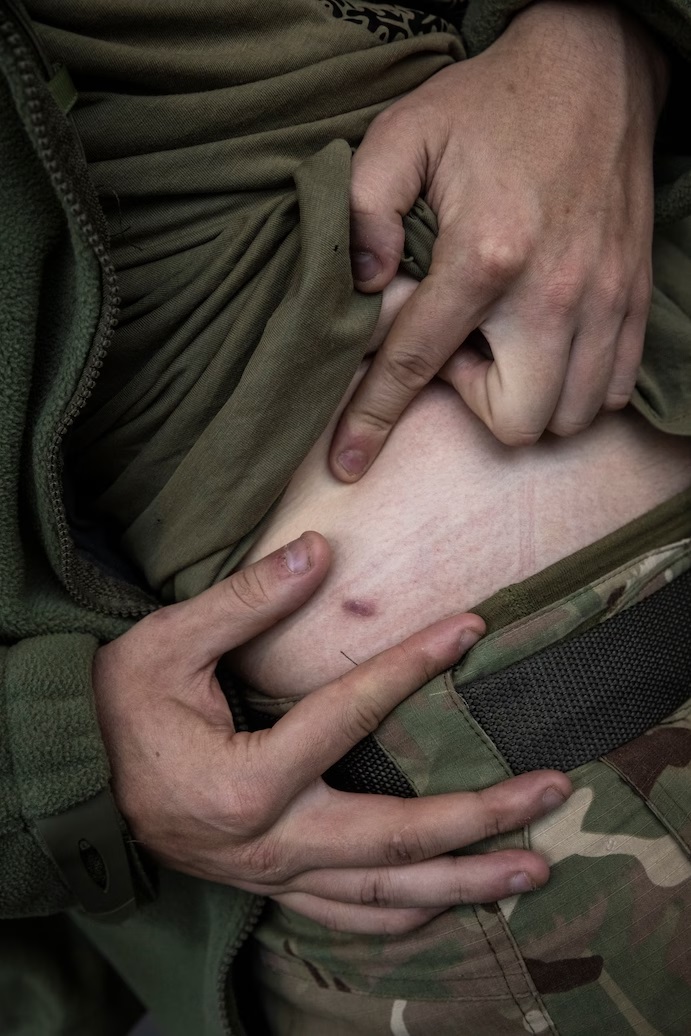
Marine Dmytro shows a scar from shrapnel in his hip that he received while fighting on the left bank of the Dnieper River. (Washington Post photo)
They survived the night, fought fiercely towards Krynky, and then established a foothold in the ruins of the houses. Russian soldiers are still stationed nearby, ready to retake the land.
On the second day, a grenade exploded, sending shrapnel the size of a matchstick into Dmytro’s hip.
Ukrainian soldiers are evacuated amid a scene of terrible devastation. Trees fell. The riverbank was muddied, the bodies of some fallen marines were left behind, unable to report under the heavy rain of bullets.
“Everything was cut into pieces, it was horrifying and unrecognizable,” Dmytro said.
The Ukrainian soldier said at least five more comrades were killed and 20 more wounded by the end of the operation.
