
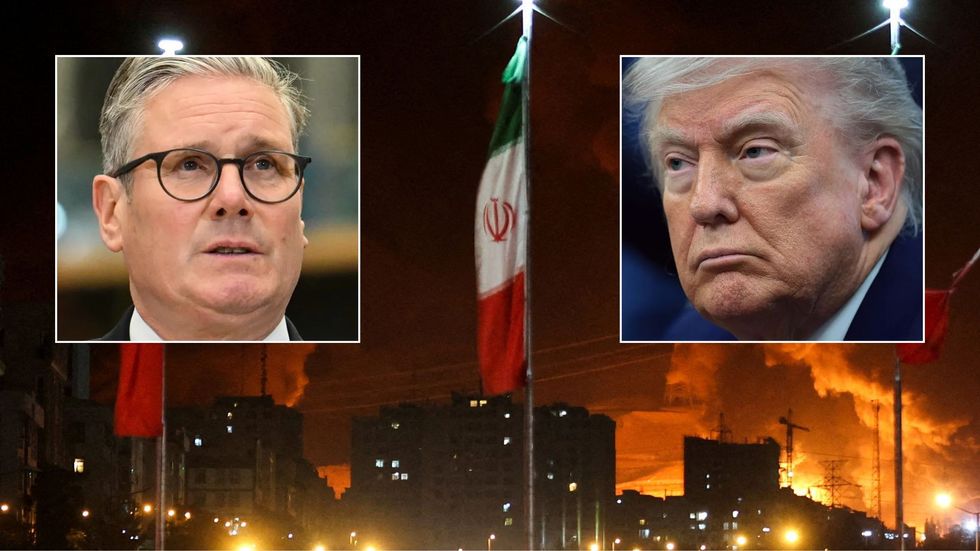
U.S. Stock futures rose on Friday after Iran declared the Strait of Hormuz “completely open” for commercial vessels, following a 10-day ceasefire between Israel and Lebanon brokered by President Donald Trump.
Futures tied to the Dow Jones Industrial Average climbed 524 points, or 1.1%, while S&P 500 futures gained 0.8% and Nasdaq 100 futures rose 0.9%. The move came after Iranian Foreign Minister Seyed Abbas Araghchi announced on X that the strait’s passage was open for the duration of the ceasefire, aligning with Iran’s prior coordination with its Ports and Maritime Organisation.
Trump had announced the ceasefire the previous day at a Las Vegas event, stating the leaders of Israel and Lebanon had agreed to the truce effective at 5 p.m. ET and adding that the broader Iran war “should be ending pretty soon” and was “going along swimmingly.” His remarks echoed earlier comments that week suggesting Tehran was eager to develop a deal and that the Middle East conflict was “very close to over.”
The optimism has driven major averages to record highs, with the Dow up 1.4%, the S&P 500 rising 3.3%, and the Nasdaq advancing 5.2% over the week. However, Liz Ann Sonders, chief investment strategist at Charles Schwab, warned on CNBC’s “Closing Bell: Overtime” that the rally’s narrow leadership may lack staying power, noting that while reaching all-time highs in 11 days is not inherently problematic, broader market participation is needed to confirm durability.
She advised investors to avoid large bets and instead use volatility to their advantage by increasing rebalancing frequency, particularly for those who typically adjust portfolios only on a calendar basis. “There are still a lot of unanswered questions,” Sonders said, urging a return to disciplined diversification across and within asset classes.
The market’s reaction underscores how geopolitical developments in the Middle East continue to influence investor sentiment, especially regarding energy transit routes and regional stability. A similar dynamic occurred in early 2020, when U.S.-Iran tensions initially spiked oil prices and volatility before a de-escalation led to a risk-on rally in equities.
What the ceasefire means for regional shipping and trade
The reopening of the Strait of Hormuz removes an immediate threat to commercial shipping lanes that carry crude oil, liquefied natural gas, and refined products from the Middle East to markets in Asia, Europe, and North America. Iran’s declaration, timed to the Israel-Lebanon ceasefire, suggests a tactical alignment to reduce friction points while the truce holds, though it does not resolve underlying tensions over Iran’s nuclear program or regional influence.
Traders watch the strait closely because any perceived closure risk typically triggers premiums in oil futures and increased volatility in energy-linked equities. The current openness, contingent on the ceasefire’s duration, introduces a conditional layer to market pricing—one that could reverse if hostilities resume or if Iran reverses its stance.
Why market leaders remain cautious despite the rally
While the broad market has benefited from the peace optimism, internal leadership remains concentrated, with gains driven largely by a narrow group of stocks. This pattern echoes past rallies geopolitical in nature, where initial enthusiasm fades if underlying economic fundamentals do not improve or if the geopolitical situation proves fragile.

Sonders’ caution reflects a broader institutional concern that markets may be pricing in a best-case scenario without sufficient hedging against reversal. The absence of widespread participation across sectors and market caps raises questions about whether the rally is driven by genuine conviction or short-term positioning ahead of known events.
How other sectors are reacting to the broader market mood
Beyond energy and geopolitics, other trends are shaping intraday and weekly movements. Quantum computing stocks have surged, with IonQ and D-Wave Quantum shares rising over 50% this week on optimism that Nvidia’s open-source AI models could accelerate adoption in the field. Meanwhile, Taiwan Semiconductor and ASML shares declined despite strong earnings, illustrating a divergence where investor excitement is shifting toward speculative tech themes while established chipmakers face scrutiny over valuation.
In another example of market rotation, social media company Myseum announced a pivot to AI agents for personalization, rebranding to Myseum.AI while retaining the MYSE ticker, and saw its shares jump approximately 130% in Thursday’s session. The move follows a similar retail-driven surge in Allbirds stock after that company announced a shift from footwear to AI-focused initiatives.
What does the Strait of Hormuz openness mean for oil prices?
The declaration reduces immediate supply disruption risks, which could ease upward pressure on oil prices, though actual pricing depends on global demand, OPEC+ output decisions, and whether the ceasefire holds beyond its 10-day term.
Is the stock market rally likely to last?
According to Liz Ann Sonders of Charles Schwab, the rally’s narrow leadership suggests caution; lasting gains would require broader participation across sectors and market caps, not just optimism tied to a temporary geopolitical development.
