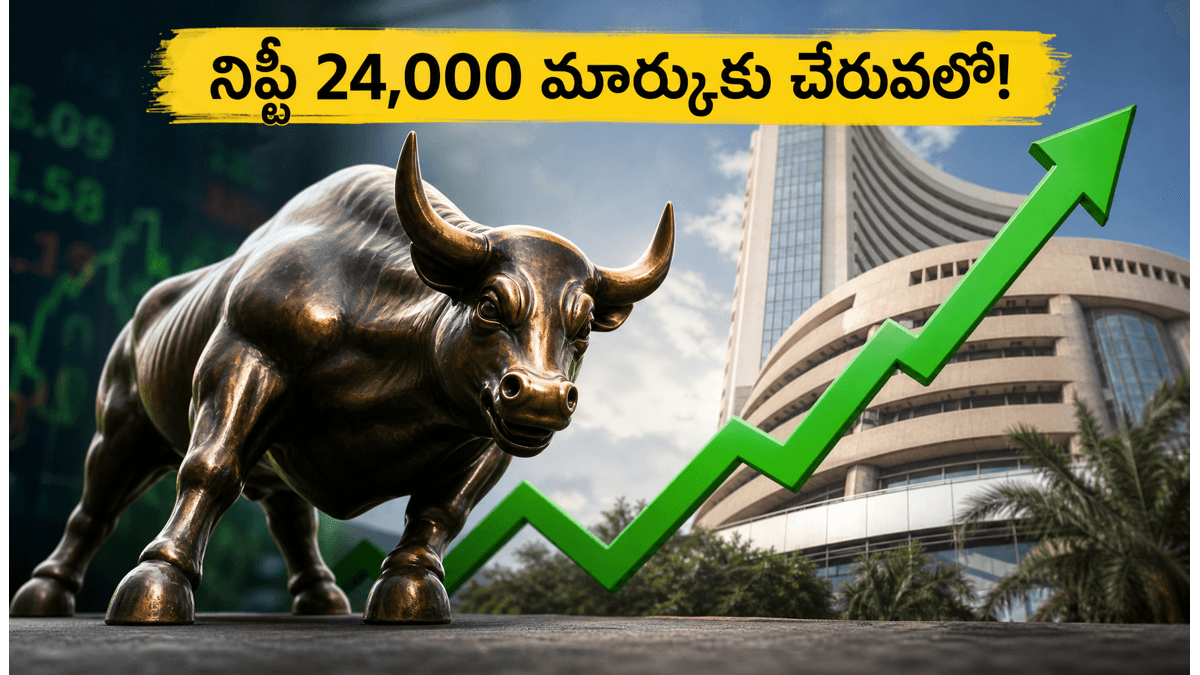
Indian stock market indices closed higher on Tuesday, June 16, 2026, marking a three-day winning streak. Driven by a US-Iran peace deal and falling crude oil prices, the Sensex climbed to 76,808.48, while the Nifty 50 approached the 24,000 milestone, supported by strong gains in the IT and automobile sectors.
Geopolitical Stability and Falling Oil Prices
The domestic market benefited from a significant shift in international relations, as a peace agreement between the United States and Iran sparked widespread buying interest among investors. In global finance, such geopolitical resolutions typically trigger a “risk-on” sentiment, where capital moves away from safe-haven assets and into equities. According to Eenadu, the market rally was further supported by declining crude oil prices and a reduction in investor fears regarding inflation and economic growth.
The reduction in geopolitical tension directly impacts energy markets. For an economy like India, which relies heavily on imported crude oil, lower global prices help stabilize the trade balance and reduce inflationary pressures. While Andhrajyothy reported that the Sensex experienced a jump of over 1,000 points, Eenadu’s data indicates the index closed at 76,808.48, representing a gain of 544.15 points. The Sensex began the session at 76,526.77 and reached an intraday high of 76,846.74 before settling near its daily peak.
IT and Auto Stocks Push Nifty Toward 24,000
The Nifty 50 index finished the session at 23,989.15, an increase of 135.25 points, leaving it within striking distance of the critical 24,000 psychological threshold. In technical analysis, round numbers like 24,000 often act as significant resistance or support levels where heavy trading volumes occur. Goodreturns reported that the Information Technology (IT) sector was a primary driver of this momentum. Investors showed high interest in large-cap IT companies, citing positive international market signals and strong expectations for upcoming corporate earnings driven by rising demand for digital services.
The Information Technology sector’s performance is closely linked to the stability of international markets and currency fluctuations. Because many large-cap Indian IT firms generate a significant portion of their revenue in US dollars, a steady or weakening USD/INR exchange rate can influence their reported earnings margins. The automobile manufacturing sector also contributed to the upward trend. Tata Motors and Mahindra & Mahindra both showed strong performance, which analysts attributed to improved sales data and the successful resolution of previous supply chain constraints. The easing of these constraints typically allows manufacturers to improve inventory turnover and reduce the costs associated with production delays.
Energy Sector Gains Amid Lower Crude Costs
As Brent crude oil prices retreated to $81 per barrel, investment interest shifted toward Oil Marketing Companies (OMCs). For these entities, the cost of crude is a primary input; therefore, a decline in global prices can lead to an expansion in Gross Refining Margins (GRMs), provided the domestic retail prices remain stable. According to Goodreturns, companies like Bharat Petroleum (BPCL) and Indian Oil Corporation (IOC) saw significant gains during the session. Market participants anticipate that the reduction in raw material costs will lead to expanded profit margins for these fuel retail providers.
Market Winners and Laggards on June 16
The session saw a divergence in performance across different industries, with technology and consumer goods performing well while metal stocks faced selling pressure. This pattern often reflects a sectoral rotation, where investors move capital from cyclical industries, such as metals, into more defensive or growth-oriented sectors like IT and consumer staples during periods of shifting economic sentiment.

| Sector/Category | Top Performing Stocks | Underperforming Stocks |
|---|---|---|
| Technology & Finance | HCL Technologies, TCS, Bajaj Finserv | — |
| Consumer & Auto | Hindustan Unilever, Tata Motors, Mahindra & Mahindra | Maruti Suzuki, Indigo |
| Energy & Infrastructure | NTPC, BPCL, IOC | UltraTech Cement |
| Metals & Defense | — | Tata Steel, BEL |
Global Commodity and Currency Benchmarks
International commodity markets and currency exchange rates provided additional context for the domestic rally. The movement in these benchmarks serves as a barometer for global risk appetite and inflationary expectations.
- Brent Crude Oil: $81 per barrel
- Gold: $4,343 per ounce
- USD/INR Exchange Rate: 94.55
The domestic rally was supported by stable global commodity prices and a steady USD/INR exchange rate, reflecting broader market confidence. The high price of gold often indicates its role as a safe-haven asset; however, as geopolitical tensions ease, investors frequently reallocate capital from gold into more productive assets like equities. The stability in the USD/INR exchange rate provides a predictable environment for both foreign institutional investors (FIIs) and domestic institutional investors (DIIs) to manage their positions.
Find more reporting in our Business section.