Broadway’s latest revival of The Rocky Horror Present arrives with a marquee cast and a director fresh from critical acclaim, yet struggles to match the kinetic precision that made its predecessor a cult phenomenon.
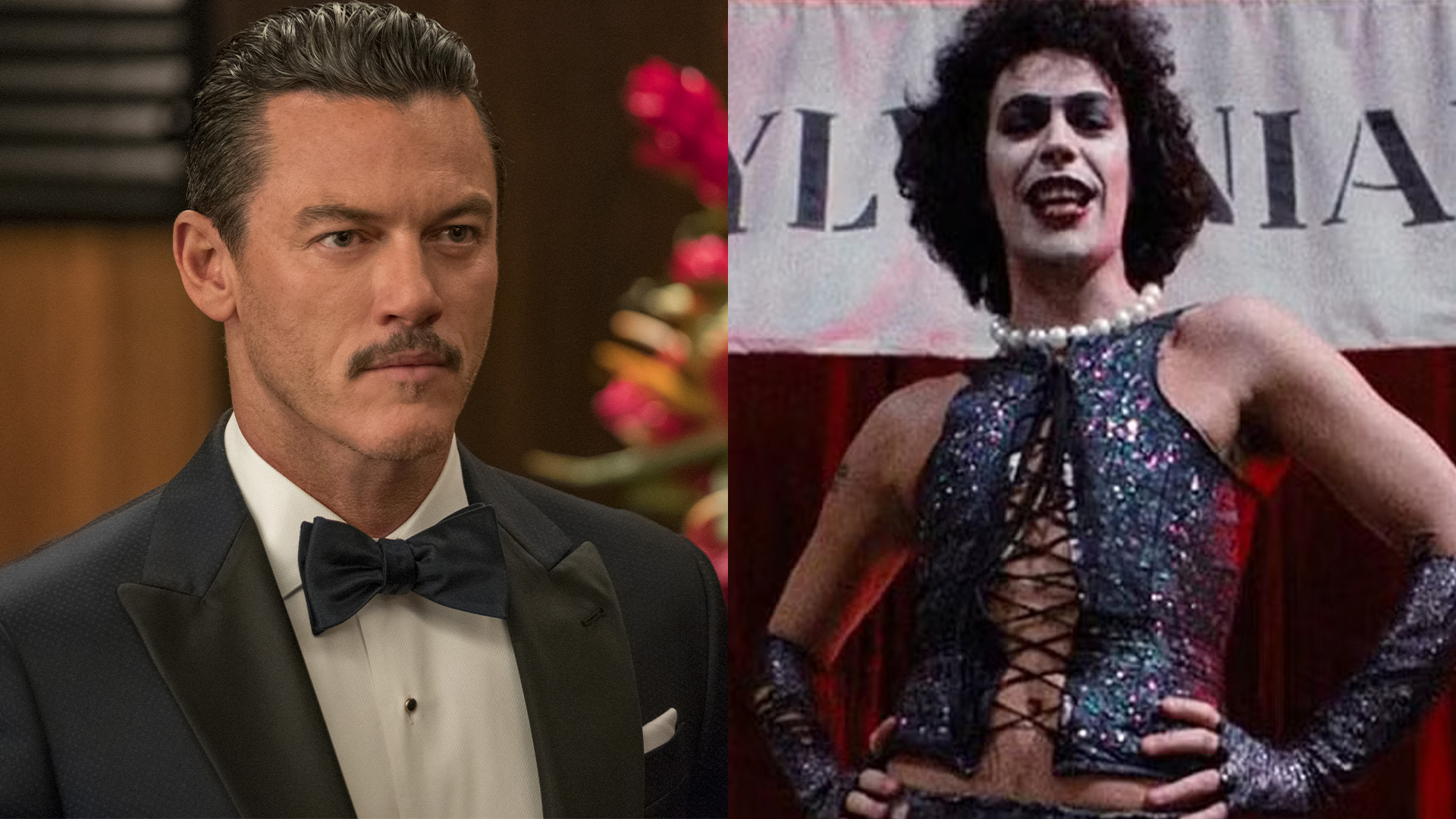
The production, which opened at Studio 54 this spring, features Luke Evans in his Broadway debut as Dr. Frank-N-Furter, alongside Oscar nominee Stephanie Hsu as Juliette Lewis as Magenta and Emmy nominee Rachel Dratch as the Narrator. Director Sam Pinkleton, whose work on the queer comedy Oh, Mary! earned widespread praise, brings a similar sensibility to the material, emphasizing the show’s campy sincerity as both artistic and political statement.
Pinkleton recounts receiving direct advice from original creator Richard O’Brien: “Just do it simply with good actors,” and “take it seriously.” That philosophy shaped a cast stacked with award-nominated talent, including Tony nominee Amber Gray as Riff Raff, Golden Globe winner Michaela Jaé Rodriguez as Columbia, and Harvey Guillén doubling as Eddie and Dr. Scott. The ensemble reflects a deliberate effort to honor the show’s long-standing place in queer theater, where its unapologetic embrace of fluidity and spectacle has resonated for decades.
Yet despite the pedigree, the staging falters in execution. Where Pinkleton’s earlier work thrived on tight, incisive staging, this production leans into loose, almost improvisational blocking that drains momentum. Scenes that should crackle with anarchic energy instead feel diffuse, as if the cast is searching for the rhythm rather than owning it. The absence of the film’s razor-sharp timing becomes increasingly apparent, leaving audiences longing for the discipline that made the 1975 adaptation a midnight movie staple.
Still, moments of clarity emerge through the design. Miniature models of the Frankenstein-esque mansion emerge from curtains as Brad and Janet approach, and hands dart from behind drapes to suggest unseen presences — tactile, analog touches that ground the spectacle in playful ingenuity. These flourishes recall the show’s roots in lo-fi, audience-participatory theater, even as the Broadway scale threatens to overwhelm them.
The tension lies in the inheritance: a stage show forever measured against a film that perfected its tone, timing, and audience participation. Although the film version remains the definitive experience for many, this revival insists on the legitimacy of the live form — not as a replica, but as a living, evolving artifact of queer performance.
For audiences seeking the communal, call-and-response energy of midnight screenings, the stage version offers a different kind of engagement — one that values presence over participation, interpretation over imitation. It may not replicate the film’s immediacy, but it asserts the enduring power of seeing the story unfold in real time, where every gesture, pause, and glance is shaped by the room.
How does this revival compare to the 1975 film adaptation?
While the film remains the definitive version for many due to its iconic performances and tight pacing, this stage production emphasizes live interpretation and theatrical craft, though it struggles to match the film’s energy and precision.

What significance does the show hold for queer audiences?
The Rocky Horror Show has long been a touchstone in queer theater for its unapologetic embrace of gender fluidity, camp, and spectacle, which this revival frames as both artistic and political.