
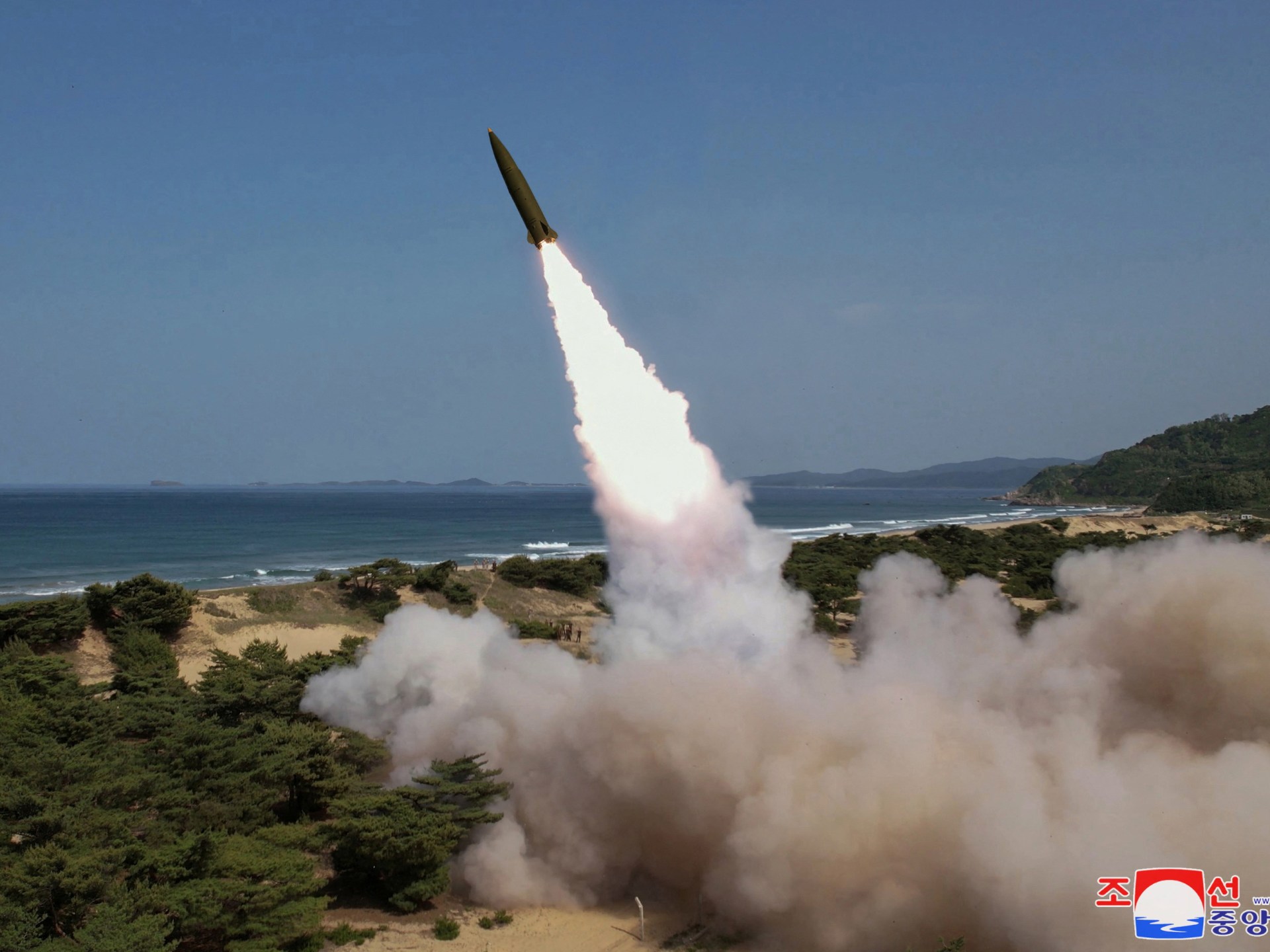
North Korea launched multiple ballistic missiles toward the sea off its eastern coast on Sunday, marking its seventh such test this year and the fourth in April, according to South Korea’s military.
Missiles fired from Sinpo area fell without entering Japan’s exclusive economic zone
The launches occurred around 6:10 a.m. Local time from the eastern Sinpo region, with South Korea confirming it had increased surveillance and was coordinating closely with the United States and Japan. Japan’s government stated the missiles landed near the east coast of the Korean Peninsula, with no incursion into its exclusive economic zone confirmed. South Korea’s presidential office held an emergency security meeting following the launches, media reports indicated.
Tests violate UN resolutions as North Korea advances nuclear capabilities
The launches contravene United Nations Security Council resolutions banning North Korea’s ballistic missile programme, which Pyongyang rejects as an infringement on its sovereign right to self-defence. This comes amid warnings from the International Atomic Energy Agency that North Korea has made “very serious” advances in nuclear weapons production, including the probable addition of a new uranium enrichment facility. North Korean leader Kim Jong Un reiterated last month that the country’s status as a nuclear-armed state is irreversible and that expanding a “self-defensive nuclear deterrent” remains essential to national security.
Launches precede upcoming US-China summit where North Korea will be discussed
The missile tests occur as China and the United States prepare for a summit in mid-May, during which Chinese President Xi Jinping and US President Donald Trump are expected to address North Korea’s nuclear and missile programmes. North Korea has conducted seven ballistic missile launches in 2026 alone, underscoring its continued defiance of international pressure despite diplomatic isolation and sanctions.
Why does North Korea keep launching missiles despite international bans?
North Korea states that its missile and nuclear programmes are necessary for self-defence and views UN restrictions as violations of its sovereignty, a position reiterated by leader Kim Jong Un.
Did the missiles pose a threat to Japan or nearby countries?
According to Japan’s government, the missiles landed near the east coast of the Korean Peninsula and did not enter Japan’s exclusive economic zone, so no immediate threat to Japanese territory was confirmed.
